Set Up an AI Virtual Receptionist for Therapy Clinics
Discover how setting up an AI virtual receptionist can help therapy clinics eliminate missed calls, reduce administrative workloads, and improve scheduling efficiency.
An AI virtual receptionist for therapy clinics is an automated, HIPAA-compliant system that manages client phone calls, text messages, and scheduling without human intervention. By integrating with Electronic Health Records (EHR), this technology ensures your practice never misses an inquiry. Implementing an AI virtual receptionist can improve administrative efficiency by up to 30% [5], helping clinics manage the high volume of communications they receive daily.
Medical practices miss an average of 23% to 35% of incoming calls [1], which often occurs during peak hours or when front-desk staff are busy. By deploying an AI-powered assistant, clinics can instantly capture these opportunities. This digital solution handles routine inquiries, automates patient intake, and coordinates appointment reminders, allowing therapists to focus on clinical care instead of administrative burdens. For more information on how we help practices optimize their operations, check out About Conversify.
Why Do Therapy Clinics Need an AI Virtual Receptionist?
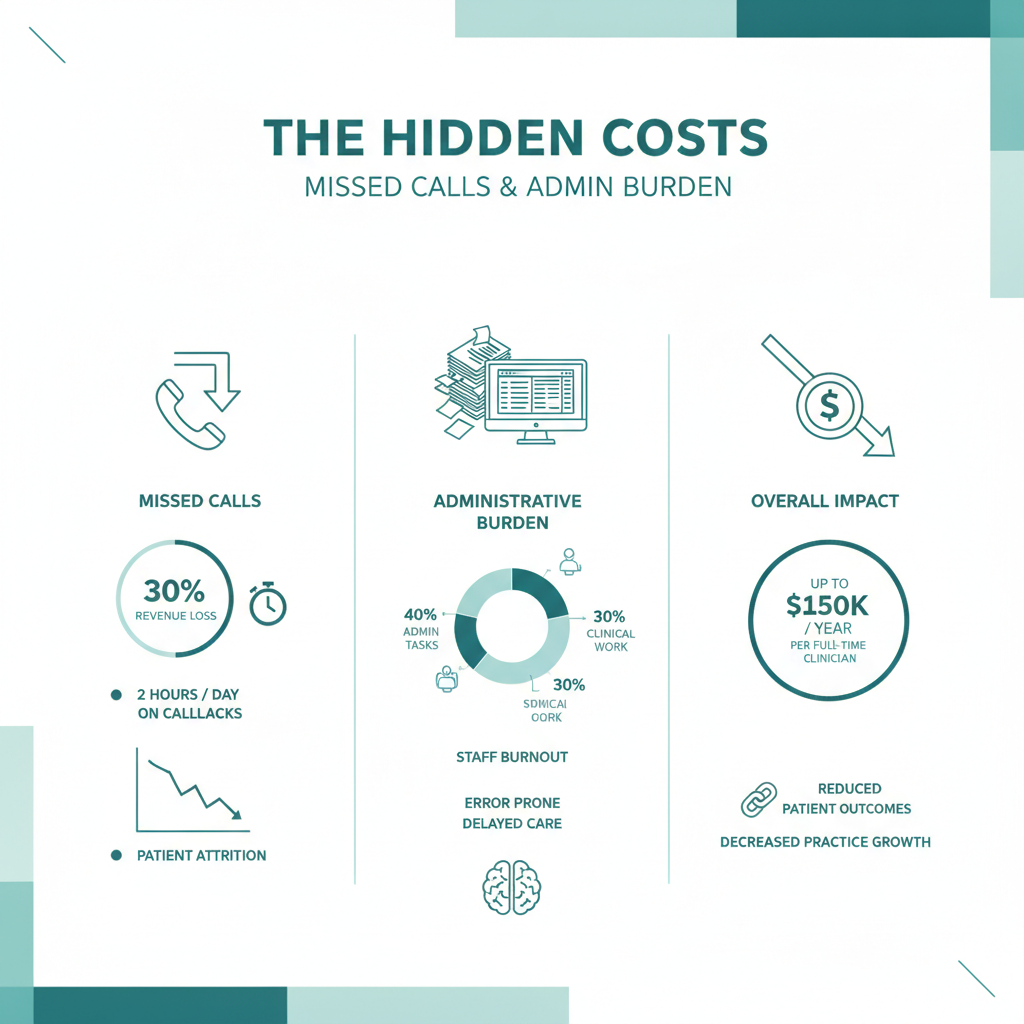
Running a private practice requires balancing clinical excellence with operational demands. However, managing incoming calls often becomes a significant bottleneck. Medical practices miss an average of 23% to 35% of incoming calls [1]. This high rate of missed calls, which frequently occurs during peak hours or when front-desk staff are busy checking in patients, represents a major source of lost revenue and missed patient opportunities.
The financial consequences of these missed connections are stark. The average medical practice loses between $200,000 and $500,000 annually due to missed calls [9]. For therapy clinics, where a single new patient has a high lifetime value, even a few missed calls a day can quietly drain six figures in potential revenue.
Furthermore, patients are highly unlikely to wait around for a callback. Approximately 62% of patients will not leave a voicemail when they reach a medical office's answering machine [2]. Instead of leaving a message, the majority of these callers, especially new patients seeking care, will hang up and call a competitor. This makes 24/7 instant AI responses critical.
Additionally, a significant portion of patient demand occurs when the office is closed. Around 41% of patient calls to medical practices occur outside of standard business hours [3]. Implementing an AI virtual receptionist allows clinics to capture this substantial after-hours demand and automatically book appointments overnight.

The Staffing Crisis and Provider Burnout in Mental Health
Therapy clinics are also facing severe staffing challenges. Front-desk turnover in healthcare hit a multi-year peak of approximately 47% in 2025, with the average time-to-fill for medical receptionist roles stretching to 62 days [10]. This severe staffing shortage makes digital solutions like AI virtual receptionists essential for maintaining consistent clinic operations.
For the providers themselves, administrative tasks are a primary driver of exhaustion. Psychiatrists spend roughly 20.3% of their working hours on administrative tasks, while therapists typically add 15 to 25 minutes of documentation to every session [4]. This heavy administrative load contributes significantly to provider burnout, which affects 52% of therapists annually [4]. By automating these repetitive tasks, clinics can protect their staff and improve retention. To explore more strategies on reducing administrative stress, view our related articles.
How to Set Up an AI Virtual Receptionist
for Your Therapy Practice
Setting up an AI virtual receptionist does not have to be a complex technical chore. By following a structured implementation plan, you can integrate this technology seamlessly into your existing workflow.
- Step 1: Select a HIPAA-Compliant Platform. Security is paramount in mental health. Choose a platform like Conversify that guarantees 100% HIPAA-compliant communication across all digital channels. Compare options against competitors like Spruce Health, Klara, OhMD, Weave, Podium, SimplePractice, Luma Health, and Solutionreach to ensure you get the features you need. You can review our pricing plans to find a budget-friendly option for your practice size.
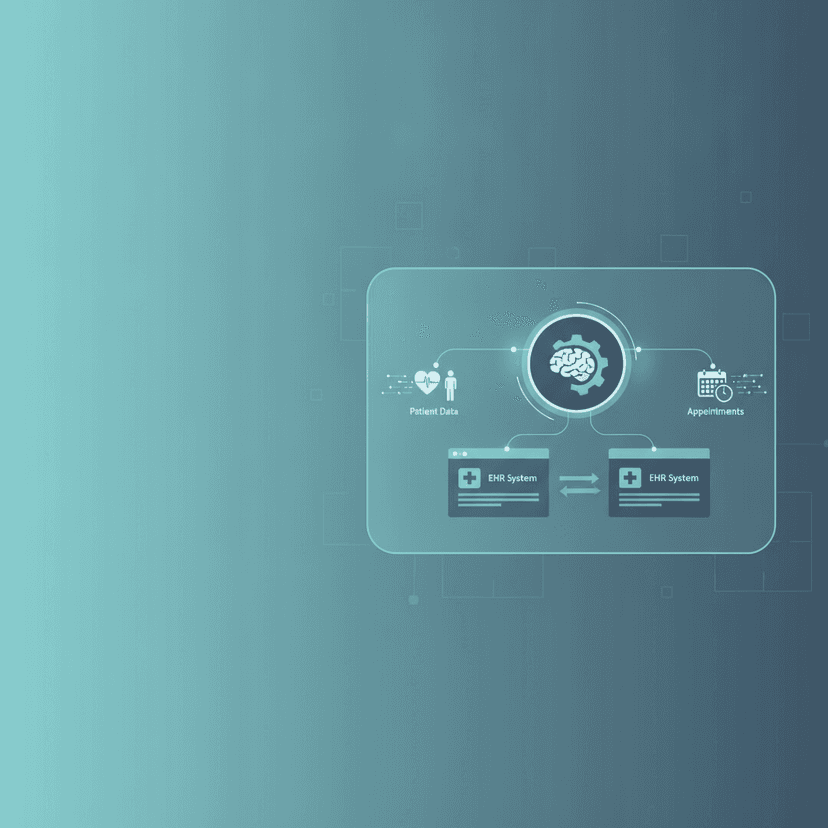
- Step 2: Integrate Your EHR and EMR Systems. To allow the AI to schedule appointments in real time, connect it directly to your Electronic Health Record (EHR) system. This ensures the AI can view real-time availability and block out times instantly, preventing double-bookings.
- Step 3: Configure Multi-Channel Communication. Modern patients expect options beyond voice calls. A 2026 survey found that 90% of patients prefer to receive healthcare communication via text message, compared to only 34% who prefer phone calls [6]. Ensure your AI receptionist supports SMS, email, and web chat.
- Step 4: Tailor Your AI's Dialogue and Workflows. Customize how the AI greets patients, answers common questions, and handles patient intake and triage. Set up automated text message reminders, which can reduce patient no-show rates by 30% to 50% [7]. This simple automation helps therapy clinics protect their schedules and maintain steady revenue without requiring manual staff outreach.
- Step 5: Test and Go Live. Run test calls and text interactions to ensure the AI routes inquiries correctly. Once verified, route your main phone line to the AI assistant during busy hours and after-hours.
How Patients Perceive AI in Healthcare
Some practitioners worry that patients will reject automated systems. However, data shows that patients are increasingly receptive to digital convenience. More than half of patients (55%) are comfortable with AI or automated systems handling simple, routine healthcare tasks like appointment reminders [8]. While patients still prefer human interaction for sensitive clinical discussions, they welcome AI-driven convenience for basic administrative logistics.
This is especially true for younger demographics. About 75% of millennials prefer texting over talking on the phone, and 80% have actively used online self-service scheduling [11]. Incorporating an AI receptionist that supports text-based booking directly appeals to this dominant demographic in the workforce.
Comparing AI Receptionists to Traditional
Answering Services
When looking for front-desk support, many clinics compare AI tools to traditional live answering services. Below is a comparison to help you choose.
| Feature | AI Virtual Receptionist | Traditional Answering Service |
|---|---|---|
| Response Time | Instant (24/7/365) | Delayed (depends on agent availability) |
| EHR Integration | Direct, real-time booking | Manual message taking and call-backs |
| Communication Channels | Phone, SMS, Email, Web Chat [6] | Phone only |
| Accuracy & Consistency | 100% consistent based on programming | Variable based on human agent training |
| Cost Efficiency | Highly cost-effective flat rates | Expensive per-minute or per-call rates |
Frequently Asked Questions
Is an AI virtual receptionist HIPAA-compliant?
Yes, professional AI virtual receptionists designed for healthcare are fully HIPAA-compliant. They encrypt all patient data in transit and at rest, ensuring that sensitive mental health communications remain secure and private.
How does an AI receptionist reduce therapy patient no-show rates?
An AI receptionist automatically sends automated text message reminders, which can reduce patient no-show rates by 30% to 50% [7]. This system keeps your schedule full and protects your clinic's revenue without requiring manual outreach from your staff.
Can an AI virtual receptionist schedule appointments directly into my EHR?
Yes, advanced AI receptionists integrate directly with major Electronic Health Record (EHR) and EMR systems. This integration allows the AI to check real-time therapist availability and book, reschedule, or cancel appointments instantly.
What happens if a patient has a clinical emergency or a complex question?
The AI virtual receptionist is programmed to recognize urgent keywords and clinical inquiries. When a complex or sensitive situation arises, the system immediately triages and routes the patient to a human staff member or provides emergency resources.
Why is SMS text messaging important for therapy clinics?
A 2026 survey revealed that 90% of patients prefer to receive healthcare communication via text message [6]. Offering text-based communication aligns with modern patient expectations and significantly increases client response and engagement rates.
How much revenue do therapy clinics lose from missed phone calls?
The average medical practice loses between $200,000 and $500,000 annually due to missed calls [9]. Because therapy clients have high lifetime value, missing even a few calls a day can lead to substantial long-term financial losses.
Sources
- Medical Practice Call Volume and Missed Call Analysis.
- Patient Voicemail Abandonment and Competitor Switching Survey.
- After-Hours Patient Call Demand Study.
- Mental Health Provider Administrative Burden and Burnout Report.
- Healthcare Administrative Efficiency and AI Integration Study.
- Patient Communication Preferences Survey 2026.
- The Impact of Automated Text Reminders on Patient No-Show Rates.
- Public Perception and Comfort Levels with AI in Healthcare.
- Financial Impact Analysis of Missed Calls in Medical Practices.
- Healthcare Front-Desk Turnover and Staffing Shortage Report 2025.
- Millennial Communication Preferences and Online Scheduling Adoption Study.
David Friedman - Founder, Conversify · LinkedIn
David Friedman is a B2B operations leader with over 10 years of experience managing large-scale teams and business processes. After years of working with service businesses and seeing how much time was lost to manual customer communication, he founded Conversify, an AI-powered platform that helps healthcare practices and service providers across Europe automate their patient and client interactions. David built the platform from the ground up, working directly with practicing healthcare professionals to ensure every feature solves a real operational pain point. He is based in Spain.