How Does an AI Receptionist Integrate with Our EHR/EMR System?
Discover how AI receptionists securely integrate with major EHR platforms like Epic, Athenahealth, and eClinicalWorks, or legacy systems via Visual AI, to automate 70 percent of routine calls and increase bookings.
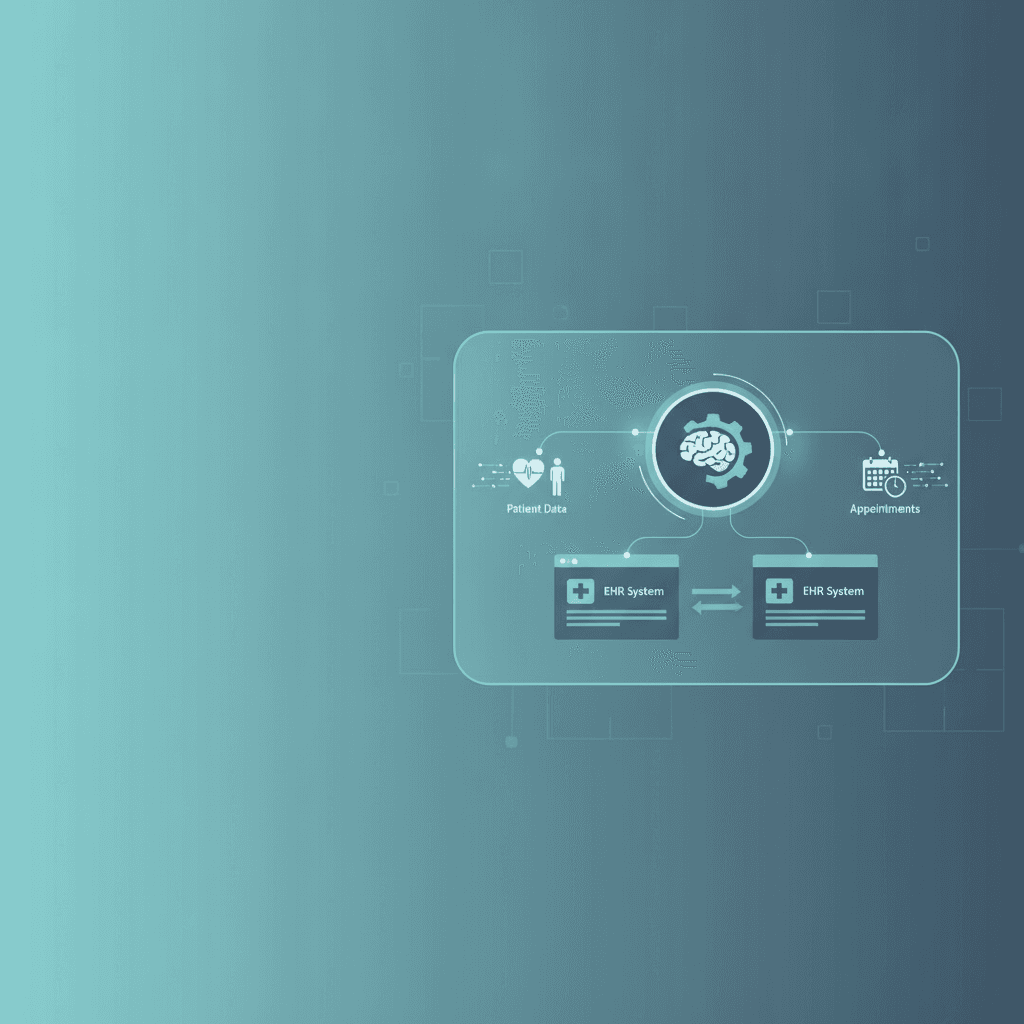
An AI receptionist integrates with your EHR/EMR system by establishing a secure, bidirectional connection through FHIR APIs, HL7 interfaces, or visual AI. This real-time synchronization allows the AI to read provider availability and write appointments directly into your scheduling software without manual data entry, eliminating scheduling conflicts.
Without this bidirectional synchronization, clinic-side changes will not update the AI agent, leading to operational confusion. In fact, Connect Health reports that 83 percent of failed AI receptionist deployments in healthcare trace their problems back to incomplete EHR integration [3].
For medical clinics and other service-based organizations, implementing a robust ai receptionist for service businesses ensures that routine tasks like scheduling are fully automated. According to a Deloitte healthcare study, 70 percent of routine inbound calls to healthcare providers require no human intervention when AI receptionists are properly configured [1]. This high automation rate allows medical practices to offload repetitive tasks like scheduling and FAQs, freeing up staff to focus on in-office patient care [1]. To understand how we help clinics streamline their operations and manage patient communication, visit our About Conversify page, or explore our other related articles on healthcare automation.
>
Key Takeaways
* Complete EHR integration is critical, as 83 percent of failed AI deployments trace back to integration gaps [3].
* Modern integrations use FHIR APIs and HL7 event listening (SIU messages) for real-time, bidirectional sync [4].
* Major platforms like Epic, Athenahealth, and eClinicalWorks require custom, secure, and resource-aware protocols [5, 8, 12].
* Visual AI solutions allow integration with legacy systems and Citrix-based environments without APIs [10].
* Automating the front desk can drive a 20 to 30 percent increase in bookings and an average ROI of 451 percent [6, 11].
The Core Architecture: How AI and EHRs Talk to Each Other
To understand how an AI receptionist works, it helps to look at the underlying technology. Modern AI receptionists utilize FHIR (Fast Healthcare Interoperability Resources) APIs and HL7 (Health Level Seven) interfaces to achieve bidirectional synchronization with major EHRs like Epic, Athenahealth, and eClinicalWorks [4].
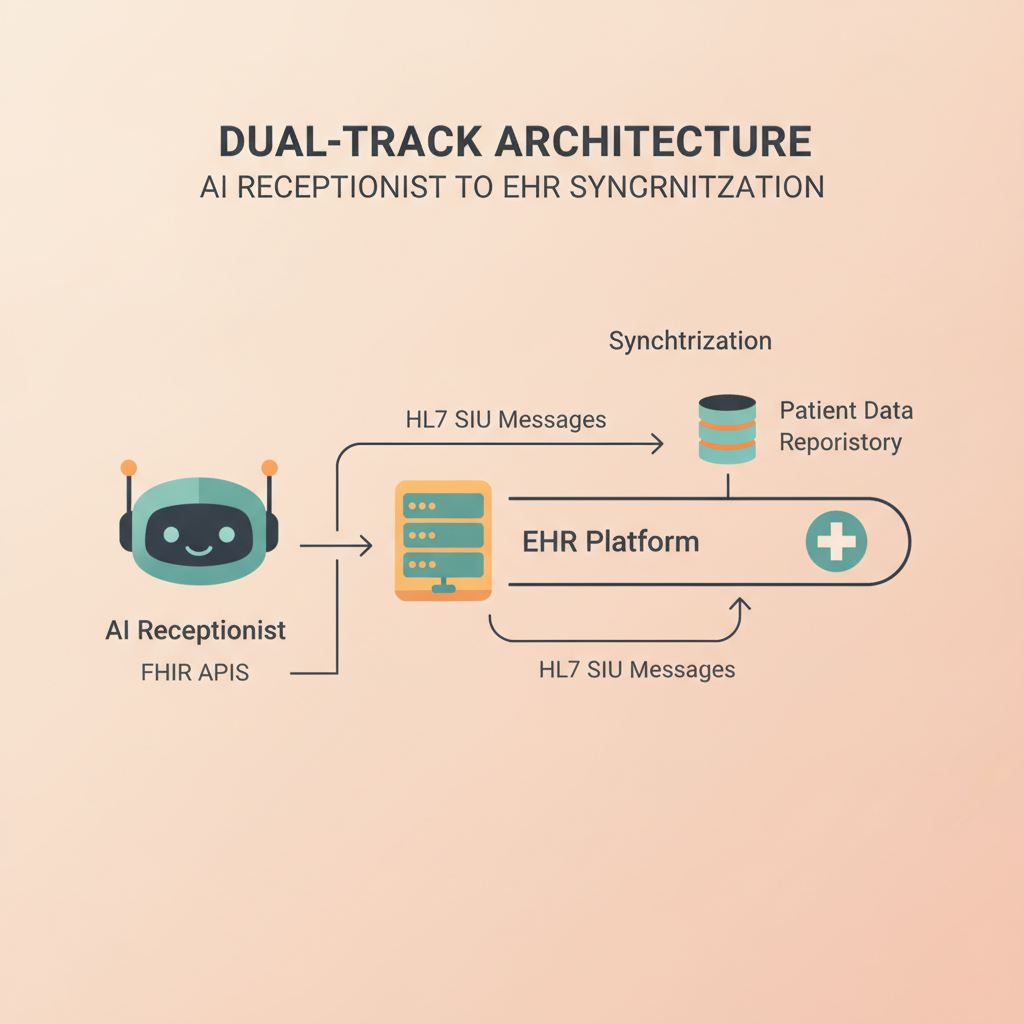
This dual-track architecture uses FHIR APIs to handle agent-initiated bookings and HL7 event listening (specifically SIU messages) to capture clinic-side schedule changes in real time [4]. Here is how the two systems work together:
- FHIR APIs (The Outbound Track): When a patient interacts with the AI receptionist to book an appointment, the AI uses FHIR APIs to query the EHR for available time slots. Once the patient selects a time, the AI writes the appointment details directly back into the EHR.
- HL7 Event Listening (The Inbound Track): If a human receptionist modifies, cancels, or reschedules an appointment directly inside the clinic, the EHR generates an HL7 SIU (Scheduling Information Unsolicited) message. The AI receptionist listens for these events and instantly updates its internal calendar, preventing double-bookings.
Without this dual-track architecture, clinic-side changes will not update the AI agent, leading to scheduling conflicts and operational confusion [3].
Deep Dive: Integration Protocols for Major EHR Platforms
Different EHR systems have unique technical requirements and business rules. A high-quality AI receptionist for service businesses must adapt to these specific platforms natively.
Epic EHR Integration
Epic is known for its strict security standards. Epic EHR requires backend-to-backend authentication using RSA key pairs and signed assertions for AI agents to securely connect to its Cadence scheduling system [5]. This security protocol eliminates the need for shared secrets, ensuring that patient lookup and appointment booking remain fully HIPAA-compliant [5].
Athenahealth Integration
When integrating with athenahealth (athenaOne), AI receptionists like Echo Booking read specific scheduling elements such as departments, providers, appointment types, and durations to book directly into the system [8]. Because the department is the organizing fact of an Athena schedule, the AI must map these rules natively to ensure appointments are written to the correct provider queue [8].
eClinicalWorks Integration
For eClinicalWorks integrations, AI receptionists must schedule against both provider availability and specific physical resources, such as rooms, chairs, or equipment [12]. A direct, two-way integration reads these resource constraints from eClinicalWorks to ensure the AI only books slots where the provider, duration, and required equipment all align [12].
Bridging the Gap with Legacy Systems: Visual AI Integration
Not every practice uses a modern, cloud-based EHR with open APIs. Many clinics rely on legacy, on-premise, or highly customized proprietary systems, often accessed through secure Citrix environments.
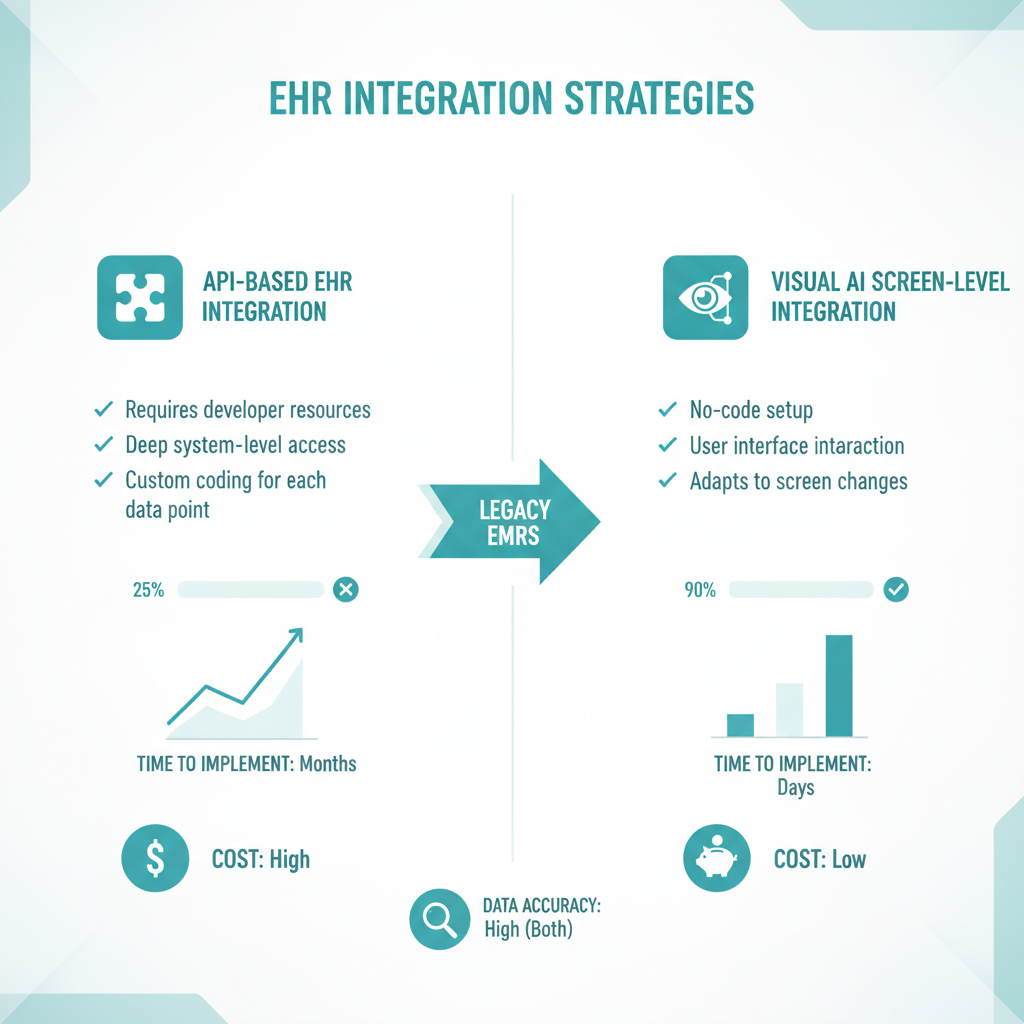
To solve this, Novoflow's Universal EHR Framework utilizes a visual AI approach to navigate legacy or proprietary EHR systems at the screen level without relying on FHIR or HL7 APIs [10]. This visual method reads scheduling grids and form fields exactly like a human receptionist, making it compatible with older systems or EHRs accessed through Citrix environments [10].
The Impact: Why Seamless Integration is a Game-Changer
Implementing a fully integrated AI receptionist solves some of the biggest operational challenges that service businesses face today.
Eliminating Missed Calls and Competitor Leakage
Industry benchmarks show that between 20 percent and 40 percent of inbound calls to medical clinics go unanswered during regular business hours, and nearly 100 percent go unanswered after hours [2]. AI receptionists address this issue by providing 24/7 coverage, eliminating missed calls and preventing potential patients from booking with competitors [2].
According to Salesforce's State of the Connected Customer report, 44 percent of businesses adopt AI receptionists primarily for after-hours coverage rather than replacing human staff [14]. This highlights that the primary driver for AI adoption is extending patient access to nights, weekends, and holidays when the physical office is closed [14].
Enhancing Staff Efficiency
Healthcare practices that automate their front desk with AI receptionists report a 20 percent to 30 percent increase in booked appointments and a 50 percent to 80 percent reduction in front desk labor hours [11]. This efficiency boost is primarily driven by capturing after-hours calls, automating patient intake, and reducing the time staff spend on manual data entry [11].
Automated Insurance Verification
To ensure clean billing, AI receptionists can automatically verify patient insurance eligibility and capture plan details, such as member ID and group numbers, before locking in an appointment slot [13]. Integrating real-time insurance verification into the booking flow prevents scheduling errors, reduces claim denials, and ensures cleaner billing cycles [13].

Calculating the Return on Investment (ROI)
For mid-sized and growing practices, the financial benefits of automation are substantial. A case study of healthcare AI implementations shows an average return on investment (ROI) of 451 percent, with mid-sized organizations saving around 2.4 million dollars within 18 months [6]. These financial gains are achieved through a combination of reduced administrative labor, faster claims processing, and a significant reduction in missed appointment revenue [6].
When evaluating pricing plans for communication tools, clinics should consider how much revenue is lost to missed calls and scheduling errors. Integrating an AI receptionist is not just an administrative upgrade; it is a direct investment in your practice's growth.
Frequently Asked Questions
How does an AI receptionist handle
scheduling conflicts with our EHR?
Modern AI receptionists use bidirectional synchronization via FHIR APIs and HL7 event listening (SIU messages) [4]. This dual-track architecture ensures that any clinic-side schedule changes are instantly read by the AI, preventing double-bookings.
Is the integration between an AI receptionist
and Epic EHR secure?
Yes, integrations with Epic's Cadence scheduling system use backend-to-backend authentication with RSA key pairs and signed assertions [5]. This security standard eliminates shared secrets, keeping patient lookups and bookings fully HIPAA-compliant.
Can an AI receptionist work with legacy
EMR systems that lack modern APIs?
Yes, legacy or Citrix-based systems can be integrated using visual AI frameworks like Novoflow's Universal EHR Framework [10]. This technology navigates scheduling grids and form fields at the screen level, exactly like a human receptionist.
How does the AI know which provider
or room to book in eClinicalWorks?
The AI receptionist reads specific resource constraints directly from eClinicalWorks, including provider availability, appointment duration, and physical resources like rooms or equipment [12]. It only confirms slots where all these elements align.
Does an AI receptionist replace human front desk staff?
No, the primary goal is to extend access and reduce repetitive tasks. Salesforce reports that 44 percent of businesses adopt AI receptionists mainly for after-hours coverage [14], freeing up in-office staff to focus on direct patient care [1].
Can the AI verify patient insurance before booking?
Yes, the AI receptionist can automatically verify insurance eligibility and capture details like member IDs and group numbers before locking in a slot [13]. This reduces booking errors and prevents future claim denials.
Sources
- [1] Resonate App
- [2] Pup Pilot
- [3] OmniMD
- [4] Mexro Technologies
- [5] AI Scan Solutions
- [6] Groww Stacks
- [7] Med Reception
- [8] Echo Booking Athena Integration
- [9] Echo Booking Solutions
- [10] NovoFlow
- [11] Echo Booking Case Studies
- [12] Lead Receipt
- [13] AiNora
- [14] Healos AI
David Friedman - Founder, Conversify · LinkedIn
David Friedman is a B2B operations leader with over 10 years of experience managing large-scale teams and business processes. After years of working with service businesses and seeing how much time was lost to manual customer communication, he founded Conversify, an AI-powered platform that helps healthcare practices and service providers across Europe automate their patient and client interactions. David built the platform from the ground up, working directly with practicing healthcare professionals to ensure every feature solves a real operational pain point. He is based in Spain.