Solve Your Clinic's Missed Call Problem with an AI Receptionist
Discover how implementing an AI receptionist can solve the missed call crisis for small clinics, streamline patient scheduling, and boost practice revenue by up to 27 percent.
By eliminating hold times and bypassing voicemail, AI customer support for small business prevents patient abandonment and captures revenue that would otherwise be lost to competitors. Implementing automated AI tools addresses the critical vulnerabilities of traditional phone lines, where small practices typically miss 30 percent or more of their incoming calls. Instead of forcing patients to wait on hold for an average of 1 minute and 47 seconds, an AI receptionist provides immediate answers, matching the 51 percent of consumers who prefer interacting with bots for instant service. This automated support system integrates seamlessly with messaging channels like WhatsApp and SMS, allowing clinics to capture after-hours booking intent and increase overall operational efficiency. To learn more about how our team helps practices transition to automated systems, visit our About Conversify page. > Key Takeaways:
* Eliminate Missed Calls: Small clinics miss over 30 percent of calls, but AI receptionists provide instant, 24/7 responses.
* Prevent Patient Flight: Since 67 percent of patients will call a competitor rather than wait on hold, immediate AI response protects revenue.
* Boost Revenue: Integrating online booking through AI support can increase overall business revenue by an average of 27 percent.
* Reduce Administrative Costs: AI customer support drops interaction costs by up to 68 percent compared to manual call handling.
The High Cost of Unanswered Calls in
Small Practices Front desk staff at small clinics are frequently overwhelmed by checking in patients, managing physical paperwork, and handling administrative tasks, leaving a significant portion of inbound patient calls unanswered. In fact, research shows that small businesses fail to answer between 22 percent and 62 percent of incoming phone calls. This is a staggering volume of lost communication. When these calls go unanswered, relying on traditional voicemail in a small clinic is highly ineffective. An incredible 85 percent of callers who reach a voicemail inbox hang up without leaving a message. This high abandonment rate means that most potential patients will simply hang up and contact a competitor immediately rather than wait for a callback. For medical practices specifically, the numbers are equally concerning. Medical practices miss an average of 23 percent of incoming calls, with solo and small practices typically experiencing miss rates of 30 percent or more. This means nearly one third of your potential patient base never even gets the chance to speak with your staff. The immediate revenue risk of unanswered calls is severe, as patients seeking care prioritize instant response times over leaving messages. When a clinic relies on a physical front desk to manage both in-person care and a ringing telephone, patient satisfaction and practice revenue both suffer.
Why Hold Times and Voicemails are Killing
Your Patient Acquisition Even when front desk staff manage to answer the phone, the patient experience is often compromised by long hold times. On average, patients wait on hold for 1 minute and 47 seconds when calling a medical office. This delay has a direct, negative impact on patient retention: 34 percent of patients abandon calls entirely after holding for just 2 minutes. Even if a clinic's staff eventually answers, long hold times cause a third of potential patients to hang up before speaking to anyone. Modern consumers expect immediate gratification. This shift in behavior is reflected in how patients react to voicemail: 62 percent of patients will not leave a voicemail when calling a medical office, and 67 percent will call a competing provider instead of waiting for a return call. Patients are no longer willing to wait hours for a busy receptionist to call them back; they want answers now. Fortunately, patient comfort with automated systems is at an all-time high. Statistics indicate that 51 percent of consumers prefer interacting with bots over humans when they want immediate service, and 75 percent prefer AI chatbots for urgent or immediate needs. This demonstrates that patients are increasingly comfortable with automated systems, provided the AI can resolve their inquiries quickly without long hold times. 
Capturing the 41 Percent of After-Hours
Patient Demand One of the greatest limitations of a traditional front desk is the constraint of standard business hours. Approximately 41 percent of all patient calls to medical practices occur outside standard business hours, such as evenings and weekends. Since small clinics are typically closed during these times, these calls normally route to a standard voicemail system, where they are almost entirely lost. An automated AI receptionist solves this by remaining active 24 hours a day, 7 days a week. By deploying AI customer support for small business, clinics can capture after-hours booking intent that would otherwise be lost to voicemail. AI agents, such as those provided by Resolvly [1] or Omago [2], work nights, weekends, and holidays at a fraction of the cost of human staff. This allows your clinic to stay open while you are closed [2], ensuring that a patient looking to book an appointment at 10:00 PM on a Saturday can do so instantly, without waiting until Monday morning.
The Shift to Messaging and Online Scheduling
The modern patient journey has shifted away from phone calls entirely. Today, 67 percent of consumers prefer booking appointments online over calling, and 80 percent would switch healthcare providers for the convenience of online scheduling. Integrating AI customer support for small business that includes automated online booking directly aligns with modern patient preferences, reducing the burden on phone-based scheduling. 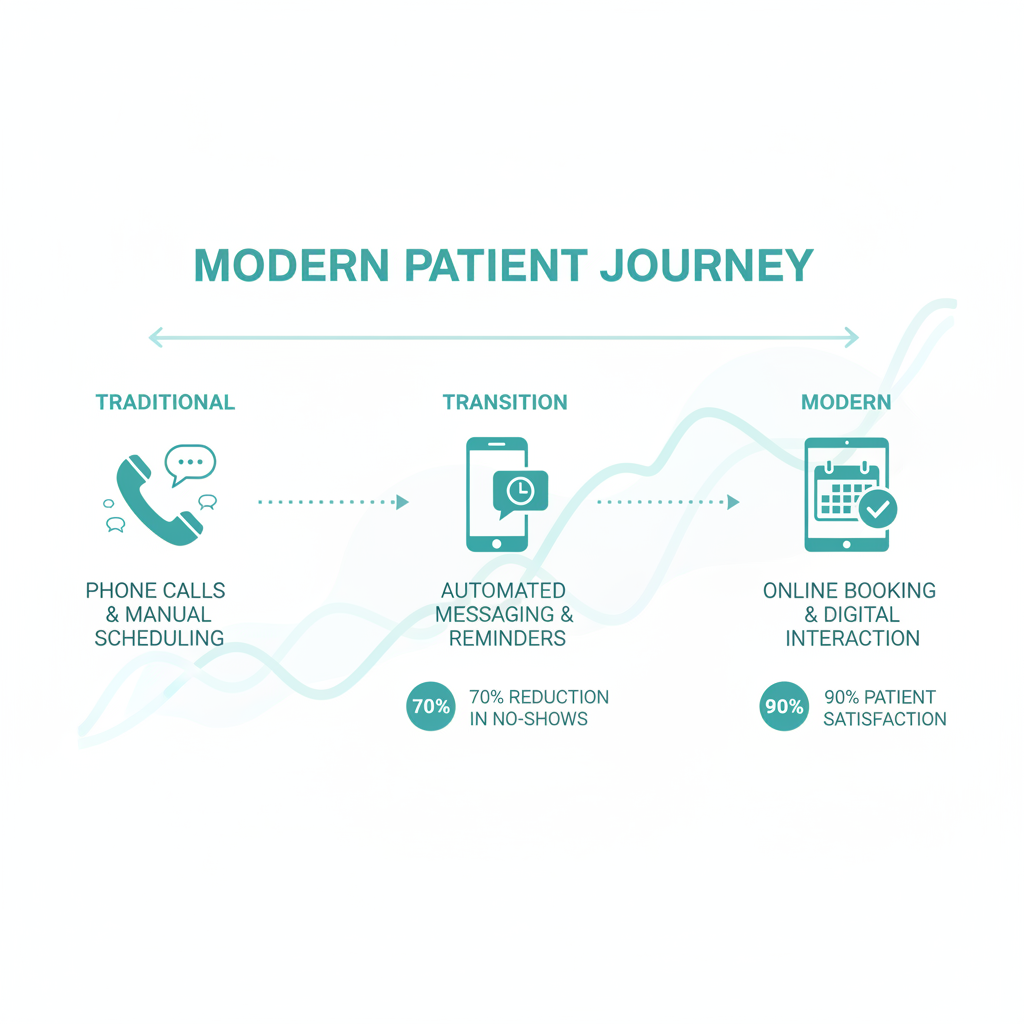 Furthermore, communication preferences have evolved. Approximately 56 percent of consumers prefer to message a business for help rather than call customer support, and 77 percent of patients want appointment reminders via text. Utilizing an AI-powered system that manages a WhatsApp shared inbox with AI auto-responses is a highly effective way to engage patients on the channels they already use. Platforms like CLETUS [3] can automatically learn from your website content to answer patient questions 24/7, capturing visitor information and booking requests seamlessly. By automating the booking process through digital channels, clinics can capture more appointments and significantly boost their bottom line. In fact, businesses that implement online scheduling systems see an average revenue increase of 27 percent.
Calculating the ROI of AI Customer Support
for Small Business For small clinics operating on tight budgets, deploying AI customer support for small business offers a highly cost-effective alternative to hiring additional front-desk staff. AI-powered customer support can reduce the cost per interaction by up to 68 percent, dropping from $4.60 to just $1.45. This drastic reduction in operational costs allows clinics to scale their patient communication without a corresponding increase in overhead. The financial return on investment is incredibly strong. Companies see an average return of $3.50 for every $1 invested in AI customer service, with top performers reporting up to an 8x ROI. This strong financial return makes a compelling business case for small clinics looking to solve their missed call problem through automated AI receptionists. To explore how these cost savings apply to your practice, view our pricing plans.
How to Implement an AI Receptionist
in Your Clinic Transitioning your clinic to an automated AI receptionist is a straightforward process that can be completed in just a few steps. To ensure a smooth rollout, follow this implementation guide: * Step 1: Audit your current phone system to determine your peak call volumes and identify when the majority of your missed calls occur.
- Step 2: Select an AI customer support platform that integrates with your existing communication channels, such as SMS, web chat, or a WhatsApp shared inbox.
- Step 3: Build your AI's knowledge base by feeding it your clinic's frequently asked questions, clinic policies, parking information, and accepted insurance plans. Platforms like CLETUS [3] can crawl your website automatically to build this database in minutes.
- Step 4: Connect your digital scheduling calendar to the AI system so it can book, reschedule, or cancel appointments in real time without human intervention [2].
- Step 5: Establish clear escalation pathways so that complex or clinical questions are instantly routed to your human staff via a unified inbox.
- Step 6: Train your front-desk team on how to monitor the shared inbox and step in when personal, human care is required. For more tips on optimizing your clinic's administrative workflow, check out our related articles.
Comparing AI Receptionists with Traditional
Alternatives To understand why AI is becoming the preferred choice for modern medical practices, it is helpful to compare it against traditional administrative solutions:
| Feature | AI Receptionist | Traditional Answering Service | Hiring Additional Staff |
|---|---|---|---|
| Average Cost | Highly affordable; flat-rate options available [3] | High; often billed per minute or message | Very high; requires salary, benefits, and training |
| Response Time | Instant; zero hold times | Variable; patients often wait in a queue | Variable; dependent on front desk workload |
| 24/7 Availability | Yes; fully functional nights and weekends [1] | Yes; but often incurs premium after-hours fees | No; restricted to standard office hours |
| Booking Integration | Direct; books directly into your scheduling software [2] | Indirect; takes messages for staff to book later | Direct; manually books during the call |
| Patient Preference | High; aligns with preference for messaging and online booking | Low; patients dislike leaving messages with third parties | High; patients appreciate friendly human contact |
Embracing Automated Patient Care Implementing
an AI receptionist is no longer just about adopting new technology; it is about survival in a competitive healthcare market. By ensuring that every single patient call and message is answered instantly, clinics can protect their revenue, reduce staff burnout, and deliver the modern, convenient experience that today's patients demand. An AI receptionist does not replace the human touch of your medical staff; instead, it frees them from administrative burdens so they can focus on what matters most: providing exceptional care to the patients sitting in your waiting room.
Frequently Asked Questions
Will patients hang up if they realize
they are talking to an AI receptionist?
No, the majority of modern patients prioritize speed over human interaction when seeking immediate answers. Research shows that 51 percent of consumers prefer interacting with bots over humans for immediate service, and 75 percent prefer AI chatbots for urgent needs. By providing instant responses, an AI receptionist prevents patients from hanging up and calling a competitor.
How much does it cost to run an AI
receptionist for a small clinic?
The cost of AI customer support for small business is highly economical compared to traditional staffing. Implementing AI can reduce your cost per interaction by up to 68 percent, dropping from $4.60 to just $1.45 per interaction. Some budget-friendly software solutions even offer flat-rate packages starting as low as $29 per month [3].
Can an AI receptionist actually book
appointments directly into our calendar?
Yes, modern AI receptionists integrate directly with digital calendars and scheduling software to book appointments in real time [2]. This automation directly aligns with patient preferences, as 67 percent of consumers prefer booking appointments online over making a phone call.
What happens if the AI receptionist
cannot answer a patient's question?
When faced with a complex or highly specific medical inquiry, the AI receptionist will automatically capture the patient's contact information and escalate the conversation to your human staff [3]. This ensures that urgent clinical questions are handled safely by professionals while routine administrative queries remain automated.
How does an AI receptionist handle after-hours inquiries?
An AI receptionist remains active 24/7, allowing it to capture the 41 percent of patient calls that occur outside standard business hours. It can answer common questions, collect details, and book appointments during evenings and weekends when your physical office is closed [1].
What is the average return on investment
for clinic AI customer support?
Businesses see an average return of $3.50 for every $1 invested in AI customer service, with top-performing organizations reporting up to an 8x ROI. Additionally, clinics that implement automated online scheduling systems experience an average revenue increase of 27 percent by capturing previously missed leads.
Sources [1] [Resolvly, AI Customer Support
for SMBs](https://www.resolvly.ai/) [2] 24/7 AI Customer Service for Small Businesses: Omago [3] CLETUS Chat: AI Chat Agent for Small Business, $29.95/Month Flat Rate
David Friedman - Founder, Conversify · LinkedIn
David Friedman is a B2B operations leader with over 10 years of experience managing large-scale teams and business processes. After years of working with service businesses and seeing how much time was lost to manual customer communication, he founded Conversify, an AI-powered platform that helps healthcare practices and service providers across Europe automate their patient and client interactions. David built the platform from the ground up, working directly with practicing healthcare professionals to ensure every feature solves a real operational pain point. He is based in Spain.