
AI Receptionist ROI: The Ultimate Guide to Front-Desk Automation
Discover the true ROI of implementing an AI receptionist. Learn how automating your front desk captures missed calls, reduces operational costs, and drives revenue growth.
AI receptionist ROI refers to the financial and operational return businesses gain by automating front-desk communications. Traditional front desks miss a staggering number of inbound inquiries, directly translating to lost revenue. By deploying an AI receptionist, businesses can handle unlimited simultaneous calls, automate scheduling, and provide 24/7 coverage. With Conversify, companies can instantly capture after-hours leads, manage a WhatsApp shared inbox, and automate appointment bookings using our flexible pricing plans. This transition from manual call handling to automated, AI-driven customer communication helps service providers recover lost opportunities while significantly reducing overhead costs.
What is the Real Financial Impact of Missed Calls?
Many business owners underestimate how much unanswered phones cost their bottom line. Research shows that small businesses lose an average of $126,000 in annual revenue to missed calls [10]. This massive loss stems from a structural issue; approximately 62% of incoming calls to small service businesses go completely unanswered [10]. When a call goes to voicemail, the opportunity is almost always lost. In fact, 85% of those callers never call back, choosing instead to contact a competitor who answers immediately [10]. This problem is even more severe for specialized professional service offices. When prospective clients call a business, they expect immediate engagement. If they encounter a busy signal or are placed on hold, they simply hang up. An AI receptionist acts as a safety net, ensuring that no call is ever missed, regardless of how busy the physical front desk might be.
How Does an AI Receptionist Reduce Operational Costs?
Hiring, training, and retaining front-desk staff is one of the largest overhead expenses for any local business. Traditional staffing models are increasingly difficult to maintain due to rising labor costs and severe talent shortages. An AI receptionist offers a highly cost-effective alternative. While a full-time human receptionist typically costs between $30,000 and $60,000 per year, an AI receptionist usually costs between $600 and $4,800 per year [5]. This represents an 87% to 97% reduction in operational front-desk costs while providing 24/7 coverage and the ability to handle unlimited simultaneous calls [5]. 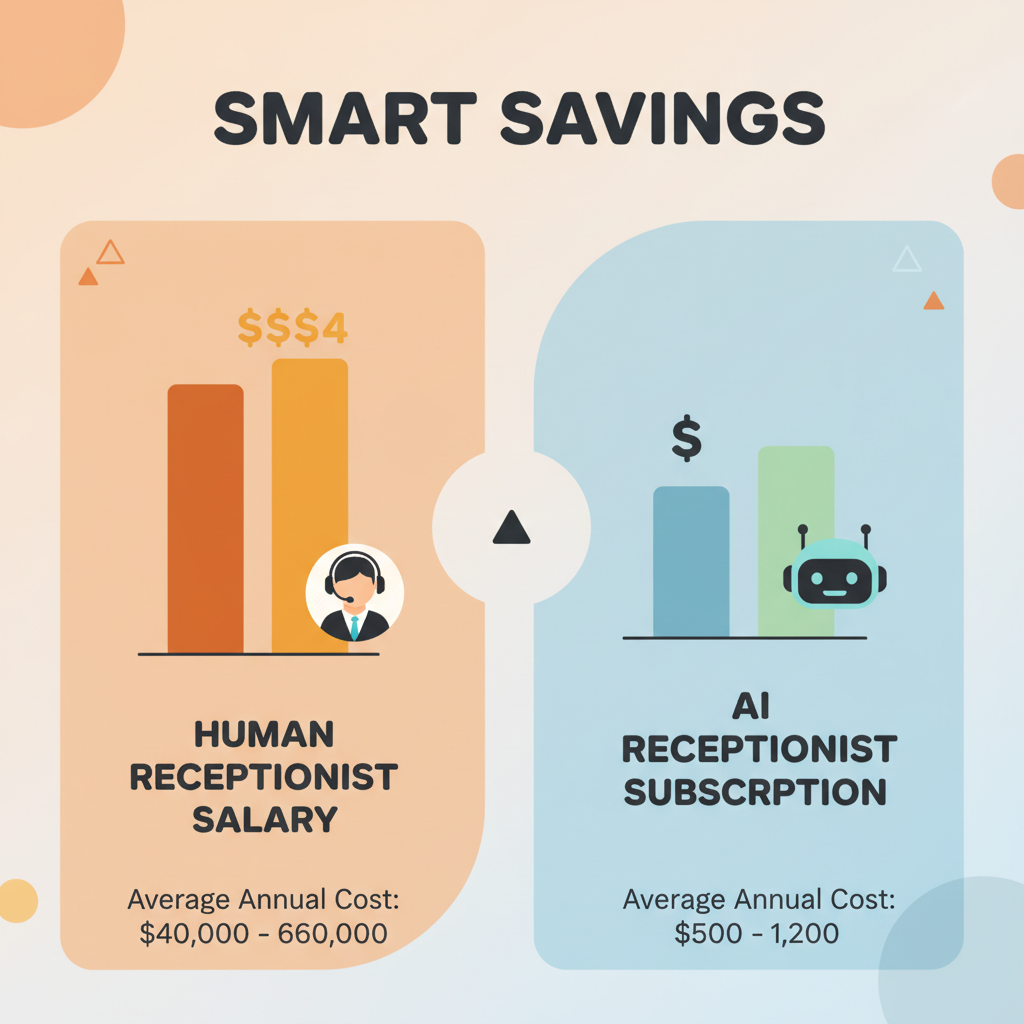 These savings are not just theoretical. By shifting repetitive tasks to an AI assistant, businesses can optimize their existing staff. Instead of answering the phone dozens of times a day to answer basic questions about hours or directions, employees can focus on delivering exceptional service to the customers who are physically in the building. To learn more about our mission, visit About Conversify.
What is the Average AI Receptionist ROI for Service Businesses?
The return on investment for automating your front desk is both rapid and substantial. Service offices deploying advanced AI front desks typically see an annualized ROI between 3x and 8x their subscription cost within the first year, with payback periods of just 1 to 3 months [8]. This rapid return is highly sensitive to the business's average appointment value and baseline call abandonment rate [8]. For offices looking to maximize efficiency, the returns can be even higher.g., Conversify) |
| --- | --- | --- |
|---|---|---|
| Annual Cost | $30,000 to $60,000 [5] | $600 to $4,800 [5] |
| Call Answer Rate | Average 66% (34% missed) [2] | 100% [11] |
| Simultaneous Calls | 1 call at a time | Unlimited simultaneous calls [5] |
| Coverage | Standard business hours | 24/7/365 coverage [5] |
How Do AI Receptionists Drive Direct Revenue Growth?
An AI receptionist does not just save money; it actively generates revenue by capturing opportunities that would otherwise be lost. A significant portion of consumer demand occurs outside of standard business hours. Approximately 35% to 40% of all business calls arrive after hours when human staff are unavailable [1]. AI receptionists capture 15% to 20% more appointments from these after-hours calls that would otherwise go straight to voicemail [1]. 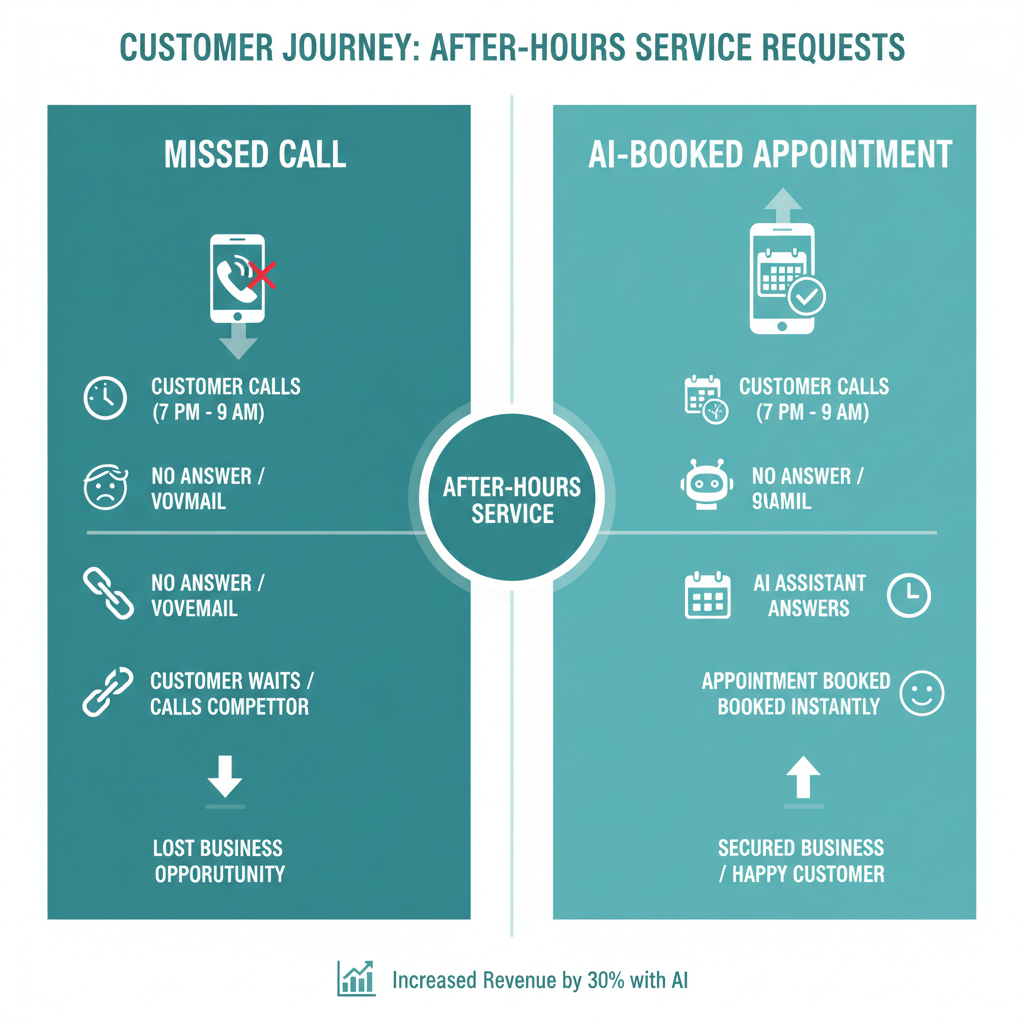 Furthermore, AI receptionists are highly effective at keeping calendars full. Additionally, implementing AI-driven scheduling assistants leads to a 20% to 30% reduction in missed appointments [12]. By sending automated confirmations and allowing clients to reschedule easily, the system saves administrative staff 10 to 15 hours per week [12]. This automation ensures that bookings are captured around the clock without requiring manual intervention from the office team [12].
Why Customer Satisfaction is Key to
Long-Term ROI Some business owners worry that automated systems might alienate customers. However, modern voice and text AI tools provide an incredibly smooth experience. AI receptionists achieve high customer satisfaction ratings of 85% to 92% in post-call surveys, with 99% of callers expressing positive or neutral sentiment [10]. This high level of acceptance is driven by immediate response times, accurate call routing, and the complete elimination of hold times [10]. Customers appreciate getting their questions answered instantly without having to wait on hold or wait for a callback. 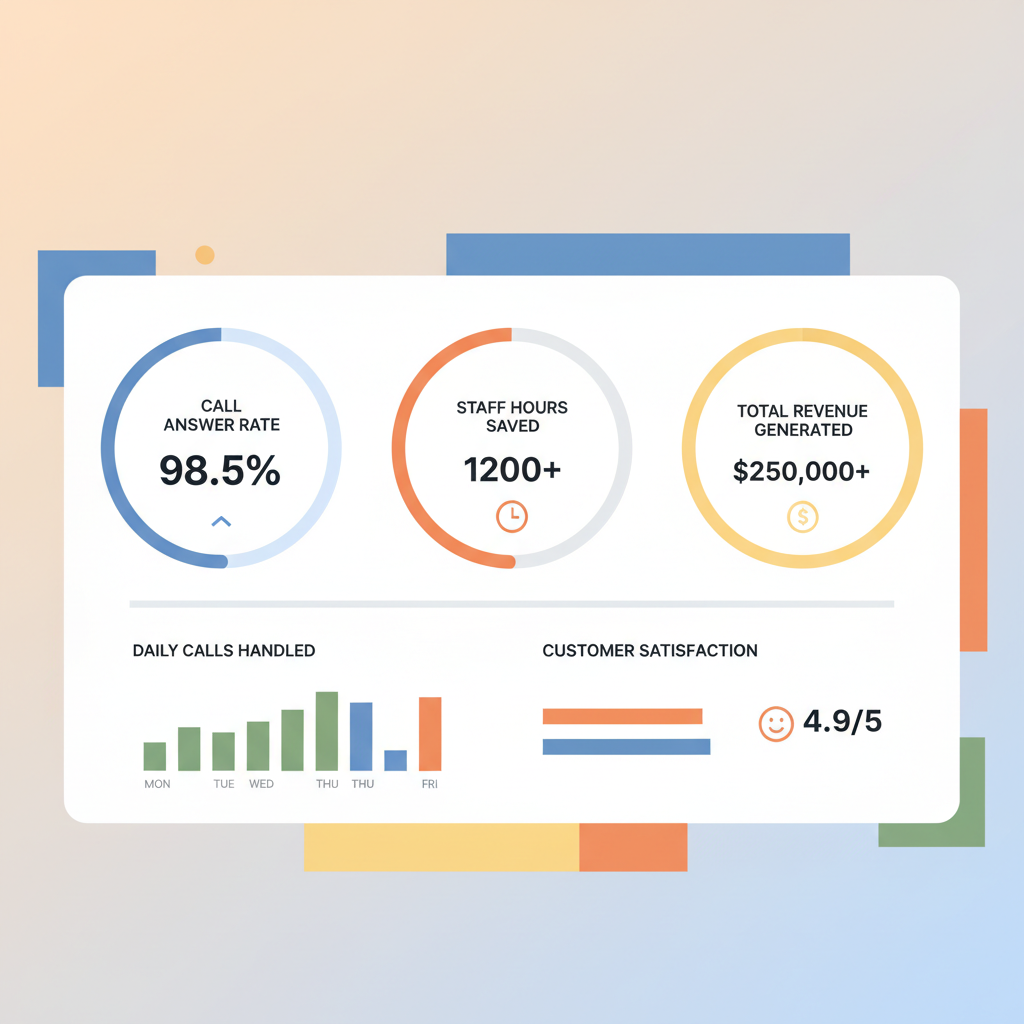 This efficiency has a massive impact on internal operations. Service providers achieve a 30% improvement in administrative efficiency after implementing AI receptionists, with 70% of routine calls requiring no human intervention [4]. This allows office staff to focus on higher-value tasks and in-person customer care rather than answering repetitive phone inquiries [4]. Because of these benefits, adoption is growing rapidly.
How to Implement an AI Receptionist
and Maximize Your ROI Transitioning to an automated front desk is a straightforward process that can yield immediate results. To get the most out of your AI receptionist, follow these key steps: - Step 1: Audit your current call volume. Track how many calls your team misses during busy hours and after standard business hours.
- Step 2: Define your booking rules. Establish clear guidelines for appointments, deposit requirements, and cancellation policies.
- Step 3: Integrate with your calendar. Ensure your AI receptionist has real-time access to your booking calendar to prevent double bookings.
- Step 4: Set up multi-channel communication. Use an all-in-one platform like Conversify to manage calls, text messages, and WhatsApp inquiries in a single shared inbox.
- Step 5: Automate routine inquiries. Input answers for your most common questions, such as pricing, location, and hours of operation.
- Step 6: Train your team. Educate your staff on how to monitor the AI system and handle complex, high-value inquiries that require human intervention. By taking these steps, you can ensure your business captures every lead, keeps your calendar full, and delivers an exceptional customer experience. Read our related articles to learn more about optimizing your digital front desk.
Frequently Asked Questions
What is the average ROI of an AI receptionist?
Most service businesses see an annualized ROI between 3x and 8x their subscription cost within the first year [8]. Some highly optimized offices even report up to a 14x return on investment [11]. This rapid return is driven by capturing missed calls and reducing front-desk labor costs.
How much money can an AI receptionist save my business?
An AI receptionist typically costs between $600 and $4,800 per year, compared to $30,000 to $60,000 for a full-time human receptionist [5]. This represents an 87% to 97% reduction in front-desk operational costs [5]. On average, small and mid-sized offices save around $87,000 annually [11].
How do AI receptionists handle after-hours inquiries?
Approximately 35% to 40% of all business calls arrive after standard business hours [1]. An AI receptionist answers these calls instantly, booking appointments and answering questions 24/7. This capability allows businesses to capture 15% to 20% more appointments from after-hours leads [1].
Can an AI receptionist help reduce unfilled appointment slots?
Yes, service providers using AI receptionists report 31% fewer unfilled appointment slots [2]. The system achieves this by instantly capturing cancellation calls and offering those open slots to waitlisted clients. This ensures your calendar remains full without manual outreach.
Do customers like interacting with AI receptionists?
Yes, AI receptionists achieve high customer satisfaction ratings of 85% to 92% in surveys, with 99% of callers expressing positive or neutral sentiment [10]. This high rate of satisfaction is due to immediate response times, accurate information, and the elimination of hold times.
How does an AI receptionist improve staff efficiency?
Implementing an AI receptionist leads to a 30% improvement in administrative efficiency, with 70% of routine calls handled without human intervention [4]. This saves front-desk staff 15 to 20 hours per week [11]. As a result, your team can focus on in-person customer care and high-value tasks.
Sources [1] [Brilo.ai AI Receptionist
Trends 2026](https://www.brilo.ai/resources/ai-receptionist-trends-2026)
- PatientDesk.ai Dental Practice AI Revolution
- Zenoti AI Receptionist ROI and Phone Revenue
- Naitive.cloud Voice AI Healthcare ROI Case Studies
- DigitalPhone.ai AI ROI Analysis
- Lucrovox ROI of an AI Receptionist
- Globe Market Research AI Receptionist Market Statistics
- OmniMD AI Front Desk ROI Calculator
- GetNextPhone AI Receptionist Statistics
- CallBird AI Receptionist Statistics and Insights
- LetsAskClaire State of AI Receptionists in Professional Offices
- Conversify Is an AI Receptionist Worth It? Implementing an AI receptionist is one of the fastest ways to eliminate missed calls, reduce front-desk overhead, and capture lost revenue. By partnering with Conversify, your business can automate scheduling, manage all customer messages in a unified inbox, and provide 24/7 coverage. If you are ready to scale your operations and maximize your front-desk efficiency, explore our platform and see how we can help your business grow.
David Friedman - Founder, Conversify · LinkedIn
David Friedman is a B2B operations leader with over 10 years of experience managing large-scale teams and business processes. After years of working with service businesses and seeing how much time was lost to manual customer communication, he founded Conversify, an AI-powered platform that helps healthcare practices and service providers across Europe automate their patient and client interactions. David built the platform from the ground up, working directly with practicing healthcare professionals to ensure every feature solves a real operational pain point. He is based in Spain.