What Is Front Office Automation? The Complete Guide to Scaling Your Service Business
Learn how front office automation can transform your service business. By automating scheduling, reminders, and routine inquiries, you can capture after-hours bookings and reduce no-shows by up to 38%.
Front office automation refers to the integration of digital tools and artificial intelligence to manage customer-facing tasks like scheduling, inquiries, and follow-ups without manual staff intervention. This automation streamlines administrative workflows, eliminates front desk bottlenecks, and ensures that customer communications are handled 24/7. Implementing front office automation allows service businesses, such as salons, restaurants, stores, and agencies, to scale operations without increasing headcount. By automating repetitive administrative tasks, teams save significant time while elevating the customer experience. This technology ensures no inquiry goes unanswered, transforming how modern organizations manage their daily customer interactions. To learn more about optimizing your customer interactions, explore our related articles.
Why Service Businesses Are Turning to
Front Office Automation Modern service businesses face unprecedented administrative pressures. Front desk staff are often overwhelmed by a constant stream of phone calls, scheduling requests, and routine inquiries, leaving little time for high-value, in-person customer service. This operational bottleneck is why organizations are actively prioritizing front office automation to manage high-volume, high-friction workflows where staffing pressures are most acute [11]. This widespread adoption is driven by the clear efficiency gains that automation provides. When repetitive tasks are offloaded to intelligent software, employees can focus on more strategic initiatives. In fact, McKinsey estimates that 60% of employees could save 30% of their time by utilizing business process automation [10]. This potential time savings demonstrates how automating repetitive front office tasks can significantly boost overall staff productivity and operational efficiency.
The High Cost of Manual Front Desk Operations
Relying solely on manual processes for front desk operations is a costly strategy. Missed appointments and uncaptured leads directly impact a business's bottom line. For instance, missed appointments cost service industries an estimated $150 billion annually, but automated text reminders can reduce no-show rates by 30% to 38% [1]. This massive financial drain highlights why businesses are increasingly adopting automated outreach to protect their revenue. Beyond missed appointments, the sheer volume of manual administrative work drains valuable staff energy. Automating these high-friction administrative workflows can dramatically reduce front office bottlenecks and alleviate staff burnout. 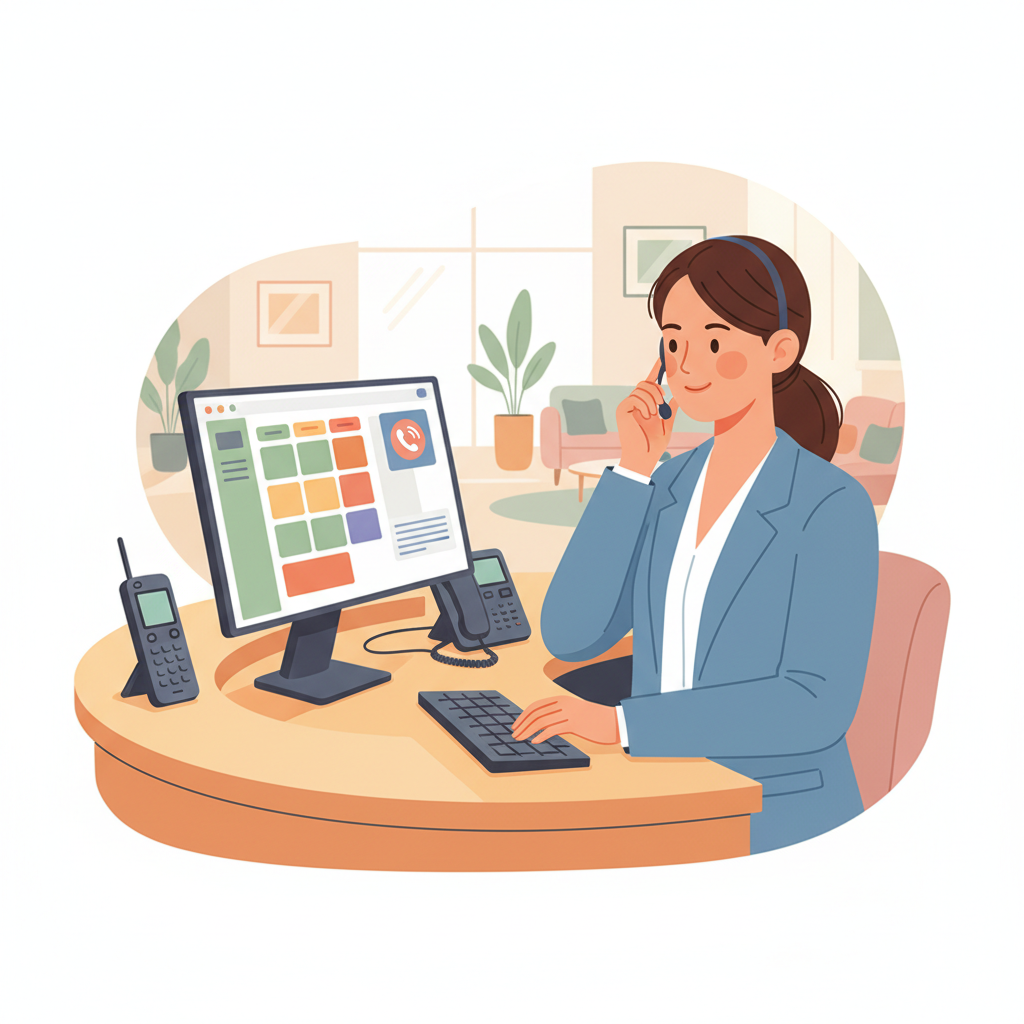
Key Features of an AI-Powered Front
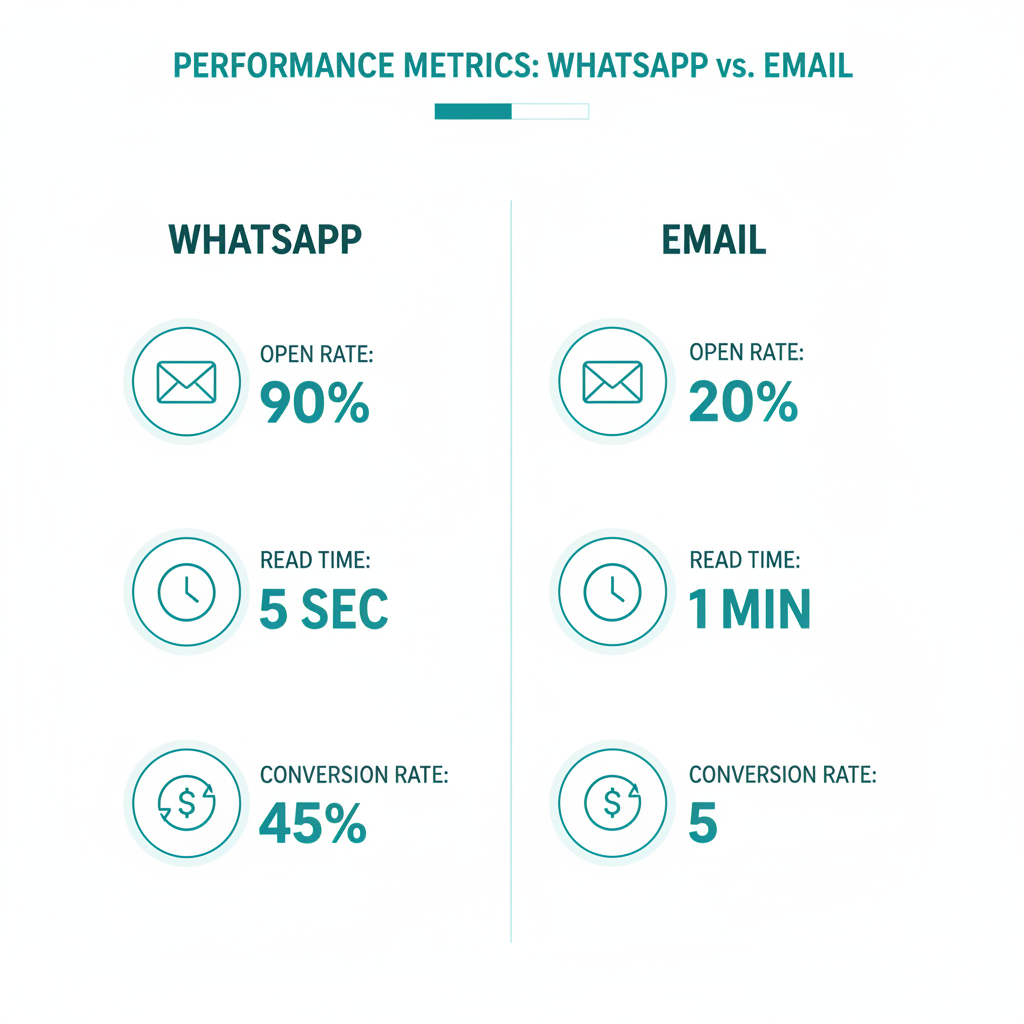
Office To build an efficient automated front office, businesses must leverage the communication channels their customers already prefer. Traditional methods like email and phone calls are increasingly ignored, making modern messaging platforms essential. - Instant Messaging Dominance: WhatsApp Business messages achieve an open rate of 95% to 98%, compared to just 20% to 25% for traditional email [4]. This exceptionally high visibility makes WhatsApp a highly effective channel for automated appointment reminders, customer communication, and marketing.
- Rapid Response Times: Between 80% and 90% of WhatsApp messages are read within 3 to 5 minutes of delivery [5]. This near-instantaneous read rate ensures that time-sensitive communications, such as same-day appointment openings or waitlist notifications, are seen and acted upon immediately.
- Intelligent Query Resolution: AI-powered WhatsApp chatbots can resolve up to 80% of routine customer inquiries without any human intervention [6]. Automating these repetitive questions frees up front office staff to focus on complex customer needs and high-value, in-person care.
- High-Converting Campaigns: Personalized and automated WhatsApp campaigns can achieve conversion rates of 45% to 60%, compared to just 2% to 5% for standard email and SMS [6]. Meeting customers on their preferred messaging platform allows businesses to resolve objections in real time and drive significantly higher booking and sales rates.
How to Implement Front Office Automation
in Your Business Transitioning to an automated front office does not have to be overwhelming. By following a structured approach, service businesses can seamlessly integrate AI tools into their existing workflows. - Step 1: Audit your current front desk workflows. Identify the repetitive tasks that consume the most staff time, such as answering FAQs, scheduling appointments, or sending reminders.
- **Step 2: Choose a unified platform.
- Step 3: Set up automated appointment scheduling. Implement a 24/7 automated booking system. This allows you to capture the 40% of appointments that are booked after standard business hours [1], [2].
- Step 4: Deploy AI-powered messaging channels. Connect your business WhatsApp account to your automation platform. Configure AI chatbots to handle up to 80% of routine inquiries instantly [6].
- Step 5: Monitor performance and optimize. Track key metrics such as response times, booking rates, and staff time saved to continuously refine your automated workflows. A customer happily booking an appointment on their mobile phone via a sleek WhatsApp chat interface
Comparing Front Office Automation Tools: Conversify vs.
Alternatives When evaluating front office automation tools, businesses have several options, including ManyChat, respond.io, and Intercom. However, many of these platforms require complex setup processes, custom coding, or expensive integrations that are impractical for small to medium service businesses. This significantly reduces setup time and ensures a superior customer experience. Furthermore, the financial return on this technology is realized rapidly. Research shows that 60% of organizations achieve a full return on investment within 12 months of implementing business process automation [10]. This rapid payback period is driven by immediate labor savings, error reductions, and the ability to handle higher booking volumes without increasing headcount.
Frequently Asked Questions
What is front office automation?
Front office automation is the use of digital tools and artificial intelligence to handle customer-facing tasks such as scheduling appointments, answering routine inquiries, and sending reminders. By automating these repetitive workflows, businesses can operate 24/7, reduce staff burnout, and improve overall operational efficiency.
How does front office automation reduce appointment no-shows?
Front office automation reduces no-shows by sending timely, automated text reminders directly to customers' preferred messaging apps. Research shows that these automated reminders can reduce appointment no-show rates by 30% to 38%, protecting business revenue [1].
Why is WhatsApp highly effective for front office automation?
WhatsApp is exceptionally effective because of its unmatched engagement rates. WhatsApp Business messages achieve an open rate of 95% to 98%, and between 80% and 90% of these messages are read within 3 to 5 minutes of delivery [4], [5].
Can AI chatbots handle complex customer inquiries?
While AI chatbots excel at resolving up to 80% of routine customer inquiries without human intervention, they are designed to hand off complex or sensitive issues to live staff [6]. This hybrid approach ensures customers always receive the appropriate level of support.
What is the typical return on investment for front office automation?
Most businesses see a rapid return on investment after automating their front desk. Specifically, 60% of organizations achieve a full return on investment within 12 months of implementing business process automation due to labor savings and increased booking volumes [10].
How does front office automation capture after-hours business?
Automated scheduling systems remain active 24/7, allowing customers to book appointments whenever they want. This is crucial because approximately 40% of customer and client appointments are booked after standard business hours [1], [2]. Embracing front office automation is no longer a luxury; it is a necessity for service businesses looking to remain competitive and scale efficiently. By automating routine inquiries and scheduling, you can reclaim hours of lost time, eliminate costly booking errors, and provide the instant, modern communication experience that customers expect. Learn more About Conversify and start transforming your front desk operations today.
Sources
- Appointment Booking Statistics
- How AI Scheduling Improves Booking
- Why Front Desk Automation Is the Next Efficiency Frontier
- WhatsApp Business Statistics
- WhatsApp Business Automation Guide
- Powerful WhatsApp Marketing Statistics
- WhatsApp Statistics
- Front Office Automation Glossary
- Front Office Automation Revolutionizing Operations
- Business Automation Statistics
- Automatic for the People: AI for Front Office Access
- Why Front Office Automation Alone Isn't Enough for Operations
David Friedman - Founder, Conversify · LinkedIn
David Friedman is a B2B operations leader with over 10 years of experience managing large-scale teams and business processes. After years of working with service businesses and seeing how much time was lost to manual customer communication, he founded Conversify, an AI-powered platform that helps healthcare practices and service providers across Europe automate their patient and client interactions. David built the platform from the ground up, working directly with practicing healthcare professionals to ensure every feature solves a real operational pain point. He is based in Spain.