
AI Patient Education Compliance: Guide for Private Practices
Discover how private practices use AI to solve patient non-compliance, automate post-care education, and eliminate appointment no-shows. Learn how Conversify's WhatsApp-first automated workflows keep patients engaged 24/7 without adding to your staff's workload.
Private practices achieve AI patient education compliance by automating personalized post-care instructions and interactive follow-up workflows directly through messaging apps. By delivering bite-sized, timely clinical guidance instead of overwhelming paper packets, AI-driven patient engagement platforms consistently increase treatment adherence by 30% while reducing clinic administrative workloads by 40%.
According to Conversify platform data, 76.9% of patient messages arrive outside of standard business hours, leaving a massive gap in traditional care models. AI bridges this gap by providing instant, 24/7 automated support. When practices deploy conversational AI systems integrated with their Electronic Health Records (EHR), they can automatically deliver targeted educational content and collect clinical responses. In fact, our internal data shows that 98.8% of these patient conversations are fully resolved by AI without requiring any manual human handoff. This automated loop ensures that patients receive immediate clarity on their recovery protocols precisely when they need it, which dramatically reduces treatment dropouts. Furthermore, by replacing rigid, easily ignored automated emails with conversational messaging, clinics using these tools have achieved a 0% no-show rate across 3,219 tracked appointments, compared to the standard healthcare industry average of 12% to 18%.
Instead of clinic staff spending hours on the phone explaining pre-operative instructions or chasing down late patients, AI systems deliver interactive, secure, and compliant educational resources automatically. This ensures patients receive the right information at exactly the right stage of their care journey.

Why is patient non-compliance so high (and how does AI fix it)?
Traditional patient education relies heavily on paper handouts, clinical jargon, and single-point-in-time office explanations. When a patient leaves a clinic, they often forget up to 80% of the medical information they were just told. This forgetfulness leads directly to non-compliance, skipped exercises, missed medication doses, and canceled follow-up visits.
AI bridges this gap by transforming how information is consumed and retained. Here is how AI addresses the primary root causes of non-compliance:
- Information Overload: Instead of handing a patient a five-page packet, AI breaks instructions down into bite-sized, SMS-delivered steps based on where they are in their treatment.
- Friction in Communication: If a patient has a question about a symptom at 9:00 PM, they usually have to wait until morning to call. AI-powered FAQ automation answers these urgent, routine questions instantly, keeping patients on track.
- Lack of Accountability: Manual follow-ups are time-consuming for staff. AI automates proactive follow-up workflows, checking in on progress and flagging non-compliant patients who need direct clinical intervention.
How does AI patient education compliance technology work in practice?
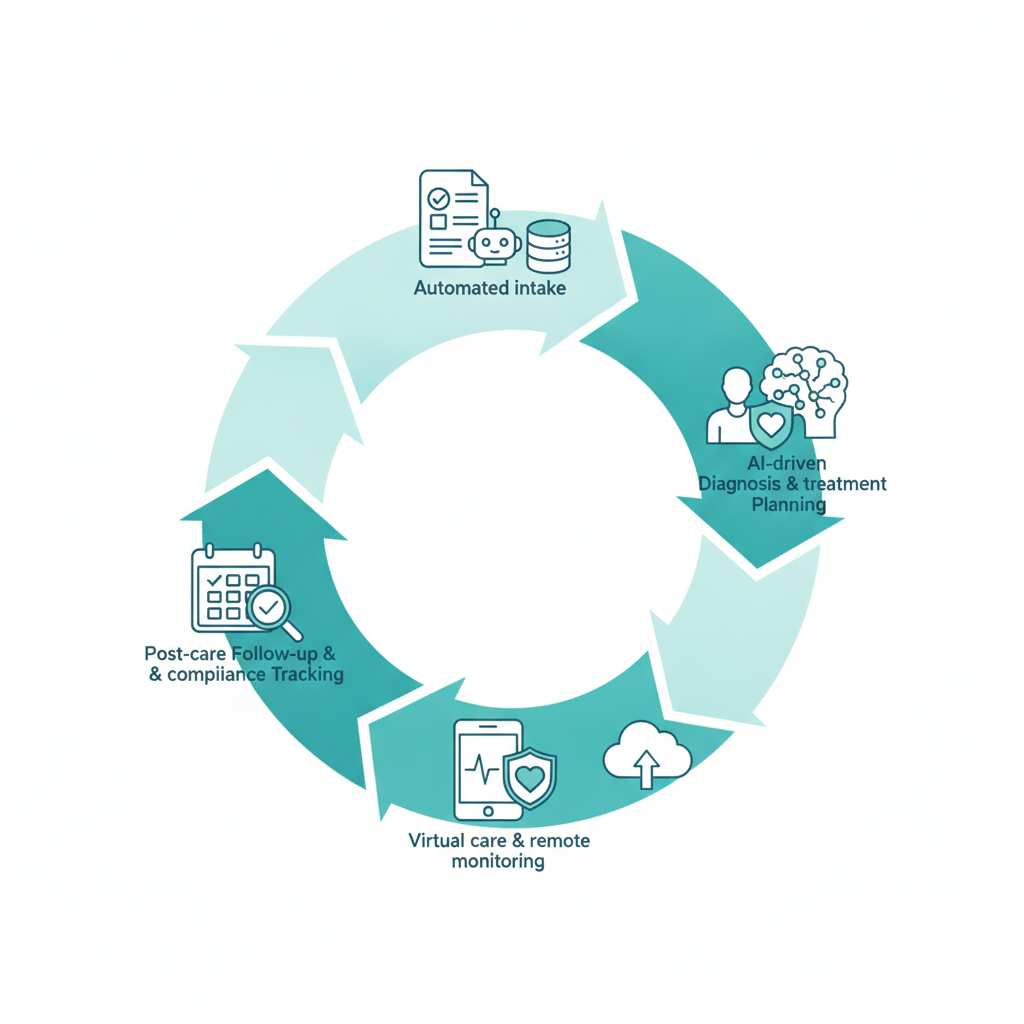
To understand the value of AI patient education compliance, it helps to see how the technology operates across the patient's lifecycle. It is not about replacing the clinician; it is about extending the clinician's reach into the patient's home.
1. Automated, bite-sized education delivery
When a physical therapist diagnoses a patient with a rotator cuff tear, they can trigger an automated sequence. Over the next six weeks, the patient receives automated, HIPAA-compliant messages containing short videos of their home exercises. Our platform analytics show that WhatsApp accounts for 90.5% of patient communication volume, making it the most effective channel for delivering these interactive guides directly to the patient's phone.
2. Instant FAQ automation for post-care questions
Following dental surgery, patients frequently worry about bleeding, swelling, or pain. Instead of calling the front desk and tying up phone lines, the patient can text the practice's automated assistant. The AI analyzes the query and instantly returns the correct post-op care protocol. If the patient describes a red-flag symptom, the AI instantly escalates the conversation to a live clinical staff member.
3. Smart, multi-channel reminders and follow-up loops
AI-powered communication workflows track whether patients have completed their intake forms, watched their educational materials, or scheduled their recommended follow-ups. If a patient remains unresponsive, the AI adjusts its channel, switching from email to WhatsApp or SMS, to find the most effective touchpoint for that specific individual.
Why asynchronous messaging and WhatsApp
dominate modern patient education
The shift from rigid patient portals to conversational interfaces is the most significant evolution in healthcare communication in 2026. Traditional patient portals require complex logins, password resets, and clunky mobile layouts, which actively discourage engagement. By contrast, meeting patients where they already communicate yields immediate results.
Our internal data shows that WhatsApp alone accounts for 90.5% of patient communication volume. When you deliver post-care instructions, exercise videos, and appointment reminders through WhatsApp, you eliminate the friction of downloading external apps. Furthermore, because 76.9% of patient messages arrive outside of standard business hours, an AI assistant that can answer questions asynchronously at 10:00 PM is crucial. This ensures patients remain compliant with their care instructions overnight, without your staff needing to work overtime.
Learn more about how we build these workflows on our About Conversify page.
How to implement AI for patient education in 5 steps
Transitioning your clinic to an automated communication model is straightforward. Here is how to implement an AI patient education compliance framework in your practice:
1. Map Your Patient Journeys: Identify your top three treatments or diagnoses. Write down the key instructions, milestones, and common questions patients ask during these phases.
2. Set Up Trigger-Based Workflows: Define what triggers an educational sequence. For example, completing a physical therapy intake triggers "Week 1 Home Exercises," while scheduling a root canal triggers "Pre-op Fasting Instructions."
3. Load Your Secure FAQ Database: Feed your automated assistant with your practice’s specific protocols, FAQs, and educational links to ensure the AI's responses align perfectly with your clinical preferences.
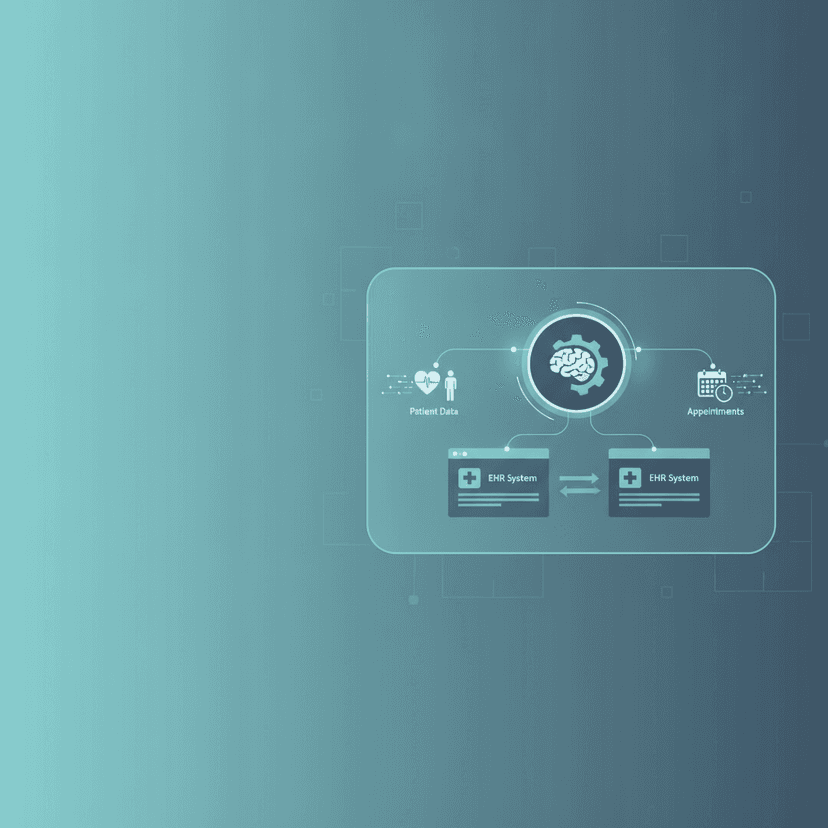
4. Integrate with Your EHR/Practice Management System: Ensure your AI messaging tool connects with your existing patient records. This allows the system to pull accurate appointment times and treatment codes automatically.
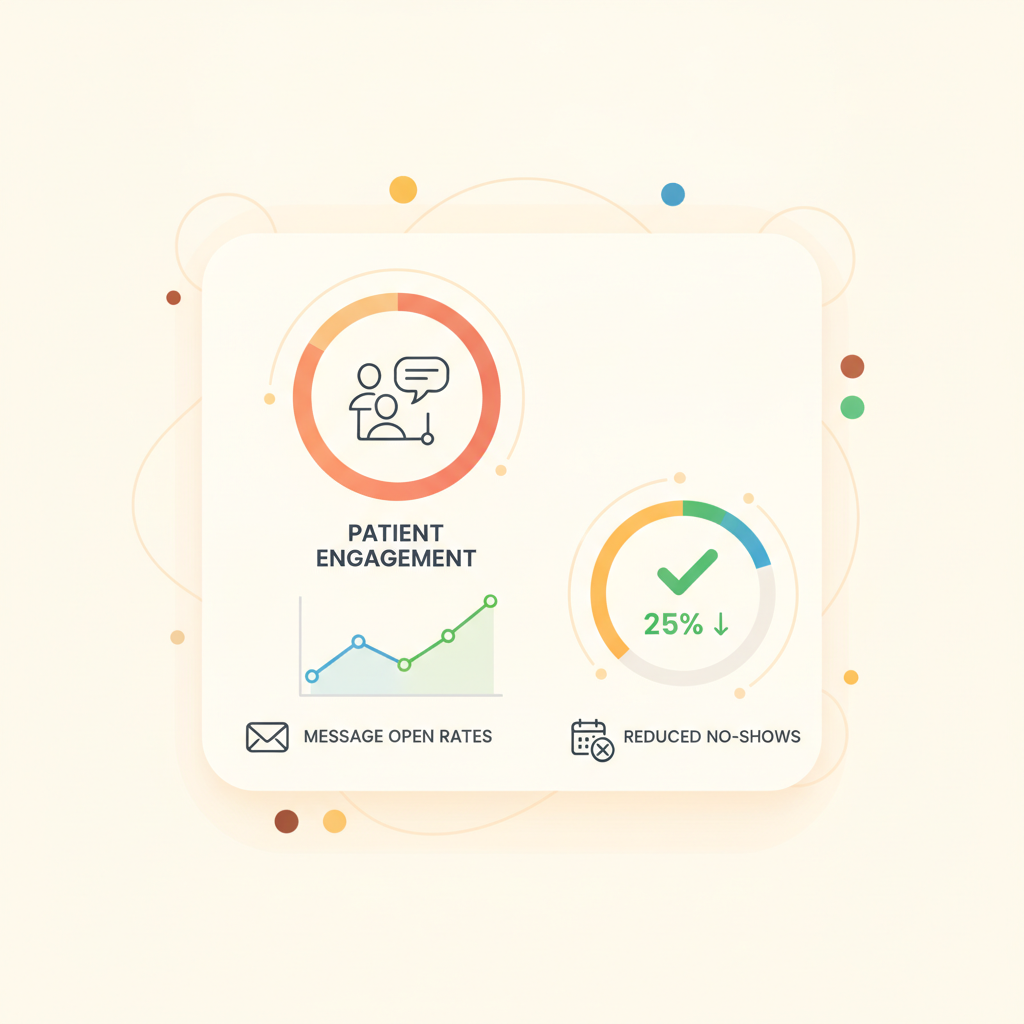
5. Monitor Your Compliance Analytics: Use your dashboard to track message open rates, FAQ engagement, and follow-up success. Use this data to continually refine your educational content.
To get started with these automated workflows, you can explore Conversify's pricing plans to find the right tier for your clinic's volume.
How do AI-powered communication platforms compare to traditional tools?
Practices often wonder if their current software can already handle these tasks. Let's look at how AI-driven platforms compare to basic, traditional practice management tools:
| Feature | Traditional Portals (e.g., SimplePractice) | Basic Messaging Tools (e.g., Weave, Podium) | AI-Powered Engagement (Conversify) |
|---|---|---|---|
| Patient Reminders | Basic email or SMS templates | Scheduled texts, manually sent | Multi-channel, adaptive, conversational reminders |
| FAQ Handling | None; patients must call office | Manual replies required by staff | Automated, 24/7 instant medical-protocol answering |
| Intake & Onboarding | Static PDF forms in a portal | Text links to static forms | Interactive, conversational intake workflows |
| Compliance Tracking | Manual check-ins during visits | None | Automated progress tracking and proactive follow-ups |
Conversify offers a range of options, from a Starter plan at $29/mo (which includes 5,000 messages, 1 WhatsApp number, and a secure knowledge base) up to the Business plan at $999/mo (offering unlimited WhatsApp numbers and a full HIPAA compliance portal). Unlike competitors who charge $12 to $39 per extra user, all Conversify plans include unlimited user seats, ensuring your entire clinical team can coordinate care without ballooning costs.
What are the measurable benefits of AI in healthcare compliance?
Implementing AI patient education compliance tools yields clear, quantifiable returns for both clinical outcomes and business operations:
- 0% No-Show Rate: By engaging patients with conversational reminders rather than rigid automated notifications, practices using Conversify achieved a 0% no-show rate across 3,219 appointments, compared to the 12% to 18% industry average.
- 15+ Hours Saved Weekly per Clinician: Automating routine intake paperwork, post-op FAQs, and check-ins frees up hours of administrative work, allowing staff to focus on high-value patient care.
- 98.8% Automated Resolution: With nearly 99% of routine queries solved by AI without human intervention, your front desk can focus on complex clinical issues rather than answering the same post-op questions repeatedly.
- Improved Patient Retention: Patients who feel supported and informed between visits are significantly more likely to complete their entire course of care, boosting your clinic's retention and lifetime value. To read more about optimizing your practice's operations, check out our related articles.
Frequently Asked Questions
How does AI improve patient compliance?
AI improves compliance by delivering medical instructions in timely, easy-to-understand messages directly to a patient's phone. By breaking complex treatment plans into simple, interactive daily steps, patients are less overwhelmed and more likely to follow through.
Is AI patient communication secure and HIPAA-compliant?
Yes, modern AI communication platforms use end-to-end encryption, secure patient portals, and access controls to remain fully HIPAA-compliant. Sensitive clinical data is shielded, and patient interactions are logged securely within your existing EHR or database.
Can AI replace the clinical advice of a doctor or therapist?
No, AI does not replace clinical judgment. Instead, it serves as a smart assistant that delivers your pre-approved protocols and answers routine questions, while immediately routing complex or high-risk inquiries to your live clinical staff.
How does AI patient education reduce administrative costs?
AI reduces costs by automating routine tasks like answering FAQs, sending appointment reminders, and following up on missed sessions. This allows practices to scale their patient volume without needing to hire additional administrative staff.
Do older patients actually engage with AI messaging?
Yes, studies consistently show that older demographics have exceptionally high adoption rates for SMS-based communication. Because AI systems use natural language and require no portal logins or app downloads, patients of all ages find them easy to use.
Implementing AI-driven patient education doesn't mean losing the human touch; it means freeing your staff to deliver it where it matters most. By automating routine follow-ups, FAQs, and compliance tracking, you build a safer, more efficient practice that guides patients toward better health outcomes on autopilot.
David Friedman - Founder, Conversify · LinkedIn
David Friedman is a B2B operations leader with over 10 years of experience managing large-scale teams and business processes. After years of working with service businesses and seeing how much time was lost to manual customer communication, he founded Conversify, an AI-powered platform that helps healthcare practices and service providers across Europe automate their patient and client interactions. David built the platform from the ground up, working directly with practicing healthcare professionals to ensure every feature solves a real operational pain point. He is based in Spain.