

AI Assistant for Physical Therapy Clinics: Fix Busy Schedules
Discover how implementing an AI assistant for physical therapy clinics can reduce appointment no-shows, eliminate missed phone calls, and save hours of administrative work daily.
An AI assistant for physical therapy clinics is a digital tool that automates scheduling, patient communication, and front-desk tasks. Physical therapy clinics frequently report average daily no-show and cancellation rates of approximately 20%, with up to one in three scheduled appointments failing to occur [3]. This high frequency of missed appointments creates severe operational and financial strain because clinics struggle to manually reassign open slots quickly enough without real-time scheduling tools. Implementing an AI-driven virtual assistant provides a seamless solution. By integrating directly with clinic EHR and EMR systems, these tools automatically fill empty slots, answer patient calls, and send automated reminders, keeping schedules full and therapists focused on patient care.
Why Manual Scheduling is Costing Your
Physical Therapy Clinic Thousands Every empty slot on a therapist's schedule represents a direct hit to your bottom line. Each missed physical therapy appointment slot costs a clinic an average of $160 to $200 in immediate lost revenue [2]. For a typical practice, missing just 10 out of 40 daily appointments can quickly compound into a loss of over $1,000 per day, or roughly $20,000 in monthly revenue [2]. Beyond immediate losses, cancellations trigger a high risk of premature self-discharge. Patients who miss a single appointment are approximately 70% more likely to completely abandon their treatment plan within 18 months, compared to a 19% attrition rate among consistent attenders [9]. This drop-off derails patient recovery and drastically reduces their lifetime value to the clinic. In our related articles, we explore how patient retention impacts long-term clinic growth.
The Hidden Cost of Missed Phone Calls
When front-desk staff are overwhelmed, the phone is often the first thing to be ignored. Medical practices miss an average of 23% of incoming phone calls, and 62% of those unanswered callers hang up without leaving a voicemail [10]. Because missed calls do not generate automated reports or show up on a clinic's schedule, this financial drain remains largely hidden from practice managers. Each missed phone call costs a medical practice an average of $125 to $200, leading to estimated annual losses of $150,000 to over $500,000 for a typical multi-physician practice [6]. Furthermore, meeting modern patient expectations for instant, frictionless communication is a critical competitive differentiator. Approximately 41% of patients have switched healthcare providers due to a poor phone experience, and 67% will call alternative clinics if their primary provider does not answer within three rings [8]. 
How an AI Assistant for Physical Therapy
Clinics Solves the Administrative Crisis According to a November 2025 American Physical Therapy Association survey, 91% of physical therapists cite administrative burden as a primary contributor to professional burnout [11]. The overwhelming volume of non-clinical tasks, such as scheduling and insurance coordination, is driving clinicians out of the profession and threatening the financial viability of independent clinics. Physical therapists spend approximately 49% of their workday on administrative tasks, which equates to roughly 2 to 3 hours of non-clinical work during a standard 8-hour shift [4]. This heavy administrative workload diverts valuable time away from direct, hands-on patient care and exacerbates staff fatigue. Compounding this, outpatient physical therapy roles experience vacancy rates of around 16% across physical therapists, assistants, and support staff [11]. These widespread staffing shortages leave clinics with fewer front-desk and clinical staff to manage complex schedules, making manual call-handling highly inefficient. At Conversify, we designed our platform to relieve this exact pressure. Learn more About Conversify and our mission to support healthcare workers with intelligent automation.
Step-by-Step: How to Implement an AI
Assistant in Your Practice Deploying an AI assistant for physical therapy clinics does not require a complete overhaul of your current operations. Follow these strategic steps to integrate automation smoothly: - Select a HIPAA-Compliant Platform: Ensure the tool provides 100% HIPAA-compliant communication across all digital channels, securing sensitive patient data.
- Integrate with Your EMR/EHR System: Connect the AI assistant directly to your electronic health records to enable real-time calendar syncing and automated scheduling.
- Configure Multi-Channel Communication: Set up the assistant to handle SMS, email, and web chat to reach patients on their preferred platforms.
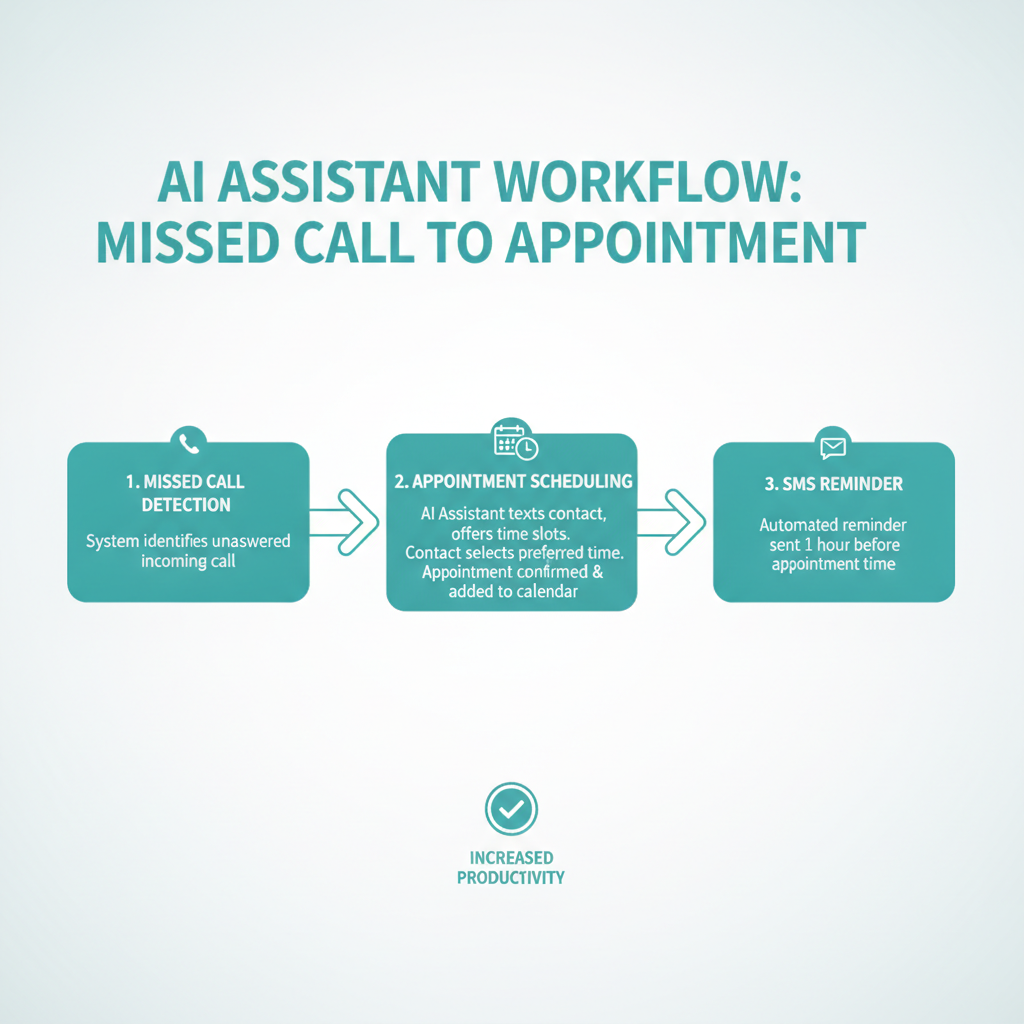
- Deploy an AI-Powered Virtual Receptionist: Set up automated call-handling to capture missed calls and route patient inquiries instantly.
- Launch AI-Driven Patient Intake & Triage: Automate the collection of intake forms before the first appointment to reduce in-clinic wait times.
Comparing AI Assistants with Traditional
Scheduling Tools While basic platforms offer simple texting or patient portals, they often lack the deep, automated 24/7 conversational AI responsiveness needed to fully eliminate missed calls. When evaluating different pricing plans, consider how much staff time is saved by true automation. Automated scheduling assistants directly target the leading reasons for missed appointments, such as patients forgetting their scheduled times or experiencing last-minute conflicts. 
Frequently Asked Questions
How does an AI assistant reduce appointment cancellations?
Implementing automated communication tools like SMS reminders can help clinics reduce appointment no-show and cancellation rates to below 5% [5]. These tools directly target the leading reasons for missed appointments, such as patients forgetting their scheduled times or experiencing last-minute conflicts.
What is the financial impact of a missed physical therapy appointment?
Each missed physical therapy appointment slot costs a clinic an average of $160 to $200 in immediate lost revenue [2]. For a typical practice, missing just 10 out of 40 daily appointments can quickly compound into a loss of over $1,000 per day [2].
How much time do physical therapists spend on administrative work?
Physical therapists spend approximately 49% of their workday on administrative tasks, which equates to roughly 2 to 3 hours of non-clinical work during a standard 8-hour shift [4]. This heavy administrative workload diverts valuable time away from direct, hands-on patient care and exacerbates staff fatigue.
Why do patients switch clinics over phone experiences?
Approximately 41% of patients have switched healthcare providers due to a poor phone experience, and 67% will call alternative clinics if their primary provider does not answer within three rings [8]. Meeting modern patient expectations for instant, frictionless communication is a critical competitive differentiator.
How does an AI assistant handle missed calls?
An AI assistant acts as an AI-Powered Virtual Receptionist that provides 24/7 instant responses to incoming calls, texts, and web chats. Since medical practices miss an average of 23% of incoming calls, this automation prevents patients from hanging up and calling competitors [10].
Is an AI assistant for physical therapy clinics HIPAA-compliant?
Yes, advanced AI assistants are designed to ensure 100% HIPAA-compliant communication across all digital channels, including SMS, email, and web chat. They securely integrate with your clinic's existing EHR/EMR systems to safeguard sensitive patient data.
Sources [1] Opmed.ai
- Phyxuphealth.com
- Nethealth.com
- Proactivechart.com
- Physitrack.com
- Agentzap.ai
- S10.ai
- Curogram.com
- Patient10x.com
- Medicalofficeforce.com
- Umt-rehabessentials.com
- Ijphy.com Embracing AI technology empowers physical therapy clinics to regain operational control, secure their bottom line, and deliver a modern experience that keeps patients engaged in their recovery journeys.
David Friedman - Founder, Conversify · LinkedIn
David Friedman is a B2B operations leader with over 10 years of experience managing large-scale teams and business processes. After years of working with service businesses and seeing how much time was lost to manual customer communication, he founded Conversify, an AI-powered platform that helps healthcare practices and service providers across Europe automate their patient and client interactions. David built the platform from the ground up, working directly with practicing healthcare professionals to ensure every feature solves a real operational pain point. He is based in Spain.