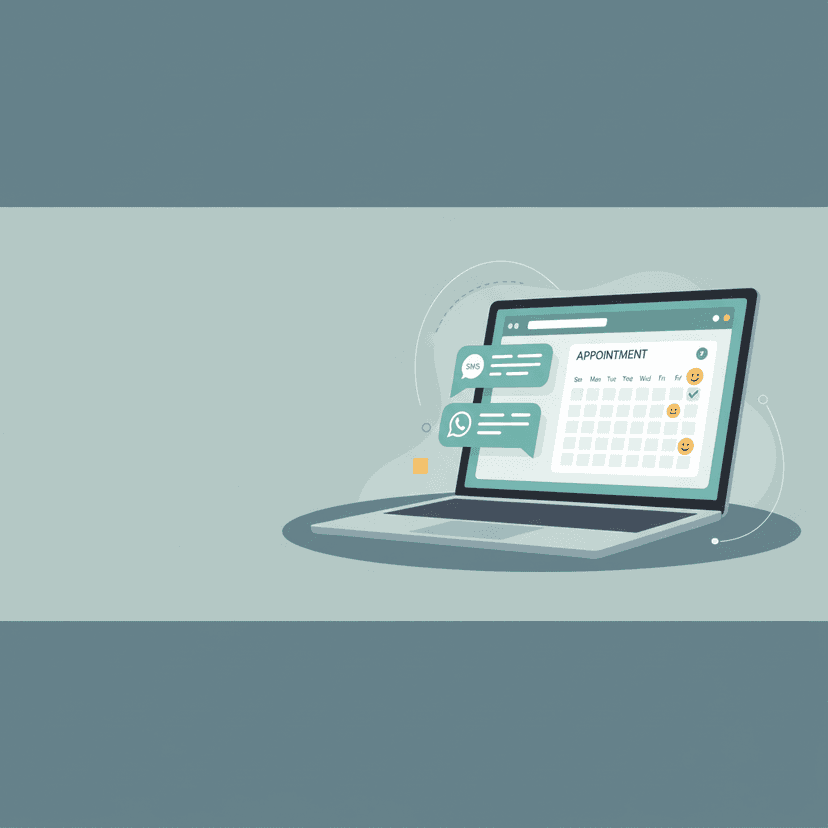
WhatsApp Booking Conversion: Turn Chats Into Appointments
Most WhatsApp bookings die mid-chat, not because the customer lost interest, but because the conversation asked them to wait. Five fixes for the waits that kill bookings.
Conversify, an AI receptionist built for small service businesses, exists because of a pattern anyone with a WhatsApp Business number knows too well: a customer messages, a conversation starts, and then it quietly dies. No rejection, no argument, no "I found someone else". The thread just goes cold somewhere between "how much is it?" and an actual appointment. WhatsApp booking conversion is the measure of how many of those chats end in a booked slot, and for most small businesses it is painfully low. Not because customers are fickle, but because the conversation keeps asking them to wait, and waiting is the one thing a customer with a phone full of alternatives will not do.
Where WhatsApp bookings actually die
Threads die at predictable points, and almost none of them have anything to do with your prices or your reviews.
- The slow first reply. A customer shopping on WhatsApp often messages several businesses in one sitting. They book with whoever gives them a real answer first. If your reply lands three hours later, the booking was gone before you typed it.
- The price question. "How much do you charge?" is not small talk. It is the buying moment. Answer it with "it depends, I'll send details later" and the chat is already over.
- The missing offer. "When works for you?" hands the work back to the customer. Most will not do it. They came to you to be offered a time.
- The confirmation gap. You say "let me check my book and confirm". Then a client walks in, the day runs away from you, and by evening the customer has booked somewhere else or simply lost the urge.
None of these are persuasion problems. Each one is a delay, and delay is the whole problem. The fix is to remove the waits, one by one.
It is worth being honest about what these dead threads cost. A chat that dies was not a tire-kicker. Someone with a real need found your number, typed a message, waited, and moved on. That is a customer who wanted to book from you and was allowed to drift, and most businesses never see it happen because nobody counts the conversations that never finished.
Step 1: Reply inside the first minute
The first reply decides most of the outcome. Customers messaging on WhatsApp tend to be ready to book right now, and they notice who answers and who does not. The prize rarely goes to the best business. It goes to the fastest one.
During opening hours, a reply within five minutes is a reasonable target. Inside one minute is better. The hard part is that your hands are usually full when the message arrives. You are mid-appointment, on the phone, or elbow deep in the exact work the customer wants to book. That is the central tension of running a service business: the moments you are most in demand are the moments your inbox is least attended.
This is the single biggest gap an AI receptionist closes. The first reply does not need to be clever. It needs to exist, be friendly, and answer the actual question asked. Everything after that is easier.
Step 2: Answer the price question in the chat
When a customer asks for a price on WhatsApp, they are further along than most owners realize. That question is the purchase starting. Treating it as something to handle later, or deflecting with "it depends" and no follow-up in the same message, kills the momentum you just earned.
The fix is a menu. Your AI receptionist should carry your real service list with your real prices, so the answer to "how much?" arrives in seconds, quoted from your actual pricing, with the next step attached: "That is $65. I have Thursday at 2pm or Friday at 10am, which works for you?"
One answer and one offer, in the same message. Compare that with the version where the customer asks, waits, messages a competitor, and books with them at 9pm while you are still closing out your day.
Step 3: Offer real slots, never ask "when works for you?"
Open-ended scheduling feels polite. It is not. "When works for you?" transfers the effort of booking back to the customer, and the most common response to being handed extra effort is to not book at all.
The alternative is reading your live calendar and putting two or three concrete slots on the table. "I have Thursday at 2, Friday at 10, or Saturday morning." Concrete choices do two things at once: they show the customer you actually want the booking, and they turn a vague intention into a one-tap decision.
This is where an AI receptionist earns its keep, because it is always looking at live availability. The slots it offers are real, double-booking is impossible, and the customer never waits for you to "check the book and get back to them".
Step 4: Confirm the booking and take
the deposit in the same thread
A booking is not a booking until the customer has something in their calendar and you have something holding the slot. The confirmation needs to happen inside the same WhatsApp thread, while the intention is hot. Date, time, service, address, and a warm "see you then", sent within seconds of the customer picking a slot.
If no-shows eat your week, this is also the moment to ask for a deposit. A payment link dropped into the same chat filters out casual bookings better than any reminder ever will. People honor what they have already paid for. Your AI receptionist can send the link, mark the slot as held, and release it automatically if the deposit never arrives, so a dead lead never blocks your calendar.
Step 5: Set a reminder cadence that actually lands
Conversion does not end at "yes". Until the customer is in the chair, the booking is a promise, and promises get forgotten. A short reminder cadence keeps it alive:
- Right after booking: a confirmation message with date, time and address.
- A day or two before: a friendly reminder with a one-tap reschedule option.
- The morning of the appointment: a final nudge.
The one-tap reschedule matters more than it looks. A customer who would have quietly not shown up will often move the appointment instead, if moving it costs one tap rather than a phone call and an awkward conversation. That is the difference between a saved booking and a no-show fee you never collected.
The half of the problem that happens while you sleep
A large share of WhatsApp booking requests arrives outside business hours, in the evening, when people finally have time to plan their week. The businesses that win those bookings are not awake. They have something answering.
An AI front desk replies at 10:40pm exactly as it does at 10:40am: price, slots, booking, confirmation. The customer wakes up to a booked appointment instead of a morning of waiting. You wake up to a fuller calendar instead of a backlog of overnight chats, all of them several hours stale by the time you see them.
There is a second-order effect that is easy to miss. The businesses that answer after hours get remembered for it. The customer who booked with you at 11pm noticed that nobody else answered, and that memory shows up the next time they need the same service, or the first time a friend asks for a recommendation. Answering when others do not is not just this week's booking. It is a small deposit in your reputation, made automatically, every single evening.
What good conversion actually looks like
There is no universal "good" WhatsApp conversion rate, and anyone quoting a single number for every kind of business is guessing. What is worth tracking is simpler: of the chats where a customer asked a price or a time, how many ended with a booked slot? That is your real funnel, and the first time most owners measure it honestly, it stings.
Track that number monthly. When instant replies, in-chat pricing, concrete slots, same-thread confirmation and a reminder cadence are all in place, it moves. It moves because the waits are gone, and the waits were the entire leak.
Making it automatic
Every step above can be done by hand by a disciplined person with a free afternoon, and it will collapse the first busy week. The reliable version is a system that never gets busy: an AI receptionist that answers in seconds, quotes your menu, offers live slots, confirms, takes deposits, and sends reminders, across WhatsApp, Instagram and web chat from one inbox.
Conversify does exactly that, from $29 a month, with a 14-day free trial that does not ask for a card. Connect your number, load your services and prices, and let tonight's messages get booked tonight.
David Friedman - Founder, Conversify · LinkedIn
David Friedman is a B2B operations leader with over 10 years of experience managing large-scale teams and business processes. After years of working with service businesses and seeing how much time was lost to manual customer communication, he founded Conversify, an AI-powered platform that helps healthcare practices and service providers across Europe automate their patient and client interactions. David built the platform from the ground up, working directly with practicing healthcare professionals to ensure every feature solves a real operational pain point. He is based in Spain.