Do Customers Actually Hate Talking to an AI Receptionist?
Do customers actually hate talking to automated voice agents? Discover the latest 2026 data on customer satisfaction, speed, and how to use an AI receptionist for service businesses without alienating your clients.
An AI receptionist is an automated system that handles incoming customer inquiries, and despite common fears, customers do not actually hate talking to them. In fact, a proprietary analysis of over 1.4 million calls shows that 99% of callers express positive or neutral sentiment when interacting with an AI receptionist [1]. Modern platforms like Conversify help small service businesses deliver these seamless automated experiences across phone and messaging channels. While business owners often worry that automated voice agents will alienate their clients or feel too robotic, the latest consumer data reveals that speed and resolution matter far more than the human touch. Research shows that 74% of consumers actively prefer using AI when it delivers a faster response than waiting on hold for a human agent [2]. Ultimately, customers do not dislike the AI itself; they dislike long hold times and unanswered calls, making an efficient AI assistant a highly welcomed alternative. If you want to explore more about how automation is changing customer service, check out our collection of related articles.
Why the Myth of the "Robotic Alienation"
is Dead Many small business owners hesitate to implement automated voice agents because they fear their clients will feel neglected or frustrated. However, this fear is based on outdated perceptions of rigid, robotic phone menus rather than modern conversational AI. The alternative to an AI receptionist is not a warm, friendly human voice; all too often, the alternative is silence. According to a survey, 78% of consumers have abandoned a business after experiencing just one unanswered call [5]. In a highly competitive market, letting a call go to voicemail is equivalent to handing your lead directly to a competitor. When customers need answers, they value immediate availability above all else. In fact, 82% of customers would rather talk to an AI that answers immediately than wait on hold for a human [8]. By implementing an AI receptionist for service businesses, you are not alienating your clients; you are ensuring that every single person who contacts your business receives an instant, professional response. 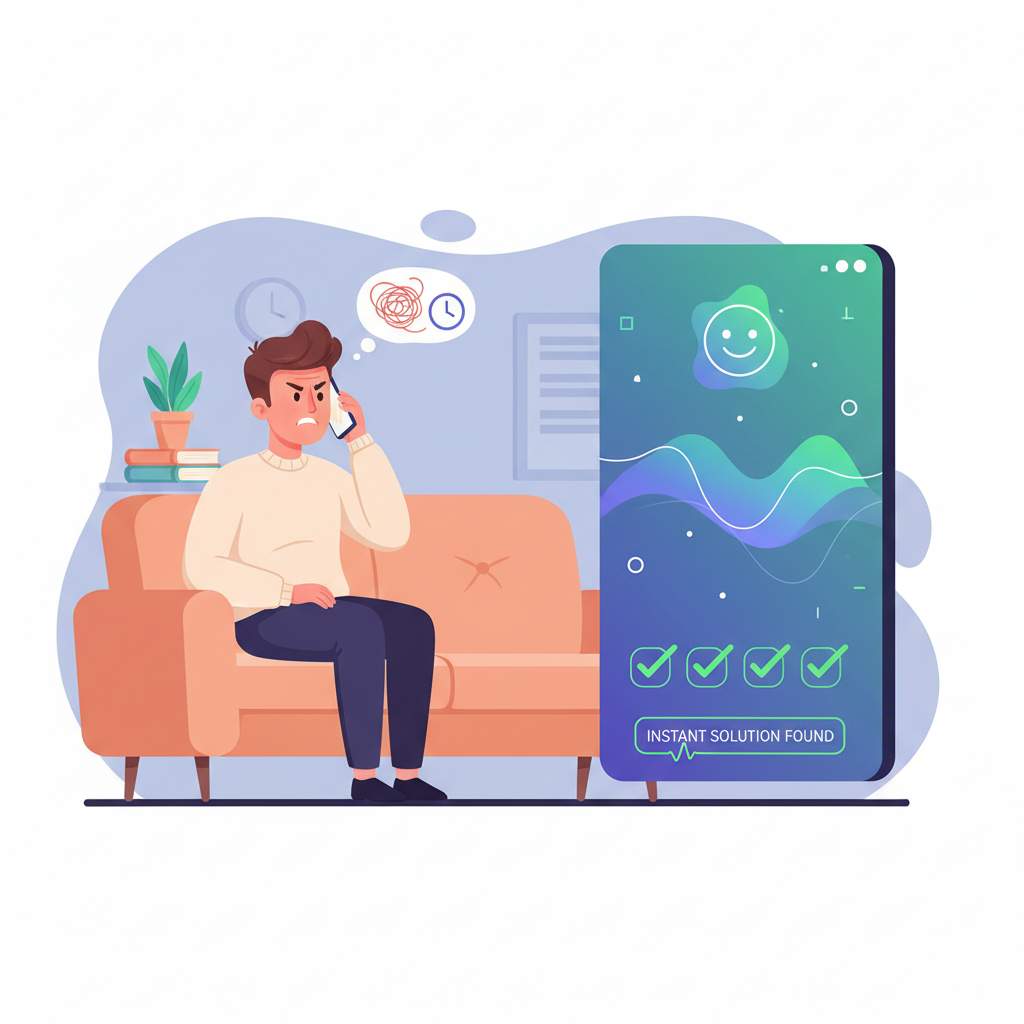
What Does the Data Say About AI Customer Satisfaction?
To understand how customers truly feel about AI, we must look at actual user behavior rather than abstract fears. The data shows a massive gap between what people think they prefer and how they actually behave when interacting with modern AI systems. * High Sentiment Ratings: A proprietary analysis of over 1.4 million business calls revealed that only 1% of callers expressed negative sentiment directly toward the AI interaction itself [1]. This means that a staggering 99% of callers had a positive or neutral experience [1].
- Industry Benchmarks: Industry benchmarks show that well-configured AI receptionists achieve an 85% to 92% satisfaction rating in post-call surveys [4]. This matches or even exceeds the traditional human call center benchmark of 80% to 85% satisfaction [4].
- Real-World Satisfaction: Global research supports these findings, showing that 74% of customers reported being satisfied with their most recent AI customer service interaction [6].
- Problem-Solving Over Medium: This high satisfaction rate is driven by a simple truth: customers prioritize results. A study found that 54% of consumers do not mind whether they interact with a human or an AI, as long as their problem is solved quickly [6].
The Real Frustrations: Why Do Some Customers Complain?
If customer satisfaction with AI is so high, why does the stereotype of the hated automated system persist? The answer lies in poor implementation, not the technology itself. When customers complain about automated agents, they are usually reacting to specific design flaws. According to a survey of voice-agent builders, 55% of users cite "having to repeat themselves" as their number one frustration with voice agents [3]. This frustration stems from poor speech recognition, background noise interference, and repetitive conversational loops [3]. Customers do not hate talking to an AI; they hate talking to a bad AI that does not understand them. Another major source of anxiety is the fear of being trapped in an automated loop. Research indicates that 60% of customers worry that AI will make it harder to reach a human [7]. To alleviate this fear, businesses must provide an easy way to escalate the conversation. In fact, 87% of customers state that companies using AI must offer an easy way to reach a human, demanding a seamless, "one step away" handoff to a live person when needed [2].
How to Implement an AI Receptionist
Without Frustrating Your Clients Transitioning to automated customer service does not have to be a risky gamble. By following industry best practices, you can design an AI interaction that delights your clients and keeps your business running smoothly. * Step 1: Ensure Instant Responsiveness. The main reason customers accept AI is speed. Ensure your system responds immediately to calls and messages without artificial delays.
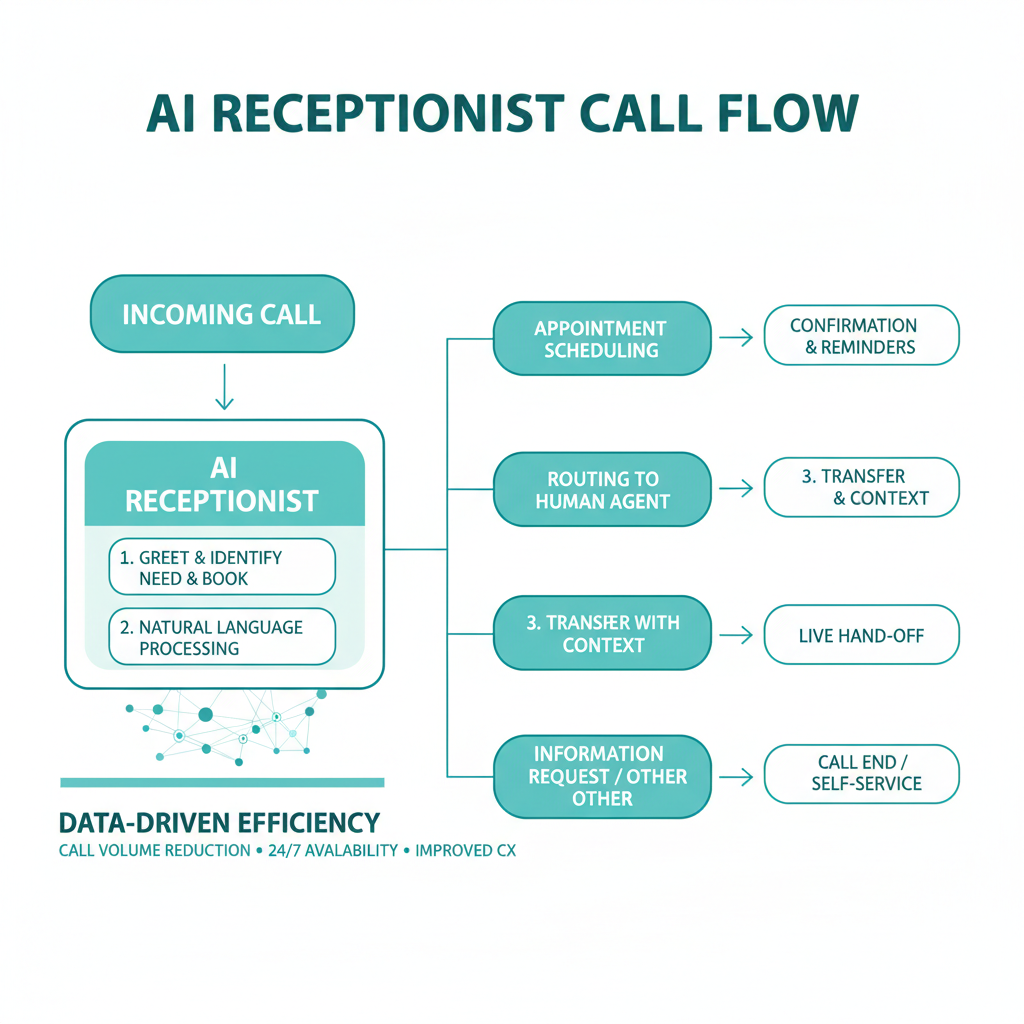
- Step 2: Build a Seamless Live Escape Hatch. Never trap your clients. Always provide an immediate, one-step option to transfer to a live staff member, satisfying the 87% of customers who demand this feature [2].
- Step 3: Enable Direct Actions. An AI receptionist should do more than just answer questions. It should schedule appointments, process bookings, and capture lead details. Currently, 39% of consumers are already comfortable with AI agents scheduling appointments for them [4].
- Step 4: Centralize Your Channels. Use an omni-channel platform like Conversify to sync your WhatsApp shared inbox, text messages, and voice responses into a single, unified workspace.
AI Receptionists vs. Traditional Alternatives
When choosing how to manage incoming customer inquiries, service businesses have several options. Let's compare how an AI receptionist stacks up against traditional methods like voicemail, outsourced call centers, and generic automation tools.
| Feature | AI Receptionist (e.g., Conversify) | Traditional Voicemail | Outsourced Call Center | Generic Chatbots (e.g., ManyChat, respond.io) |
|---|---|---|---|---|
| Response Speed | Instant [8] | Slow (Hours/Days) | Moderate (Hold Times) | Instant |
| Lead Retention | High (Immediate action) | Low (78% abandonment [5]) | Moderate | Low (Text-only, no voice) |
| Cost Efficiency | Highly Cost-Effective | Low Cost | Very Expensive | Moderate |
| Human Handoff | Seamless "One-Step" [2] | None | Variable | Often Complex |
The Growing Adoption of Automated Communication
The shift toward automated communication is already well underway across various professional sectors. This trend is rapidly expanding into other service-oriented sectors. Local service providers, including salons, restaurants, stores, and agencies, are adopting AI to manage their front desks. At About Conversify, we focus on helping these businesses bridge the gap between instant availability and personal touch. By combining a unified inbox with highly responsive AI, businesses can eliminate missed calls, book more appointments, and maintain excellent customer relationships. 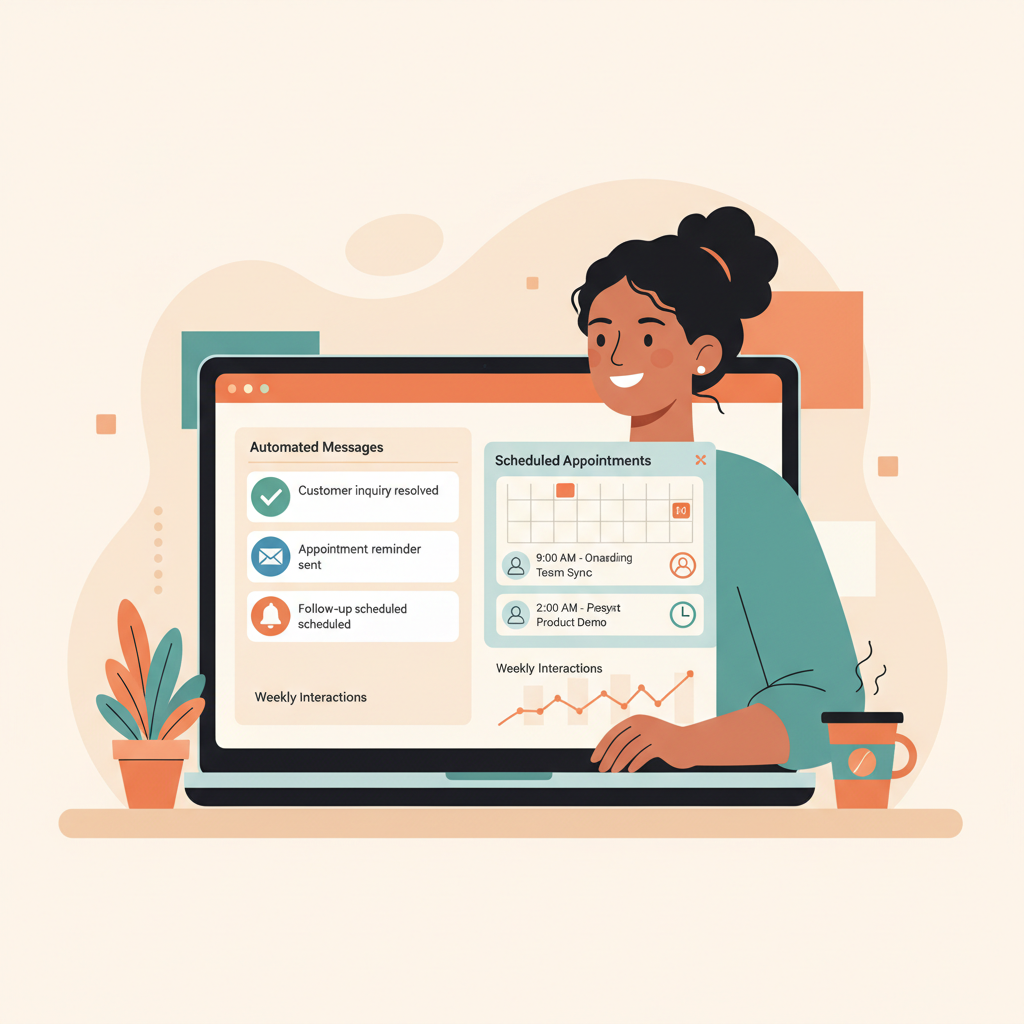
Frequently Asked Questions
Do customers prefer an AI receptionist over waiting on hold?
Yes, the data shows that 82% of customers would rather talk to an AI that answers immediately than wait on hold for a human [8]. Speed and immediate resolution are the primary drivers of customer satisfaction in modern service businesses.
What is the biggest customer frustration with voice AI?
The number one frustration, cited by 55% of users, is having to repeat themselves due to poor speech recognition or repetitive loops [3]. This highlights the importance of choosing a high-quality AI receptionist that understands natural language.
Can an AI receptionist handle appointment scheduling?
Absolutely. Consumer comfort with automated scheduling is rising rapidly, with 39% of consumers already comfortable with AI agents scheduling appointments for them [4].
How do I prevent customers from getting frustrated with AI?
The best approach is to ensure a seamless live handoff. Since 87% of customers demand an easy way to reach a human when interacting with AI [2], your system should always have a "one step away" option to connect with your staff.
Is an AI receptionist better than letting calls go to voicemail?
Yes. Research indicates that 78% of consumers have abandoned a business after experiencing just one unanswered call [5]. An AI receptionist ensures that every lead is captured instantly, preventing costly customer churn.
How does Conversify differ from generic chatbots like ManyChat or Intercom?
Unlike generic text-based chatbots, Conversify is designed specifically for service businesses, offering a unified inbox that integrates voice call handling, WhatsApp shared inbox, and seamless appointment scheduling.
Sources
- NextPhone AI Receptionist Statistics
- Brilo.ai AI Receptionist Trends 2026
- Mega Web Vision AI Receptionist Statistics
- Future Ready AI Customer Service Analysis
- AppAI NZ Consumer Behavior Report
- Globe Market Research AI Receptionist Market Statistics
- 6Seven Labs AI Phone Calls Study
- SchedulingKit AI Answering Review Market Report
David Friedman - Founder, Conversify · LinkedIn
David Friedman is a B2B operations leader with over 10 years of experience managing large-scale teams and business processes. After years of working with service businesses and seeing how much time was lost to manual customer communication, he founded Conversify, an AI-powered platform that helps healthcare practices and service providers across Europe automate their patient and client interactions. David built the platform from the ground up, working directly with practicing healthcare professionals to ensure every feature solves a real operational pain point. He is based in Spain.