How to Reduce No-Shows Without Pressuring Your Customers
Discover how to reduce no-shows for service appointments without alienating customers. Learn why automated SMS and WhatsApp reminders outperform manual phone calls.
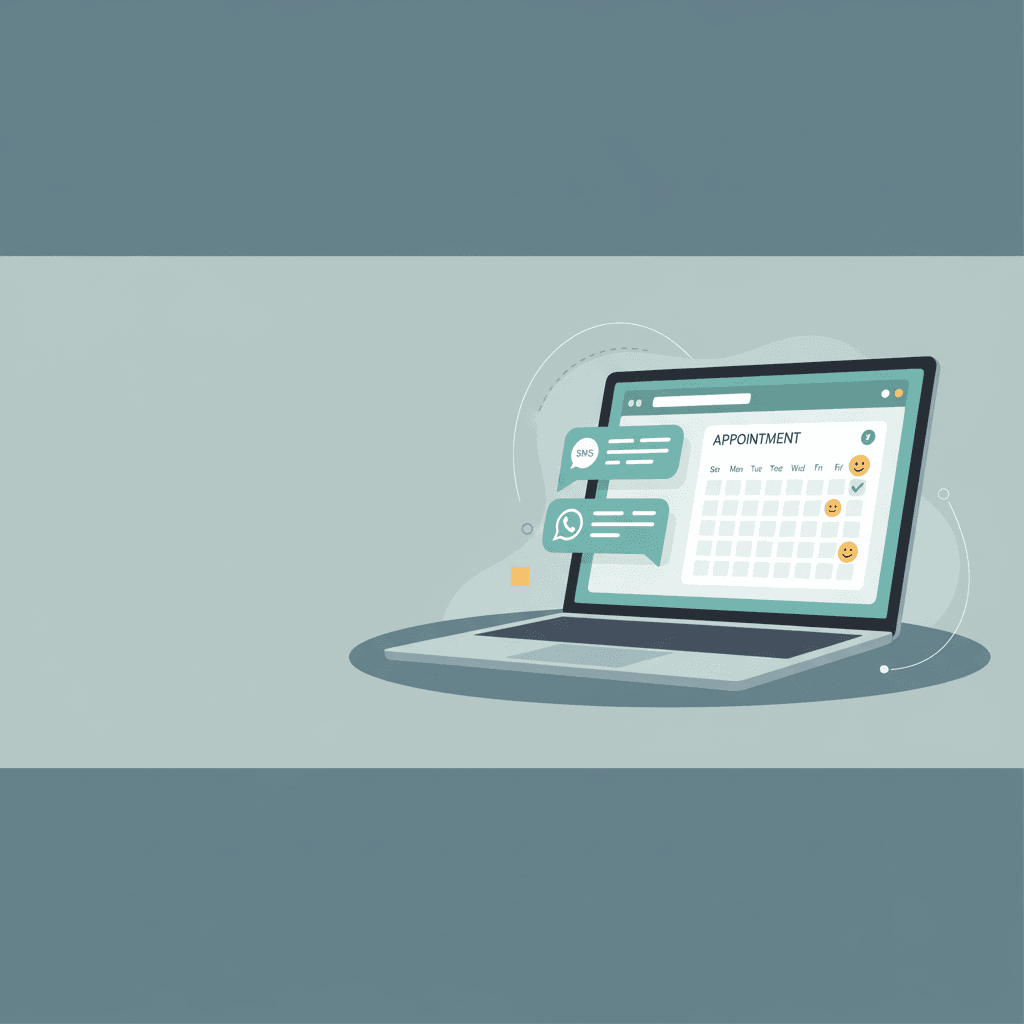
To reduce no-shows for service appointments without pressuring customers, businesses must use gentle, automated communication channels. Implementing conversational text reminders can reduce missed appointments by up to 50 percent [4] without aggressive policing. By using an AI receptionist like Conversify, businesses can provide low-pressure reminders and self-service rescheduling options that respect customer boundaries while protecting revenue. Missed appointments represent a massive operational bottleneck. Globally, the average baseline no-show rate sits at a staggering 23 percent [1], which drains resource utilization. For service businesses in the United States, these scheduling gaps contribute to an estimated 150 billion dollars in annual losses, costing individual providers an average of 200 dollars per missed slot [2]. Rather than enforcing punitive cancellation fees that alienate clients, modern brands use gentle, automated outreach. By integrating Conversify's smart booking flows, businesses leverage channels like WhatsApp and SMS. This approach achieves up to 98 percent open rates [5] and lets customers reschedule on their own terms, preserving relationships. Explore our pricing plans to see how easily you can automate this for your business.
Why Traditional Cancellation Policies
Backfire on Service Businesses Many service providers believe that the only way to protect their time is to enforce rigid, punitive cancellation policies. While charging a fee for a missed slot might recover a fraction of your lost revenue, it often damages the long-term relationship with your customer. When clients feel penalized for unexpected life events, they are highly likely to take their business to a competitor. The scale of the problem is undeniable. Missed appointments cost the service industry billions of dollars every single year, with individual operators losing an average of 200 dollars for every single empty slot [2]. This high financial drain makes it tempting to implement strict rules. However, the root cause of most no-shows is not a lack of respect for your time; it is simply forgetfulness or the friction of having to call to reschedule. By shifting your perspective from punishment to facilitation, you can build a scheduling system that benefits both your business and your clients. Instead of warning customers about the financial penalties of missing an appointment, focus on making it as easy as possible for them to show up, modify, or reschedule their booking.
What Are the Most Effective No-Show Reduction Strategies for Service Businesses?
Reducing missed appointments does not require aggressive follow-ups. Instead, you can implement structured, automated systems that gently guide clients to confirm or adjust their appointments. Here are the most effective no-show reduction strategies for service businesses: - Transition to Automated Reminders: Relying on manual outreach is inconsistent and administrative. Automated systems allow service businesses to scale their outreach consistently without placing a burden on their staff. Research shows that automated reminders reduce no-shows by 29 percent to 50 percent compared to sending no reminders at all [4].
- Provide Self-Service Rescheduling: A survey by Tebra revealed that 69 percent of clients want the ability to reschedule their appointments online rather than having to call the office [12]. By offering a low-pressure, self-service rescheduling link, you make it easy for clients to adjust their plans without feeling confronted.
- Implement Multi-Channel Communication: Some clients ignore emails, while others never answer phone calls. Combining communication channels ensures that you reach clients who might otherwise miss your messages. For instance, adding text message reminders to existing phone call routines has been shown to reduce no-shows by an additional 14 percentage points [11].
- Allow Clients to Choose Their Preferred Channel: Giving clients control over how they are contacted dramatically increases their engagement. In a private professional practice study where clients chose their preferred reminder method, the overall no-show rate across 1,193 appointments was reduced to just 2.43 percent [11].
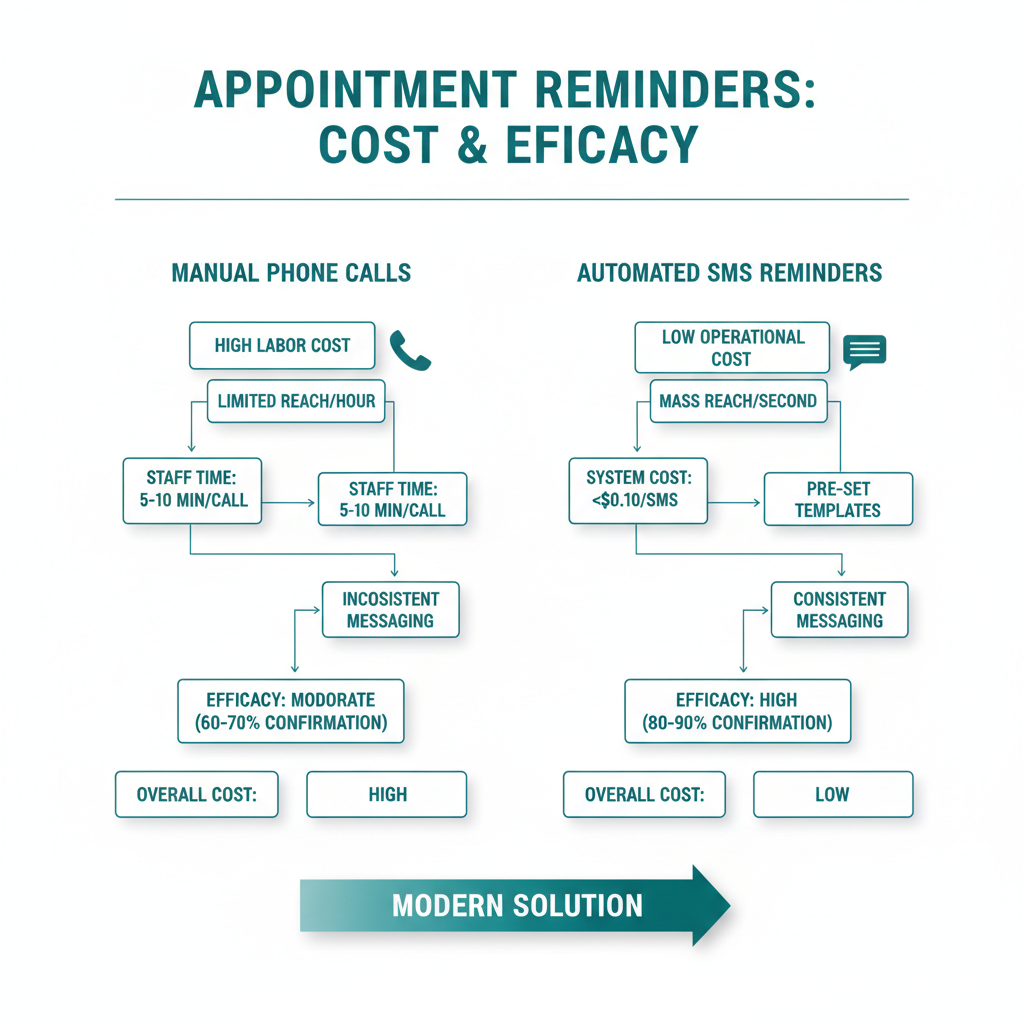
- Send Additional Reminders for High-Risk Slots: Utilizing predictive models to target high-risk slots with extra reminders allows businesses to optimize their resources. While manual calls are highly personal and can reduce non-attendance by 39 percent, they are incredibly expensive to maintain. On average, manual phone calls cost 0.90 euros per contact compared to just 0.14 euros for automated reminders [7]. Automated messaging provides a highly cost-effective alternative that frees up staff time while still achieving a significant 29 percent reduction in no-shows [7]. Furthermore, the way consumers interact with communication channels has shifted. SMS text reminders achieve an open rate of up to 98 percent, with 82 percent of consumers reading their text messages within five minutes of receipt [5]. This rapid and near-universal engagement makes text messaging far more effective than email, which typically sees open rates of only 20 to 30 percent in service settings [6]. Modern consumers also express a clear preference for text-based communication. A survey revealed that 75 percent of millennials think text messaging is a helpful way to receive appointment reminders, and 64 percent of consumers overall appreciate getting SMS reminders [13]. Meeting customers on their preferred communication channels helps businesses establish firm scheduling boundaries without making clients feel pressured or annoyed.
What Does the Real-World Data Reveal About Low-Pressure Reminders?
The impact of simple, automated reminders is backed by extensive real-world data. A 2024 service-focused study reported a 42.8 percent reduction in missed appointments after SMS reminders were introduced, with missed appointments falling from 5,848 to 3,343 [11]. This data demonstrates the substantial, measurable impact that simple, text-based interventions can have on client attendance. Another study focusing on a family-focused provider found that adding text message reminders to existing phone call reminders reduced no-shows from 23 percent down to just 9 percent [11]. This proves that you do not need to threaten clients with cancellation fees; you simply need to make sure your reminder actually catches their attention. By utilizing a unified platform like Conversify, businesses can combine the power of automated SMS and WhatsApp messaging to create a seamless, low-pressure confirmation flow. Clients receive timely, friendly prompts that allow them to confirm, cancel, or reschedule with a single tap.
How to Build a Low-Pressure Communication
Flow with Conversify Setting up an automated scheduling assistant does not have to be complicated. With Conversify, you can build a polite, automated system that keeps your calendar full while keeping your customers happy. Learn more About Conversify to see how our team is building the future of customer communication. Here is how to set it up: - Centralize Your Messages: Connect your WhatsApp, SMS, and social channels into a single, unified inbox so your team never misses a message.
- Deploy AI Auto-Responses: Use Conversify's AI receptionist to handle common scheduling questions instantly, providing 24/7 coverage without hiring extra staff.
- Embed Self-Service Links: Always include a direct, mobile-friendly link in your reminders so clients can reschedule on their own time without needing to call.
- Send a Two-Touch Sequence: Send a friendly confirmation message 24 hours before the appointment, followed by a quick reminder 2 hours before the scheduled slot.
- Personalize the Tone: Keep the language warm, helpful, and professional. Avoid sounding demanding or threatening.
Comparing Conversify with ManyChat, respond.
io, and Intercom When looking for the right software to manage your customer communications, it is important to choose a tool that fits your specific business needs. Here is how Conversify compares to other popular options on the market: - ManyChat: While ManyChat is excellent for marketing campaigns and building complex automated flows, it can feel highly robotic and often requires technical expertise to set up. Conversify, on the other hand, acts as a natural AI receptionist that handles conversations organically.
- respond.io: This platform is built for enterprise-level message routing and multi-channel support. However, it lacks the specialized, service-oriented booking integrations and AI-driven front-desk capabilities that small businesses need to manage their calendars.
- Intercom: Intercom is a powerful tool for customer support, but it is primarily built for software companies and can be incredibly expensive for local service providers. Conversify offers a streamlined, cost-effective alternative tailored specifically to local service brands. For more insights on optimizing your booking system, check out our related articles on customer communication.
Frequently Asked Questions
How much do missed appointments cost service businesses?
Missed appointments cost service systems an estimated 150 billion dollars annually, with individual providers losing an average of 200 dollars per missed slot [2]. This high financial drain highlights the critical need for businesses to implement structured, automated prevention strategies.
Are text reminders more effective than email or phone calls?
Yes, text reminders are far more effective, achieving an open rate of up to 98 percent compared to only 20 to 30 percent for email [5], [6]. Additionally, 82 percent of consumers read their text messages within five minutes of receipt, ensuring your message is seen [5].
How much can automation reduce appointment no-shows?
Implementing automated reminders reduces appointment no-shows by 29 percent to 50 percent compared to sending no reminders at all [4]. Real-world clinic data also shows a 42.8 percent reduction in missed appointments after automated SMS reminders were introduced [11].
Why do customers prefer online rescheduling over calling?
According to surveys, 69 percent of clients want the ability to reschedule their appointments online rather than calling [12]. Online rescheduling provides a low-pressure, self-service option that allows clients to adjust their plans without the discomfort of a direct verbal confrontation.
Is automated messaging more cost-effective than manual phone calls?
Yes, automated messaging is highly cost-effective, costing an average of just 0.14 euros per contact compared to 0.90 euros for manual phone calls [7]. While manual calls reduce non-attendance by 39 percent, automated reminders still achieve a 29 percent reduction while saving massive staff time [7].
How does giving clients communication choices affect attendance?
Giving clients control over how they are contacted dramatically improves appointment show rates. In a study where clients chose their preferred reminder method, the overall no-show rate across more than 1,100 appointments was reduced to just 2.43 percent [11].
Sources
- [1] [Appointment Reminder
- [2] Etisia No-Show Statistics
- [3] Waitwhile Blog: 5 Ways to Reduce No-Show Appointments
- [4] Schedly No-Show Prevention Strategies
- [5] Notifyre SMS Marketing Statistics
- [6] Proactive Chart: Appointment Reminders Text vs Email
- [7] ResolvePay: Why Automated Reminders Outperform Phone Calls
- [8] ZealousWeb: Reduce No-Shows with WhatsApp and SMS
- [9] Notifyre Appointment Reminders Statistics
- [10] WiseMelon: Reduce Patient No-Shows
- [11] National Institutes of Health Study on Appointment Attendance
- [12] Dialog Health Patient Appointment Reminder Statistics
- [13] Off the Cusp: Texting Your Patients Statistics By shifting your scheduling strategy from rigid rules to automated, conversational reminders, you can dramatically reduce no-shows while keeping customer relationships strong. Conversify provides the tools you need to build a friendly, automated scheduling assistant that works around the clock to keep your calendar full.
David Friedman - Founder, Conversify · LinkedIn
David Friedman is a B2B operations leader with over 10 years of experience managing large-scale teams and business processes. After years of working with service businesses and seeing how much time was lost to manual customer communication, he founded Conversify, an AI-powered platform that helps healthcare practices and service providers across Europe automate their patient and client interactions. David built the platform from the ground up, working directly with practicing healthcare professionals to ensure every feature solves a real operational pain point. He is based in Spain.