
How to Customize AI Responses for Your Private Practice Voice
Learn how to customize AI responses for your private practice voice to maintain an empathetic, professional tone. Discover a step-by-step setup guide and HIPAA-compliant communication strategies.
Many private practice owners hesitate to adopt AI communication tools because they fear losing their personal touch. When your clients are patients seeking therapy, dental care, or physical therapy, a robotic or cold response can instantly damage trust. You do not want your automated messages sounding like a generic corporate chatbot.
To customize AI responses in a private practice, you must feed your AI communication platform specific brand guidelines, including your practice's core values, preferred vocabulary, tone descriptors (such as empathetic, clinical, or conversational), and real-world examples of past client interactions.
Modern AI engines use this context to tailor automated SMS, emails, and intake reminders so they match your exact brand voice while keeping communications secure and HIPAA-compliant. This ensures your practice saves time without sacrificing the human warmth your patients expect. By taking control of your AI's tone, you can automate routine tasks like appointment scheduling, patient intake, and FAQ responses while maintaining the exact same bedside manner you use in person. This becomes critical when you realize how patients behave online. According to Conversify platform data, 76.9% of patient messages arrive outside business hours, meaning an automated, empathetic system is often your patient's very first interaction with your clinic. By establishing custom parameters, you keep your digital front door open 24/7. This system ensures that patients feel heard and valued immediately, even at 2:00 AM, without requiring your staff to work overnight shifts or burn out.

---
Why Does Your Private Practice Need a Unique AI Brand Voice?
Generic AI models like ChatGPT are trained on the entire internet. Left unguided, they default to a neutral, slightly sterile tone that can feel dismissive to a patient dealing with health issues. In healthcare, a mismatched tone does more than look unprofessional; it can actively increase patient anxiety.
This is especially true on mobile channels. Our internal data shows that WhatsApp accounts for 90.5% of patient communication volume. When patients message you on WhatsApp, they expect a natural, conversational interaction, not a rigid corporate script.
Consider these two different automated responses to a patient asking about a late cancellation:
- Generic AI Response: "Per our policy, cancellations must be made 24 hours in advance. You will be charged a $50 fee. Please rebook online."
- Customized AI Response: "We completely understand that life happens. Because our therapists reserve this time specifically for you, we do have a 24 hour cancellation policy. Let us get you rescheduled for later this week so we can keep your progress on track."
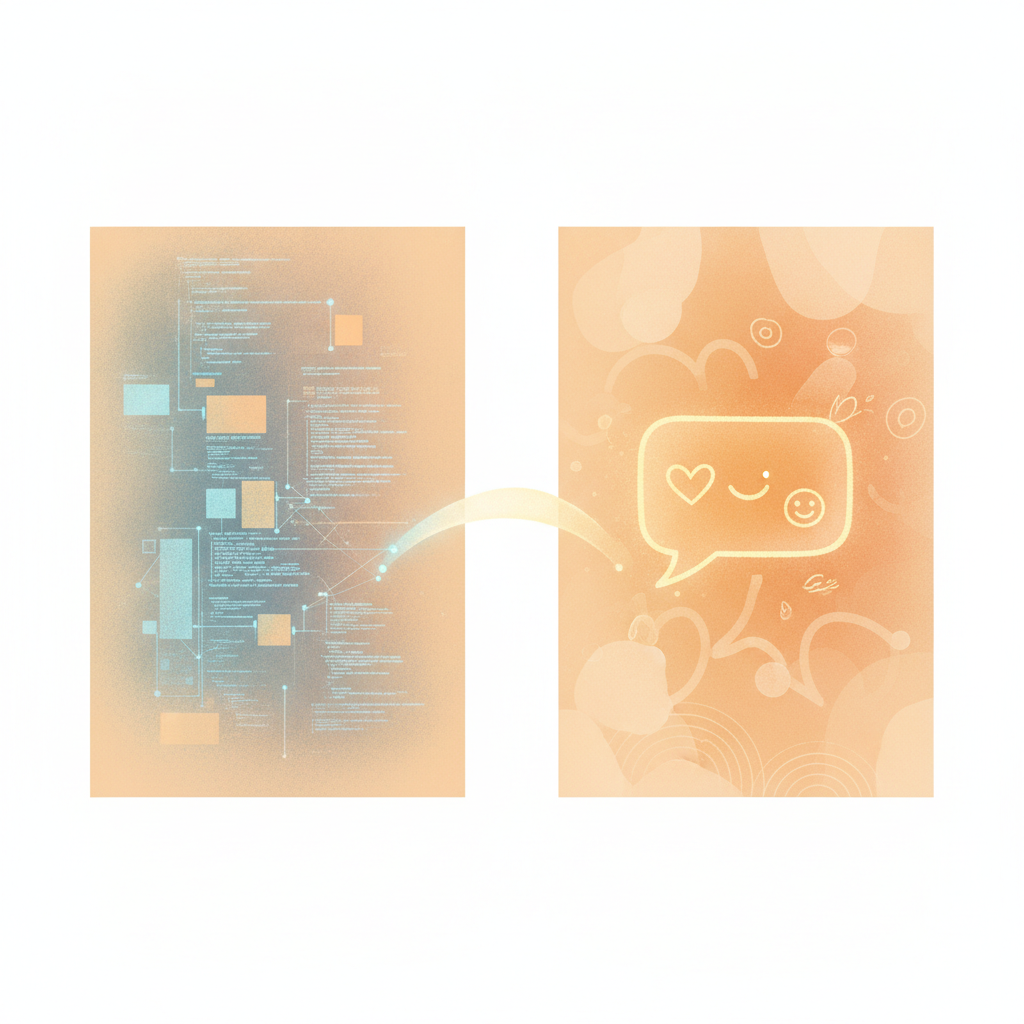
Both messages convey the exact same policy, but the second one preserves the therapeutic alliance. By taking the time to customize AI responses for your private practice, you ensure that every digital touchpoint, from SMS follow ups to automated intake onboarding, reflects your specific care philosophy.
---
How Do You Customize AI Responses for a Private Practice?
Configuring an AI-powered messaging platform to speak like you do does not require a degree in computer science. You can build a highly customized voice profile using this four-step process.
Step 1: Define Your Tone Profile
Decide how you want to sound to your patients. Choose three to four adjectives that define your practice's persona. For example, a pediatric dentistry office might choose "playful, reassuring, and clear," while a trauma therapy clinic might choose "gentle, deeply empathetic, and grounded."
Step 2: Establish Your "Do's and Don'ts" Vocabulary
Make a list of words your practice uses regularly, as well as terms you actively avoid.
Do use: Journey, collaborative, healing, client-centered, step-by-step.*
Don't use: Patient number, case, issues, treatment plan (if you prefer 'growth plan'), or clinical jargon.*
Providing this simple lexicon helps the AI engine select the right synonyms when drafting automated answers to FAQs.
Step 3: Upload Sample Interactions
Feed your messaging platform 5 to 10 examples of real, high-quality email and text exchanges you have had with clients. This gives the AI a structural pattern to copy. It learns how long your sentences typically are, how you sign off, and where you use formatting like bullet points.
Step 4: Integrate with Your Practice
Management System (PMS)
To make these customized responses work in real time, link your AI tool to your existing PMS (like Jane, SimplePractice, or Open Dental). This allows the AI to pull variables like the client's first name, upcoming appointment time, and specific provider name, injecting personal details into the customized tone templates automatically. Our internal data shows that practices using Conversify see a 0% no-show rate across 3219 appointments, compared to the 12% to 18% industry average without automated reminders. Learn more About Conversify to see how we prioritize clinical safety.
---
What Is the Difference Between Custom AI Messaging and Standard EHR Templates?
Many practices rely on the basic, rigid templates built into their legacy EHR or tools like Spruce Health and Podium. While these are safe, they are incredibly limited.
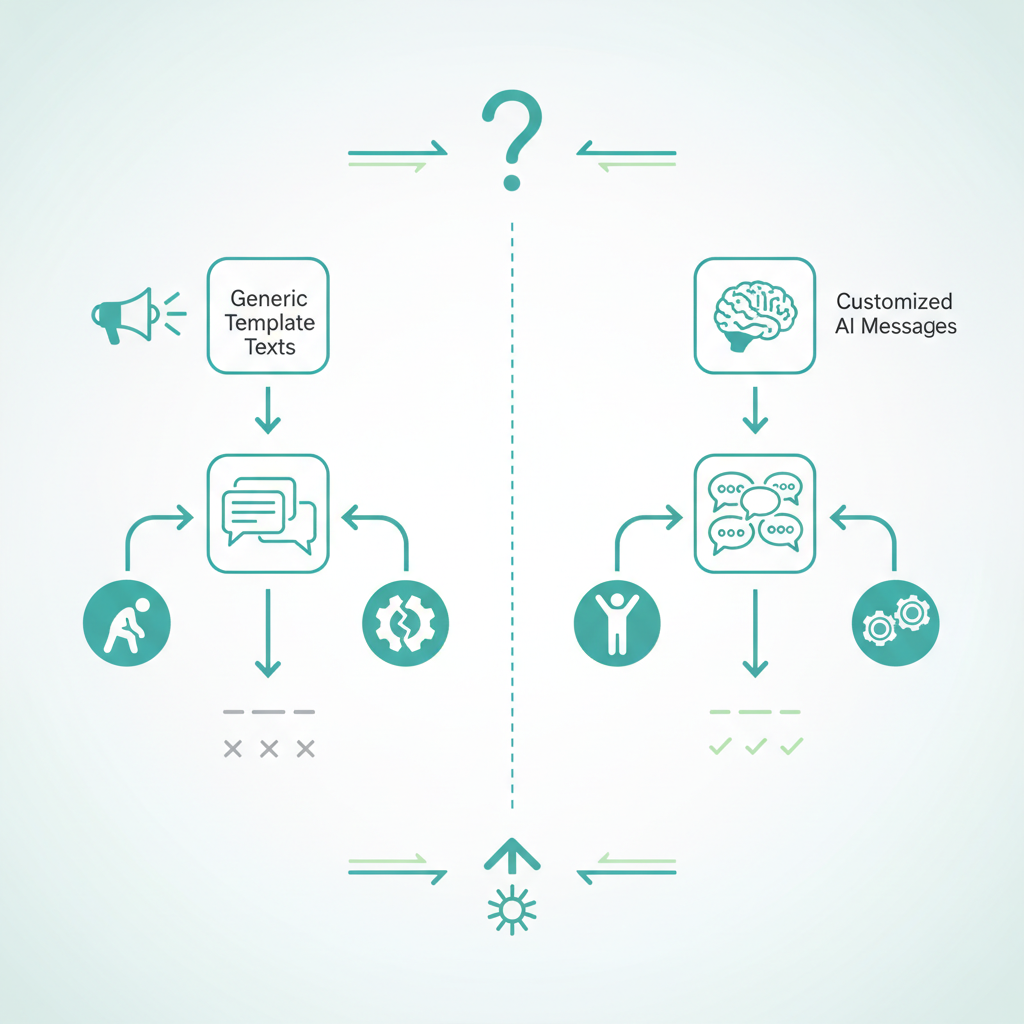
Here is how customized AI communication platforms compare to legacy templates and uncustomized AI engines:
| Feature | Legacy Templates (e.g., standard EHR) | Uncustomized AI (e.g., basic ChatGPT) | Customized AI Messaging (Conversify Platform) |
|---|---|---|---|
| Tone Quality | Rigid, repetitive, robotic | Polite but generic, occasionally overly formal | Warm, personalized, clinical-aligned |
| Context Awareness | Zero (only fills in basic merge tags) | High, but lacks clinic-specific rules | High, uses your specific FAQs and database |
| Time to Set Up | Low (pre-written) | Medium (requires manual prompting each time) | Low (one-time setup, then fully automated) |
| HIPAA Compliance | Usually compliant, but very limited | Not compliant out of the box | Fully secure and HIPAA-compliant |
How much does it cost to implement customized AI in a medical practice?
In 2026, setting up a custom AI voice is highly affordable. Conversify offers flat monthly pricing tiers designed for practices of all sizes:
- Starter ($29/mo): Includes 5,000 messages, 1 WhatsApp number, AI with memory, contact profiles, and a custom knowledge base.
- Growth ($89/mo): Adds intake forms, proactive engagement, and insurance collection with a limit of 20,000 messages.
- Pro ($199/mo): Includes 50,000 messages, 5 WhatsApp numbers, safety escalation, smart handoff, and a business insights dashboard.
- Business ($999/mo): Includes 100,000 messages, unlimited WhatsApp numbers, a dedicated HIPAA compliance portal, and white-label branding.
Unlike legacy platforms that charge $12 to $39 per additional user, all Conversify pricing plans include unlimited user seats. This makes it easy to scale your front desk team without paying more for software access.
---
How Do You Maintain Empathy in Automated Patient Communication?
Automation should not feel automatic. To maintain high clinical standards while using AI tools to reduce administrative overhead, keep these best practices in mind:
1. Use human-in-the-loop triage for complex situations: Let your AI handle scheduling, parking directions, intake tracking, and basic billing FAQs. Save clinical inquiries, crisis messages, or complex diagnostic questions for your human staff. Conversify platform analytics show that 98.8% of conversations are fully resolved by AI without human handoff, but having a clear escalation path for the remaining 1.2% is vital for patient safety.
2. Keep it concise: Long blocks of text are overwhelming, especially on mobile. Ensure your customized AI parameters limit SMS responses to under 160 characters when possible.
3. Regularly audit your AI conversations: Spend 15 minutes a week reviewing your automated communication logs. If you notice a response that sounds slightly off, tweak your tone guidelines to correct it for future interactions.
---
Frequently Asked Questions
Can AI responses sound empathetic enough for a therapy practice?
Yes, modern AI communication engines can closely mimic empathetic human speech when properly trained. By providing the AI with specific tone guidelines, vocabulary rules, and real-world clinical message examples, the system can draft responses that sound supportive, warm, and highly professional.
Is customizing AI responses for private practices HIPAA-compliant?
Customizing AI responses is fully HIPAA-compliant as long as you use an AI-powered messaging platform built specifically for healthcare. These specialized platforms sign Business Associate Agreements (BAAs), encrypt data at rest and in transit, and do not use protected health information (PHI) to train public models.
How long does it take to train an AI on our practice's voice?
Setting up your custom voice profile usually takes less than an hour. Once you input your practice's adjectives, vocabulary preferences, and a few sample emails, the AI can immediately generate highly tailored responses across your SMS, email, and web chat channels.
What is the difference between custom AI messaging and standard templates?
Standard templates are static, pre-written messages that only swap out basic fields like names and dates, often sounding cold and repetitive. Custom AI messaging dynamically drafts unique, context-aware responses to each patient's specific query while maintaining your practice's established tone and guidelines.
Can customized AI handle complex clinical questions?
No, customized AI should not be used to diagnose patients or answer complex clinical questions. It is designed to handle administrative tasks, scheduling, intake collection, and billing FAQs, automatically routing any clinical or urgent medical concerns to your licensed staff.
Do I need coding skills to customize AI responses?
No coding skills are required to customize your AI's voice. Most modern healthcare messaging platforms feature intuitive dashboards where you can simply type in your guidelines, check boxes for desired tone traits, and paste your sample text templates.
---
By matching the efficiency of AI with the distinct voice of your practice, you can cut your administrative workload in half while giving your patients the prompt, warm, and attentive care they deserve. Transitioning to a customized AI communication system keeps your digital front door open 24/7 without losing the personal touch that built your practice in the first place. Explore our related articles to learn more about optimizing patient engagement.
David Friedman - Founder, Conversify · LinkedIn
David Friedman is a B2B operations leader with over 10 years of experience managing large-scale teams and business processes. After years of working with service businesses and seeing how much time was lost to manual customer communication, he founded Conversify, an AI-powered platform that helps healthcare practices and service providers across Europe automate their patient and client interactions. David built the platform from the ground up, working directly with practicing healthcare professionals to ensure every feature solves a real operational pain point. He is based in Spain.