
AI in Private Practice Communication: Top 5 Challenges
Implementing AI in private practice patient communication offers massive time savings but comes with critical hurdles. Learn how to address HIPAA compliance, legacy EHR integration, and clinical empathy while maintaining an efficient, modern clinic.
The primary challenges of AI private practice communication include maintaining strict HIPAA compliance, integrating conversational tools with legacy EHR platforms, preserving clinical empathy, overcoming staff friction, and managing implementation costs. Successfully bypassing these hurdles requires choosing specialized, healthcare-grade platforms rather than generic, consumer-facing AI models that lack proper security safeguards.
Administrative burnout is quietly draining the life out of independent clinics. Private practice owners routinely lose 15 to 20 hours every week to administrative tasks like managing scheduling, answering basic patient FAQs, and coordinating intake forms. While artificial intelligence offers a compelling escape route from this administrative quicksand, adopting new tech in a clinical environment is rarely seamless. According to Conversify platform data, 76.9% of patient messages arrive outside business hours, creating an overwhelming backlog for morning staff. Modern clinics are turning to automated systems to handle this volume, but they must do so carefully. The transition requires a clear understanding of data security, software compatibility, and patient psychology. By deploying specialized, compliant conversational tools rather than generic software, medical practices can safely automate their front desk workflows. This strategic shift allows practitioners to reclaim lost hours while maintaining high-quality patient interactions.
Understanding how these challenges manifest (and how forward-thinking clinics bypass them) will help you modernize your patient communication strategy without risking compliance or patient trust.
Why is HIPAA Compliance the Biggest Hurdle for AI in Healthcare?
You cannot talk about healthcare technology without starting with compliance. When you deploy an AI tool to handle SMS, email, or WhatsApp messages, that tool processes protected health information (PHI).
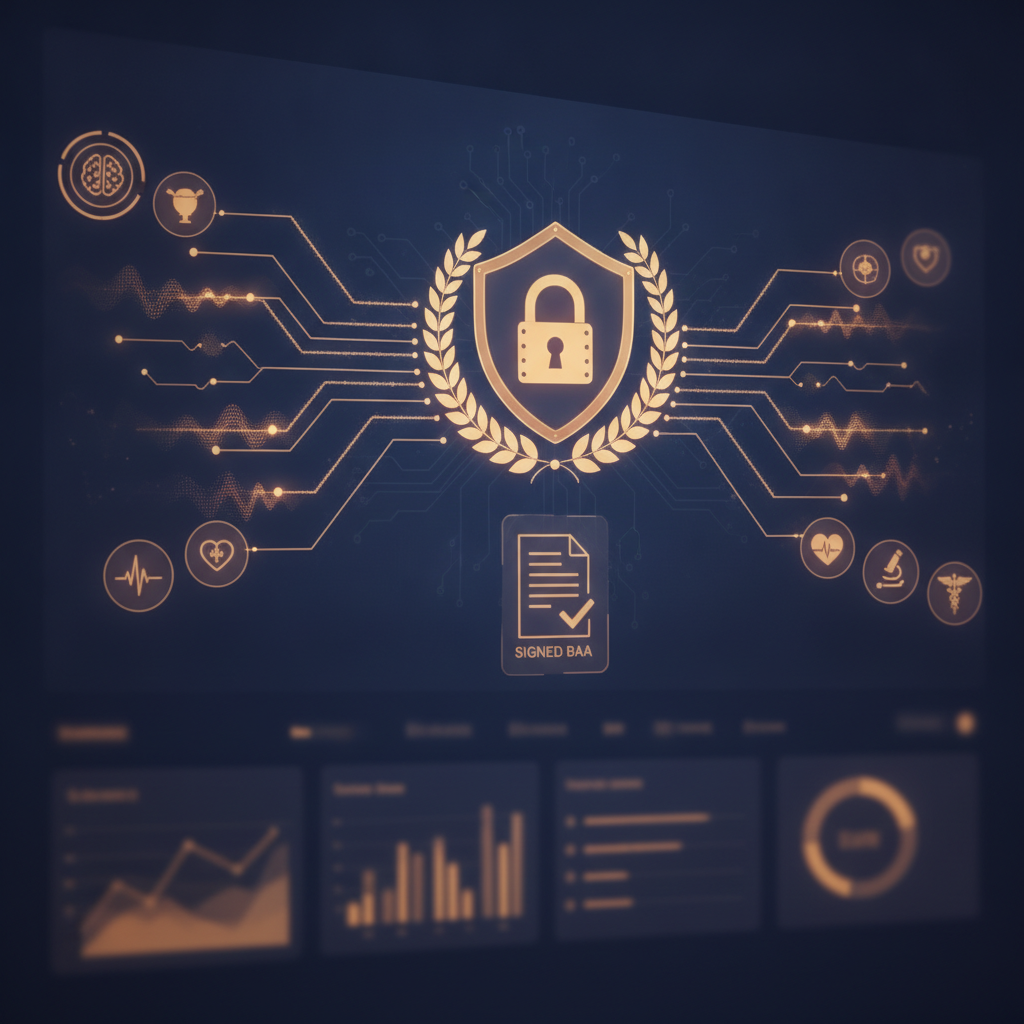
Generic AI platforms like standard ChatGPT or automated email assistants do not sign Business Associate Agreements (BAAs). If you feed patient names, symptoms, or scheduling requests into a system without a BAA, you are committing a severe HIPAA violation.
To safeguard your practice, any AI-powered client messaging tool you adopt must encrypt data both in transit and at rest. It must also provide a clear audit trail showing who accessed what information and when. Before signing up for any automation tool, ask the provider directly: "Will you sign a BAA, and does your platform support secure, encrypted multi-channel messaging?" If the answer is no, walk away immediately. For clinics requiring the highest level of security, Conversify's Business plan ($999/mo) includes a dedicated HIPAA compliance portal to ensure total peace of mind.
How Do You Integrate AI with Legacy Practice Management Systems?
Your practice likely relies on an Electronic Health Record (EHR) or practice management system like SimplePractice, TheraNest, or legacy clinic software. A major roadblock to implementing AI is the data silo problem. If your AI messaging tool cannot communicate with your scheduling calendar, your staff will end up manually copying and pasting information between platforms. This completely defeats the purpose of automation.
Many legacy platforms lack open APIs (Application Programming Interfaces), making direct integration difficult. When choosing an AI communication partner, look for platforms that offer pre-built integrations with major EHRs. This ensures that when an AI system automates appointment scheduling or processes a digital intake form, the data updates in your primary calendar instantly, avoiding double-bookings and manual entry errors.
Can AI Maintain the Empathetic Human Touch in Patient Care?
Patients reach out to private practices, especially therapists, counselors, and specialized clinics, seeking human connection and empathy. There is a valid fear that automating messages will make your practice feel cold, clinical, and robotic.
If a patient sends a vulnerable message about struggling with anxiety or physical pain, a poorly tuned AI auto-reply can feel incredibly dismissive.
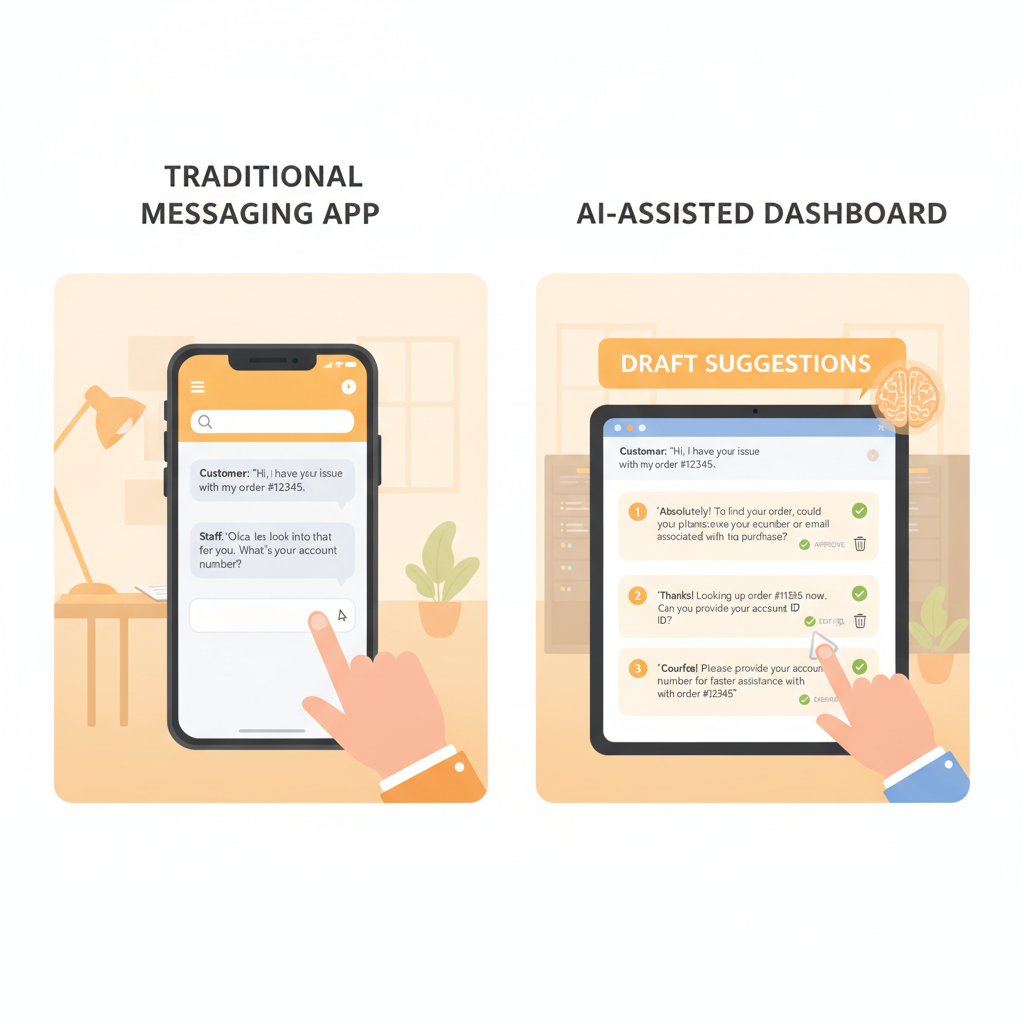
To overcome this challenge, practices should use a "human-in-the-loop" model for sensitive communications. Instead of letting AI send clinical advice or complex responses autonomously, use AI to draft personalized responses based on your practice's historical data, allowing your staff to review, tweak, and approve the message before hitting send.
Our internal data shows that 98.8% of conversations are fully resolved by AI without human handoff for routine administrative tasks. However, for clinical inquiries, a smart handoff system (available in Conversify's Pro plan for $199/mo) ensures that complex queries are instantly routed to a live staff member. This saves about 80% of writing time while keeping a warm, human touch at the center of your patient interactions.
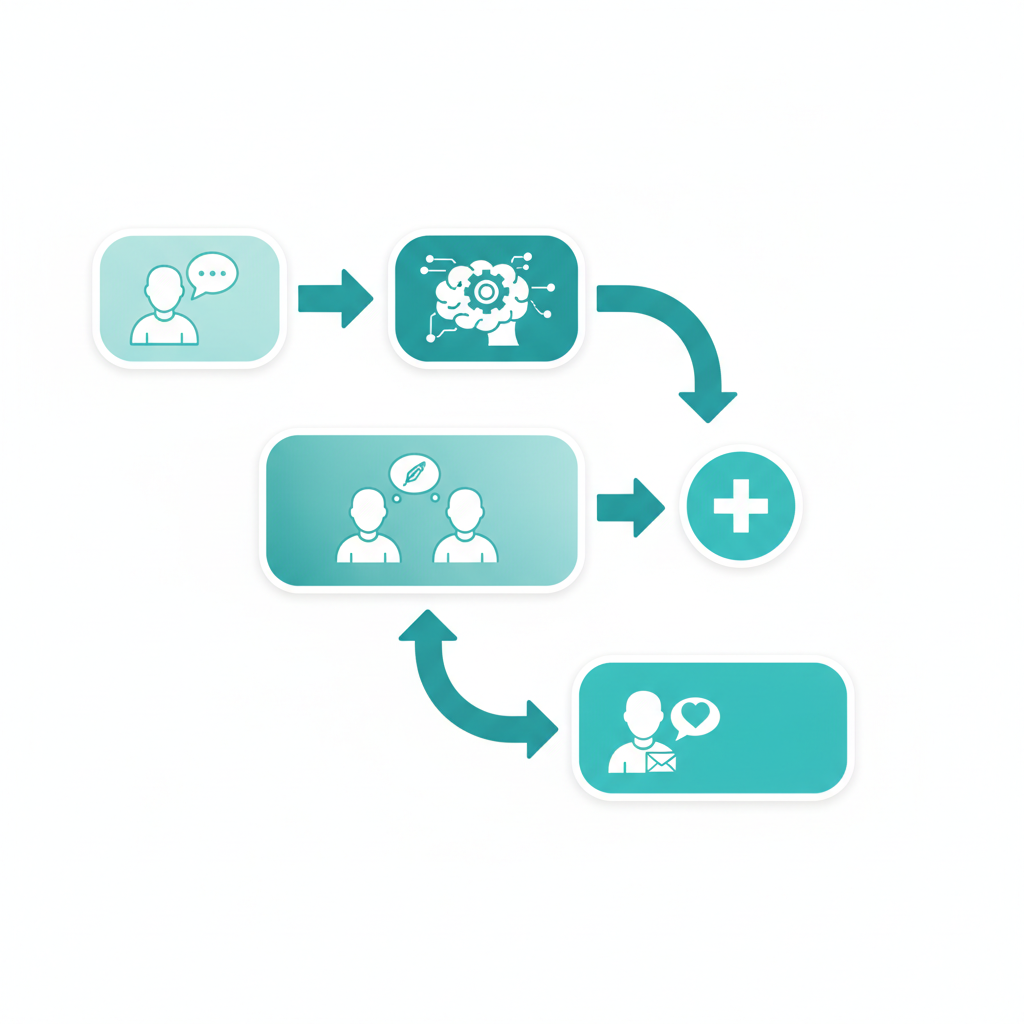
Why is WhatsApp Becoming the Dominant Channel for Patient Communication?
The channels patients use to communicate have shifted dramatically. While traditional SMS and patient portals were once the standard, modern patients demand faster, more accessible touchpoints.
According to Conversify platform data, WhatsApp accounts for 90.5% of patient communication volume. Relying solely on legacy SMS tools means you are missing patients where they are most active. WhatsApp allows for rich media sharing, instant delivery receipts, and global accessibility, making it an essential tool for modern clinics.
When exploring pricing plans, look for platforms that integrate WhatsApp natively. Conversify's Starter plan ($29/mo) includes one WhatsApp number and AI with memory, while higher tiers like the Growth plan ($89/mo) support multiple numbers alongside advanced features like intake forms and insurance collection.
What is the Cost of Implementing AI vs. Traditional Administrative Staff?
Small clinics operate on tight margins. Hiring a full-time receptionist or administrative assistant can cost between $35,000 and $45,000 annually, not including benefits, taxes, and onboarding costs.
While AI communication systems are vastly more affordable, the upfront investment (both in subscription fees and the time required to train your team) can cause initial friction. Let's break down the comparative costs and benefits:
- Traditional Staff: High overhead, limited to 40 hours a week, prone to human error under high workloads, but provides natural human empathy.
- Generic Communication Tools: Low cost, but require manual drafting and do not integrate with medical calendars.
- Dedicated AI Practice Communication Platform: Moderate, predictable monthly subscription. Operates 24/7/365, instantly handles FAQs, automates reminders, and drafts intake messages, saving up to 10 hours per staff member weekly.
The return on investment is immediate. For instance, practices using Conversify see a 0% no-show rate across 3,219 appointments, compared to the 12% to 18% industry average without automated reminders. By automating routine tasks, your physical staff can dedicate their working hours to high-value, face-to-face patient interactions rather than fighting with phone tag. Additionally, all Conversify plans include unlimited user seats, whereas competitors charge an extra $12 to $39 per user, making scaling highly cost-effective.
How Can You Safely Implement AI in Your Practice?
Transitioning to automated workflows does not have to be chaotic. Follow this structured roadmap to implement AI communication tools smoothly:
1. Audit Your Current Bottlenecks: Track your staff's daily tasks for one week. Identify where they spend the most time, such as answering "Are you accepting new patients?" or chasing down intake paperwork.
2. Verify Compliance First: Filter out any software vendor that will not sign a BAA or does not offer encrypted channels.
3. Start with Low-Risk Automation: Begin by automating highly repetitive, low-risk tasks like automated appointment reminders and scheduling confirmations to reduce your no-show rate.
4. Introduce Customizable Workflows: Set up templates for common FAQs (like parking information, accepted insurance, and pricing) so the AI can deliver instant, accurate answers.
5. Train Your Team Phase-by-Phase: Show your administrative staff how the AI acts as an assistant, not a replacement. Teach them how to review draft responses quickly to maintain your clinic's unique voice.
6. Review the Analytics: Periodically check your communication analytics to see how quickly patients are being helped and adjust workflows to close any gaps.
How Do Specialized AI Tools Compare to Traditional Competitors?
When looking at patient engagement platforms, it is easy to get confused by the options. Traditional platforms like Podium, Weave, and Birdeye are excellent for review generation and basic two-way texting, but they often lack the deep, clinical-grade AI reasoning needed to handle complex intake and highly customizable workflows.
On the other hand, platforms like Spruce Health or OhMD offer secure, compliant messaging but require your staff to manually type out almost every response.
Modern AI communication platforms bridge this gap. By combining secure, HIPAA-compliant multi-channel messaging (SMS, email, WhatsApp) with advanced workflow automation, they do not just transmit messages; they draft responses, categorize inquiries, and update your calendar automatically. Learn more About Conversify to see how this hybrid approach gives solo practitioners and small clinics the operational leverage of a large medical group without the massive staffing overhead. You can also explore our related articles to see how other clinics have successfully modernized their front desk.
Embracing AI in your private practice communication is not about replacing the human element of medicine; it is about optimizing your backend operations so you have more time to focus on what matters most: delivering exceptional patient care. By addressing compliance, integration, and empathy from day one, you can build a modern, scalable practice that thrives.
Frequently Asked Questions
Is AI communication in private practice HIPAA compliant?
Yes, AI communication can be completely HIPAA compliant, provided you use a platform designed specifically for healthcare. The vendor must sign a Business Associate Agreement (BAA), encrypt data both in transit and at rest, and maintain clear access logs. Conversify provides a dedicated HIPAA compliance portal on its Business plan to ensure total data security.
Will AI replace my clinical front desk staff?
No, AI is designed to assist your front desk staff, not replace them. By automating repetitive tasks like scheduling reminders, intake follow-ups, and answering FAQs, AI frees up your administrative team to focus on in-person patient care. Our platform data shows that while AI resolves 98.8% of routine conversations, complex queries are seamlessly handed off to your staff.
How long does it take to set up AI communication workflows?
Most modern AI communication platforms can be configured within a few days. Basic features like automated reminders and simple FAQ responses can go live almost instantly, while deep integrations with your existing legacy EHR might take a week or two to configure and test.
Can AI handle complex clinical questions from patients?
AI should not answer clinical questions autonomously. Instead, practices should use a human-in-the-loop system where the AI drafts a response based on your clinic's protocols, which a licensed practitioner or clinical staff member reviews and approves before sending. This preserves clinical safety and empathy.
How does automated scheduling reduce patient no-shows?
Automated scheduling reduces no-shows by sending timely, multi-channel reminders via WhatsApp, SMS, and email. Patients can easily confirm, reschedule, or cancel their appointments through these automated touchpoints. Practices using Conversify's automated reminders have achieved a 0% no-show rate across thousands of appointments.
What is the average ROI of AI messaging in a small clinic?
The average small clinic recovers 10 to 15 hours of administrative time per staff member weekly by automating routine communications. This reduction in overhead, combined with a lower no-show rate and unlimited user seats to avoid per-user fees, typically covers the cost of the software within the first month of implementation.
David Friedman - Founder, Conversify · LinkedIn
David Friedman is a B2B operations leader with over 10 years of experience managing large-scale teams and business processes. After years of working with service businesses and seeing how much time was lost to manual customer communication, he founded Conversify, an AI-powered platform that helps healthcare practices and service providers across Europe automate their patient and client interactions. David built the platform from the ground up, working directly with practicing healthcare professionals to ensure every feature solves a real operational pain point. He is based in Spain.