Choosing AI Communication Software for Private Practices
Selecting the right AI communication software is crucial for reducing administrative burdens in private practices. Discover key features, HIPAA compliance requirements, and a five-step decision framework to optimize your clinical workflows in 2026.
To choose the right AI communication software for a small private practice, prioritize platforms offering HIPAA-compliant messaging, automated scheduling, customizable intake workflows, and seamless EHR integration. The ideal tool reduces administrative overhead by at least 30% and supports multi-channel communication, including SMS, email, and WhatsApp, without requiring extra front-desk hires.
Running a modern private practice requires balancing clinical care with an endless stream of administrative tasks. For solo practitioners and small clinics, managing phone calls, scheduling requests, intake forms, and billing inquiries easily consumes 15 to 20 hours every week. This administrative burden leads to clinical burnout and missed growth opportunities. According to Conversify platform data, a staggering 76.9% of patient messages arrive outside normal business hours, meaning practices without automated systems routinely miss patient inquiries. By implementing AI-driven communication tools, practices can capture these leads instantly. Our internal data shows that 98.8% of these patient conversations are fully resolved by AI without requiring any human handoff. This 24/7 responsiveness allows clinics to eliminate front-office bottlenecks, lower operational costs, and ensure that patients receive immediate support. Ultimately, automating these routine touchpoints protects your clinical energy so you can focus entirely on patient care.
By automating routine patient touchpoints, you can ensure your practice remains responsive 24/7. Let us look at how to evaluate the market and select the best automated communication solution for your specific clinical needs. Read more about Conversify to see how we help clinics automate their workflows.
Why does your small private practice need AI communication software?
If you are still managing your practice using manual phone calls and basic email, you are likely losing clients to faster-responding competitors. Modern patients expect instant gratification; over 70% of consumers prefer to book appointments and ask basic practice questions via text rather than calling an office.
AI communication software acts as a virtual medical receptionist. It handles the repetitive, front-office tasks that pull you away from your patients.
Implementing an AI-driven system helps your practice in several concrete ways:
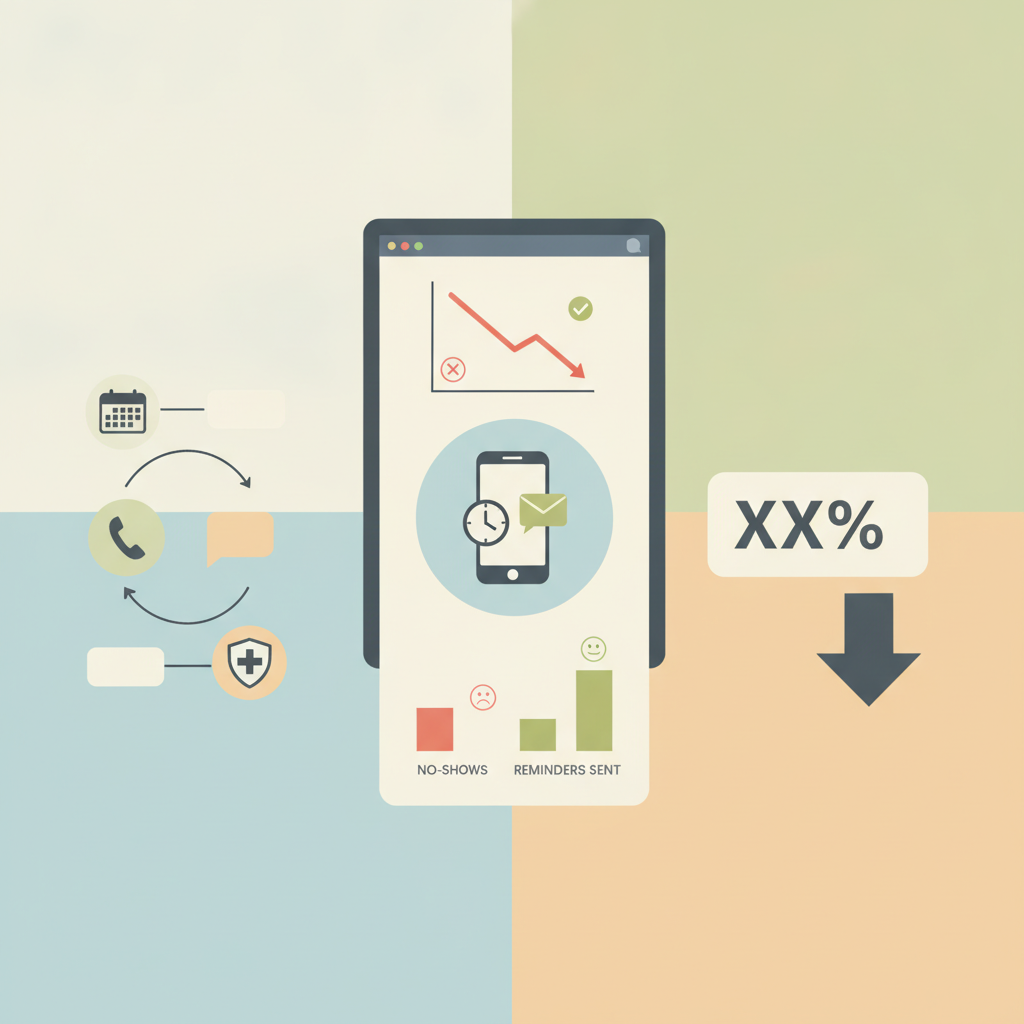
- Drastically Reduces No-Shows: Automated cadence reminders (sent at 7 days, 3 days, and 24 hours before an appointment) can lower no-show rates significantly. In fact, practices using Conversify see a 0% no-show rate across 3,219 appointments, compared to the 12% to 18% industry average without automated reminders.
- Eliminates Phone Tag: AI assistants can handle appointment rescheduling and intake coordination via secure messaging while you are in session.
- Scales Your Practice Cost-Effectively: You can grow your patient roster without the immediate financial burden of hiring and training full-time administrative staff.
What key features should you look for in AI communication tools?
Not all communication platforms are built for the healthcare space. To ensure you do not compromise patient privacy or complicate your daily operations, look for these essential features.
1. Secure, HIPAA-Compliant Messaging
This is non-negotiable. Any software that handles Protected Health Information (PHI) must comply with HIPAA regulations. Ensure the vendor will sign a Business Associate Agreement (BAA) and that all communications, whether SMS, email, or portal messages, are encrypted end-to-end. Conversify offers a dedicated HIPAA compliance portal on its Business plan to keep your clinic fully protected.
2. Automated Scheduling and Smart Reminders
Your software should not just send out static reminders. It should feature interactive, AI-driven scheduling that allows patients to confirm, cancel, or request a reschedule directly from a text message. The system should automatically update your calendar in real-time to avoid double bookings.
3. Streamlined Intake and FAQ Automation
When a new patient books an appointment, the AI should instantly dispatch secure digital intake forms. Additionally, the software should feature conversational AI capable of answering common, non-clinical FAQs, such as "Do you take Blue Cross insurance?" or "Where do I park?" instantly, day or night.
4. Multi-Channel Support and EHR Integrations
Patients communicate across different platforms. Your chosen tool should centralize SMS, email, and web chat into a single, unified inbox. More importantly, it must integrate with your Electronic Health Record (EHR) or Practice Management System (PMS) to prevent manual data entry errors. Furthermore, modern practices must meet patients where they already are. Our platform data shows that WhatsApp accounts for 90.5% of patient communication volume, making WhatsApp integration a vital channel for modern patient engagement.
5. Smart Handoffs and Safety Escalations
AI is incredibly capable, but medical communications require a safety net. Modern platforms must include automated safety escalation protocols. If a patient mentions a crisis, self-harm, or severe physical symptoms, the AI must immediately flag the message and hand it off to a human clinician. Conversify's Pro and Business plans, for example, feature dedicated safety escalation dashboards to guarantee patient safety is never compromised.
How do you choose the best AI communication software for your clinic?
Selecting software can feel overwhelming with dozens of platforms claiming to be the perfect fit. Follow this structured approach to find the tool that aligns with your practice workflow.
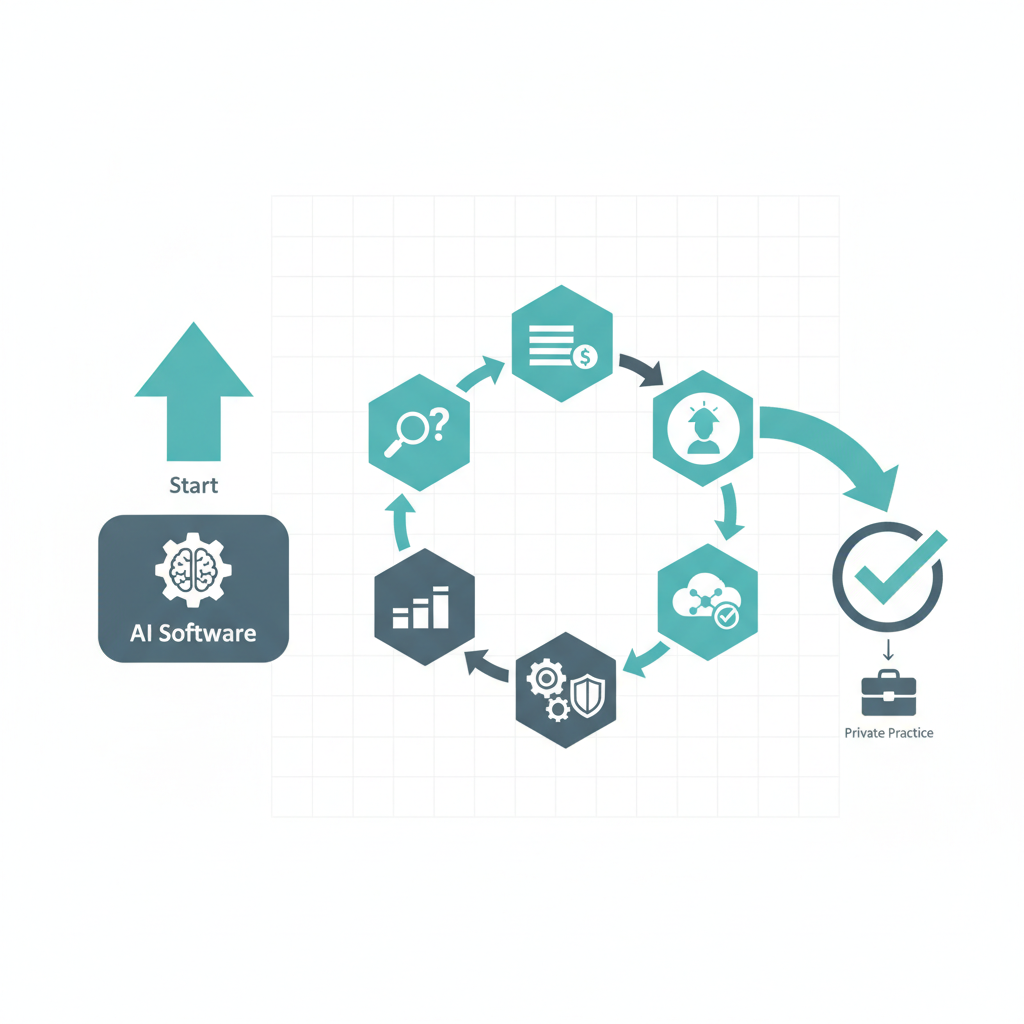
Step 1: Map Your Current Communication Bottlenecks
Spend one week tracking where your administrative time goes. Are you spending too much time playing phone tag to confirm appointments? Is your intake process delayed because patients forget to mail or bring forms? Pinpointing these pain points will help you prioritize features.
Step 2: Audit for HIPAA and Security Compliance
Narrow your list to software providers that explicitly state they are HIPAA-compliant and willing to sign a BAA. Avoid generic business communication tools (such as standard Twilio setups or unencrypted SMS marketing tools) that do not meet healthcare security standards.
Step 3: Evaluate EHR and PMS Compatibility
Check the integration marketplace of your current EHR (such as SimplePractice, TheraNest, Athenahealth, or Jane App). A communication tool that does not sync with your patient database will force you to manually copy and paste data, defeating the purpose of automation.
Step 4: Analyze Patient Experience and Interface Friction
Test the software from a patient's perspective. If a patient has to download a complex app or remember a 12-character password just to confirm an appointment, they will not use it. Look for frictionless, web-based interfaces and direct SMS or WhatsApp channels.
Step 5: Compare the Cost vs. Time-Saved ROI
Calculate the return on investment. If a platform costs $150 per month but saves your staff 10 hours of manual phone calls (valued at roughly $200 to $300 in labor costs), the software pays for itself in the first two weeks. Be sure to check the pricing plans of different vendors. For instance, Conversify's plans start at just $29 per month and include unlimited user seats, whereas competitors often charge an additional fee for every extra staff member.
Which AI communication tools are best for private practices?
To help you make an informed decision, let us compare some of the leading platforms on the market today.
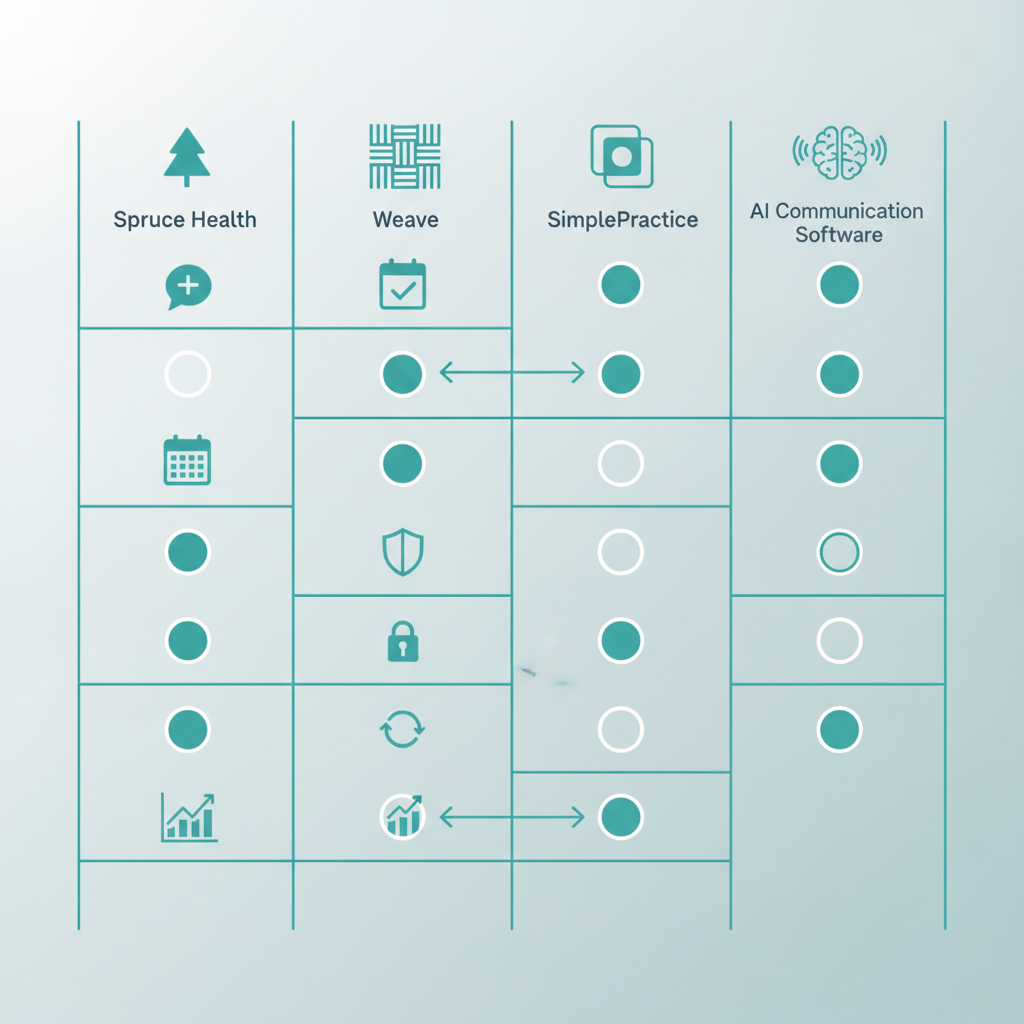
- Spruce Health and OhMD: These platforms excel at secure, HIPAA-compliant texting and basic internal team communication. They are ideal for solo practitioners who want a clean, simple communication channel, though they may require more manual setup for advanced AI workflows.
- Weave and NexHealth: Excellent options for dental, orthodontic, and physical therapy clinics. They offer deep EHR integrations and comprehensive VoIP phone systems, but their price point can be steep for small or solo mental health practices.
- SimplePractice and TheraNest: These are comprehensive EHRs with native client portals. While they handle basic automated reminders well, they lack the advanced, conversational AI FAQ capabilities and multi-channel marketing tools found in dedicated communication engines.
- Specialized AI Communication Software (Conversify): If you want to bridge the gap between a rigid EHR and patient convenience, choosing a dedicated AI communication system allows you to build custom, automated workflows. Conversify handles patient intake, instant FAQ answering, and targeted follow-up campaigns automatically, resolving 98.8% of conversations without any manual intervention. Read our related articles to see how other clinics have scaled their operations.
How does automated communication improve the patient experience?
Transitioning to AI-powered communication is not about replacing the human touch in your clinic; it is about protecting it. By offloading routine scheduling, intake coordination, and basic FAQ management to a secure, automated platform, you free up physical and mental energy. This allows your team to focus entirely on delivering high-quality, empathetic clinical care during patient sessions. Choose a system that fits your budget, respects patient privacy, and eliminates communication friction from day one.
Frequently Asked Questions
Is AI communication software HIPAA compliant?
Yes, but only if the software vendor signs a Business Associate Agreement (BAA) and uses end-to-end encryption. Platforms built specifically for healthcare, such as Spruce Health, OhMD, or Conversify (which features a dedicated HIPAA compliance portal on its Business plan), are designed to meet these exact compliance standards.
How much does AI communication software cost for a solo practitioner?
Prices generally range from $50 to $300 per month depending on the depth of features and integrations. Solo practitioners often benefit from tiered pricing plans that scale based on active patient count rather than flat enterprise rates. For example, Conversify's Starter plan is just $29 per month and includes unlimited user seats.
Can AI tools integrate with my existing EHR system?
Many modern AI communication platforms offer direct integrations with popular EHRs like SimplePractice, TheraNest, or Athenahealth. Always verify the software vendor's integration list to ensure real-time data syncing for calendars and patient charts.
Will automated messaging make my practice feel cold and impersonal?
Actually, the opposite is true. By automating routine administrative tasks like scheduling and intake, your staff gains more time to focus on delivering high-quality, empathetic face-to-face patient care.
Can AI communication software help reduce patient no-shows?
Yes, automated multi-channel reminders (SMS, WhatsApp, and email) can reduce appointment no-shows significantly. According to Conversify internal platform data, clinics using our automated reminders achieved a 0% no-show rate across 3,219 appointments, compared to the 12% to 18% industry average.
What is the learning curve for staff implementing AI communication tools?
Most modern AI communication platforms feature intuitive, user-friendly dashboards that require less than two hours of staff training. Setting up pre-built templates and automated workflows can typically be done in a single afternoon.
David Friedman - Founder, Conversify · LinkedIn
David Friedman is a B2B operations leader with over 10 years of experience managing large-scale teams and business processes. After years of working with service businesses and seeing how much time was lost to manual customer communication, he founded Conversify, an AI-powered platform that helps healthcare practices and service providers across Europe automate their patient and client interactions. David built the platform from the ground up, working directly with practicing healthcare professionals to ensure every feature solves a real operational pain point. He is based in Spain.