Stop Losing Money: Do Booking Deposits Scare Off Salon Clients?
Requiring a deposit won't scare away your salon clients. Learn how setting a 25% to 50% deposit policy actually increases successful appointments, boosts revenue, and filters out unreliable bookings.
Requiring a booking deposit does not scare away salon clients. Instead, upfront deposits are a highly effective no-show reduction strategy for service businesses, filtering out uncommitted bookings while increasing successful appointments by an average of 32% [4]. Clients actually expect deposits, viewing them as a standard commitment to secure their preferred time slot [5].
In fact, industry data shows that implementing a deposit policy is one of the most reliable no-show reduction strategies for service businesses. Far from driving customers to competitors, booking platforms report that deposit-required slots see 60% to 80% fewer no-shows [2], while overall successful appointments rise significantly, boosting stylist revenue by nearly $1,000 monthly [4]. At the same time, online booking deposits have surged by 346% over a two-year period, proving that upfront payments are rapidly becoming the gold standard for booking hair, beauty, and wellness services [5].
Many independent stylists and beauty business owners worry that a strict deposit policy will alienate their regulars. However, the data reveals that booking friction, not the deposit itself, is what truly scares clients away [7]. To learn more about our mission to help businesses communicate better and reduce booking friction, visit the About Conversify page.
>
Key Takeaways
* Deposits drive commitment: Requiring an upfront deposit reduces no-shows by 60% to 80% [2] and increases successful appointments by 32% [4].
* The sweet spot is 25% to 50%: Deposits below 20% do not change client behavior, while deposits over 60% can create booking friction [5].
* Friction is the real enemy: Over 71% of salon regulars abandon bookings not because of deposit policies, but because completing the booking is too difficult [7].
* Double down with automation: Combining booking deposits with automated SMS and email reminders can reduce missed slots by an additional 30% to 60% [6].
The Real Cost of Empty Chairs: Why No-Show
Reduction Strategies for Service Businesses Matter
Every empty slot in your calendar represents lost time, wasted product, and unrecoverable revenue. According to the Professional Beauty Association's Salon Industry Report, the average salon runs a baseline no-show rate of 15% to 20% [4]. This might sound like a minor inconvenience, but when you look at the compounding math, the results are staggering.
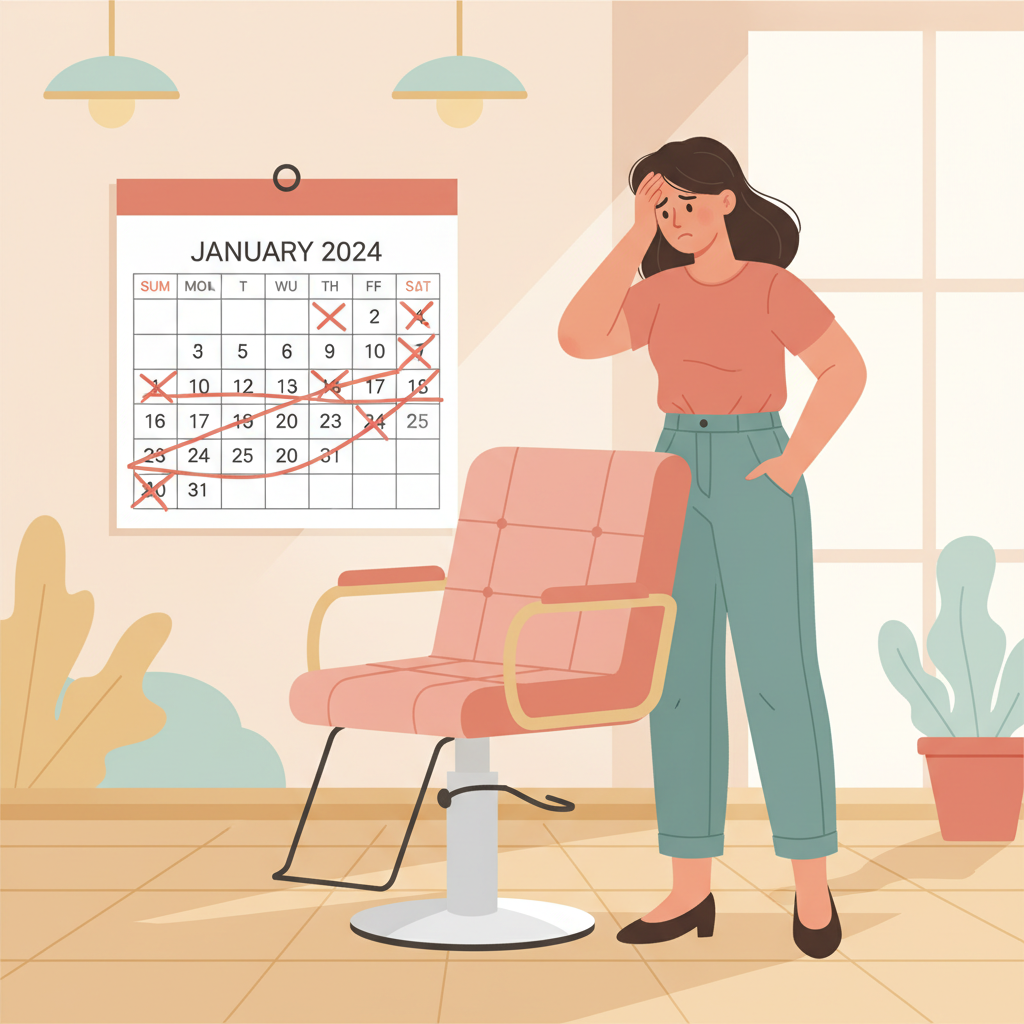
Imagine a typical three-chair salon running 30 appointments per day. If they have a 15% no-show rate and an average ticket value of $85, they are losing roughly $9,750 per month [3]. Over the course of a single year, that adds up to $117,000 in completely lost revenue [3]. For independent stylists and small business owners, this leakage is often the difference between thriving and barely scraping by. Passive scheduling is a massive drain on profitability, which is why proactive no-show reduction strategies for service businesses are essential.
Do Booking Deposits Actually Scare Off Loyal Clients?
Many salon owners hesitate to implement deposits because they fear competitors who do not charge deposits will steal their clients. However, the data strongly refutes this fear. GlossGenius reports that beauty businesses using deposits see a 32% average increase in successful appointments [4]. This does not mean they are booking fewer clients; it means they are booking committed clients. This shift translates to nearly $1,000 in additional monthly revenue per stylist [4].
Furthermore, upfront financial investment fundamentally alters how clients view their appointments. When a client pays nothing upfront, cancelling at the last minute has zero financial consequence for them. But when a deposit is required, their commitment sky-rockets. Kitomba reports that salons requiring a 100% deposit experience a 29% average reduction in cancelled or no-show appointments compared to those that take no deposits [1]. Even partial deposits are highly effective, with research across booking platforms showing that deposit-required bookings have no-show rates 60% to 80% lower than non-deposit bookings for the same time slots and service types [2].
An unexpected benefit of this policy is the psychological boost to retail sales. Kitomba customers who implement online deposits see a 2% average increase in client spend and a 9% increase in retail spend [1]. When a client has already paid a portion of their bill upfront as a deposit, their final checkout total feels significantly smaller. This makes them far more willing to purchase retail products, like professional shampoos or styling creams, or add on extra services during their visit [1].
Finding the Sweet Spot: How to Set Your
Salon Deposit Policy
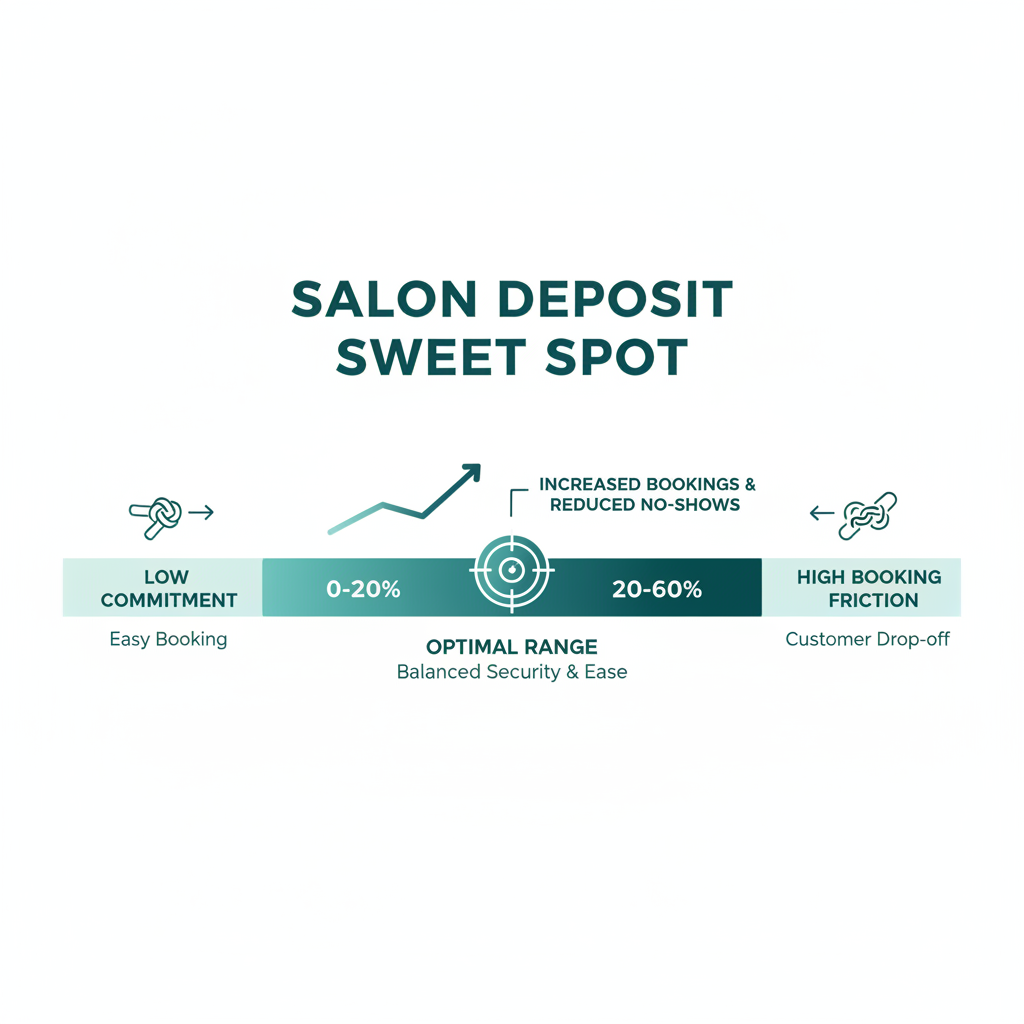
Setting the right deposit amount is a delicate balancing act. If you charge too little, you will not change client behavior. If you charge too much, you might scare away new clients who are not yet familiar with your work.
According to industry data, deposits below 20% of the service value do not meaningfully change no-show rates [5]. On the flip side, deposits above 60% can create booking friction, especially for first-time clients who are hesitant to pay for a full service upfront [5]. Industry experts recommend setting deposits between 25% and 50% of the service value [5]. This range strikes the perfect balance between securing client commitment and keeping the booking process easy and inviting.
This approach is quickly becoming the new industry standard. Over a two-year period, online booking deposits increased by 346%, while in-salon booking deposits rose by an astonishing 5,241% [5]. Upfront deposits are fast becoming an expected norm for securing hair and beauty appointments, similar to booking a hotel room or a flight.
| Deposit Level | Client Friction | No-Show Impact | Best For |
|---|---|---|---|
| Below 20% | Very Low | Negligible [5] | Quick trim or low-cost consults |
| 25% to 50% | Low to Moderate | High reduction [5] | Color, extensions, complex styling |
| Above 60% | High for new clients | Maximum reduction [1] | High-ticket packages or busy holiday slots |
How to Implement Booking Deposits Without
Losing Your Clients
If you are ready to implement no-show reduction strategies for service businesses, follow these steps to transition smoothly without alienating your current clients:
- Step 1: Determine your deposit percentage. Aim for the recommended sweet spot of 25% to 50% of the service value [5]. For high-ticket services like extensions or extensive color corrections, you may want to lean closer to 50%.
- Step 2: Minimize booking friction. Over 71% of salon regulars report they have decided not to book an appointment because it was too difficult to reach someone by phone or complete a booking online [7]. This means booking friction, rather than deposit policies, is the real client-killer. To solve this, you need a streamlined communication and booking setup. While tools like ManyChat, respond.io, or Intercom offer basic automation, they often feel too impersonal for beauty clients. Conversify offers a WhatsApp shared inbox, AI auto-responses, and seamless appointment booking that keeps the conversation natural and easy. Check out our pricing plans to see how we can simplify your booking flow.
- Step 3: Pair deposits with automated reminders. While deposits provide the strongest financial deterrent, combining them with automated multi-channel reminders ensures clients do not simply forget their scheduled times. Automated SMS and email reminders can reduce appointment no-shows by 30% to 60% [6].
- Step 4: Focus on online booking retention. Boulevard's Salon Industry Client Retention Report shows that clients who book their first appointment online return for a second appointment 78% of the time, compared to just 39% for walk-ins [7]. Optimizing your online booking experience is critical for securing long-term loyalty.
- Step 5: Write a clear, friendly cancellation policy. Explain that deposits are non-refundable but fully transferable if appointments are rescheduled with at least 24 or 48 hours of notice. This positions the deposit as a reservation fee rather than a penalty.
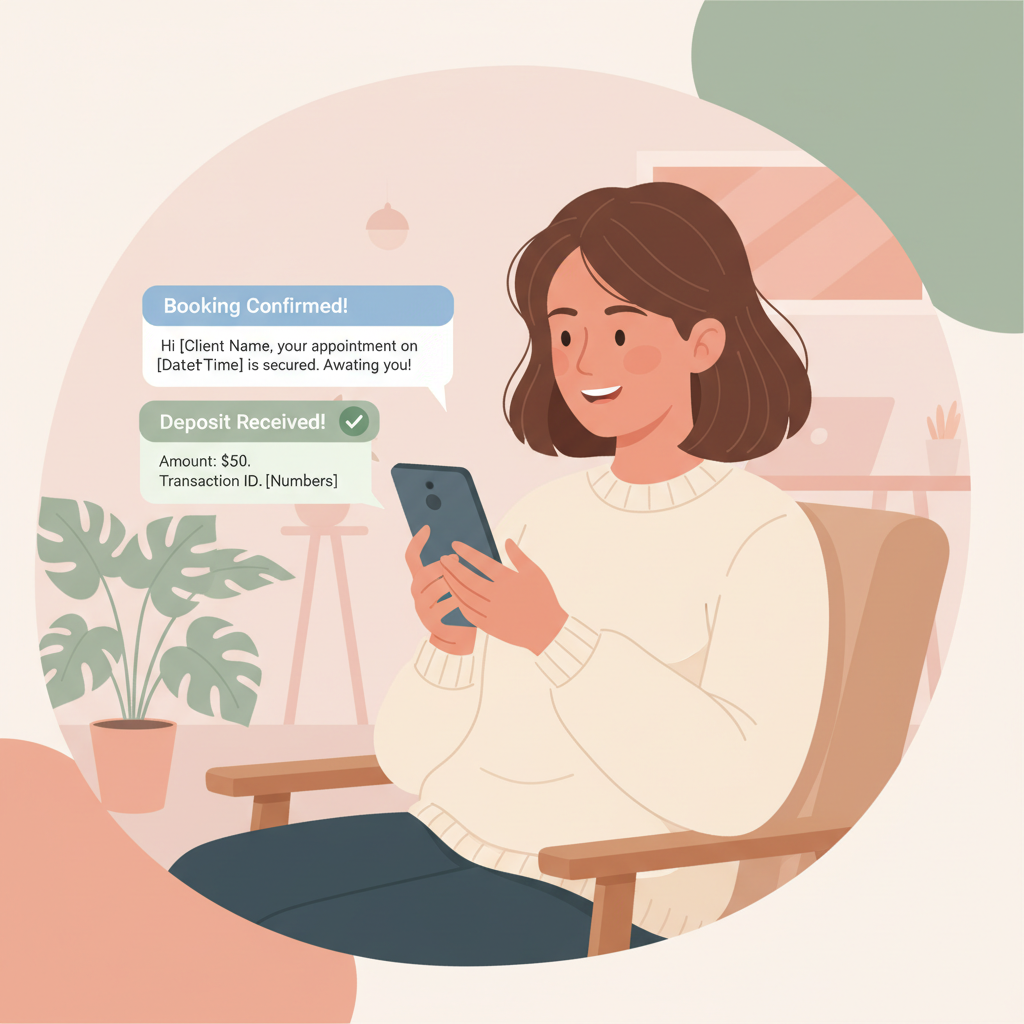
By combining booking deposits with a frictionless booking experience and automated reminders, you can safeguard your business's revenue while providing a professional, modern experience that your clients will appreciate.
Frequently Asked Questions
What is the average no-show rate for beauty salons?
According to the Professional Beauty Association's Salon Industry Report, the average salon runs a baseline no-show rate of 15% to 20% [4]. This high baseline represents a massive drain on revenue, making active no-show reduction strategies essential for maintaining profitability.
Will requiring a deposit scare away my existing salon clients?
No, requiring a deposit will not scare away your clients if implemented correctly. GlossGenius reports that beauty businesses using deposits see a 32% average increase in successful appointments, which translates to nearly $1,000 in additional monthly revenue per stylist [4].
What is the recommended deposit percentage for a salon?
Industry experts recommend setting deposits between 25% and 50% of the service value [5]. Deposits below 20% do not meaningfully change no-show rates, while deposits above 60% can create booking friction for new clients [5].
How much money do salons lose from unaddressed no-shows?
A typical three-chair salon running 30 appointments per day with a 15% no-show rate and an $85 average ticket loses roughly $9,750 per month [3]. Annually, this compounding financial damage adds up to $117,000 in lost revenue [3].
Do booking deposits increase retail sales in salons?
Yes, implementing online deposits can actually boost retail spend by 9% and overall client spend by 2% [1]. Because clients have already paid a portion of their bill upfront, their final checkout total feels smaller, making them more willing to purchase retail products [1].
How effective are automated reminders compared to deposits?
Automated SMS and email reminders can reduce appointment no-shows by 30% to 60% [6]. While deposits provide the strongest financial deterrent, combining them with automated reminders ensures clients do not simply forget their scheduled times.
Sources
- Kitomba Blog: Deposits vs Cancellation Fees
- Dingg App: How One Small Change Saved My Salon
- Lutily: Salon No-Show Costs
- Waitq: Salon Statistics
- SalonIQ: Deposits in Your Salon
- Appointment Reminder: No-Show Statistics
- Salon Today: Boulevard Report on Salon Client Retention
David Friedman - Founder, Conversify · LinkedIn
David Friedman is a B2B operations leader with over 10 years of experience managing large-scale teams and business processes. After years of working with service businesses and seeing how much time was lost to manual customer communication, he founded Conversify, an AI-powered platform that helps healthcare practices and service providers across Europe automate their patient and client interactions. David built the platform from the ground up, working directly with practicing healthcare professionals to ensure every feature solves a real operational pain point. He is based in Spain.