
How to Set Up Missed Call Text Back on an Existing Landline
Learn how to set up missed-call text back recovery on your existing business landline. Keep your current voice carrier while using Hosted SMS and conditional forwarding to capture lost leads instantly.
Setting up missed-call text back recovery on an existing landline is achieved by text-enabling your current number via Hosted SMS and configuring conditional call forwarding using carrier star codes like *71. When a call goes unanswered, the carrier automatically forwards it to a digital tracking number. By implementing this system, businesses capture leads within the critical first minute, turning unanswered calls into active text conversations. You can easily view our pricing plans to see how affordable this setup is. Learn more About Conversify and how we help businesses recover lost revenue, or browse our related articles for more automation tips.
Why Voicemail is Failing Your Business
(and the Power of SMS) Every missed call is a lost opportunity. Small businesses miss between 20% and 35% of incoming calls during business hours, and nearly 100% of calls after hours [1]. This high volume of unanswered calls represents a massive revenue leak for service businesses, making missed-call text back recovery a critical automation to implement. When customers call a business, they expect immediate assistance. If they reach a voicemail greeting, the outcome is rarely positive. In fact, fewer than 3% of callers who reach a service business's voicemail actually leave a message [2]. Instead of leaving a voicemail, the vast majority of callers immediately hang up and dial a competitor. This behavior highlights why an automated text-back is far more effective than a traditional greeting. Responding to a lead within the first 60 seconds has been shown to boost conversion rates by as much as 391% [3]. Missed-call text back recovery systems leverage this speed by triggering an automated text within seconds of a missed call, capturing the lead while they are still in decision mode. Furthermore, text messages have a 98% open rate and a 45% response rate, compared to a 20% open rate and a 6% response rate for email [12]. This stark difference in engagement explains why moving a missed call conversation to SMS yields significantly higher recovery rates than sending an email follow-up. For local service businesses, salons, retail stores, agencies, and local offices, this transition from voice to text is the key to maintaining a competitive edge.
How Missed-Call Text Back Recovery Works
on a Landline Many business owners believe that to start texting customers, they must abandon their long-held landline numbers or switch to a completely new VoIP provider. Fortunately, this is not the case. You can keep your existing voice service completely intact while modernizing your customer communication. First, businesses can text-enable their existing landline using Hosted SMS through a third-party texting provider, keeping their voice service completely intact with their current carrier [4], [5]. This allows local businesses to keep their well-known primary phone number for voice calls while routing text traffic separately through a digital messaging dashboard. Your physical desk phones continue to work exactly as they always have. Second, you set up conditional call forwarding via carrier-level star codes, such as dialing 71 or 61, which routes unanswered calls to a tracking number without replacing the existing phone system [7], [8]. This technical setup ensures that the primary business landline rings normally first, and the missed-call text back recovery workflow only triggers if the call goes unanswered, busy, or unreachable. 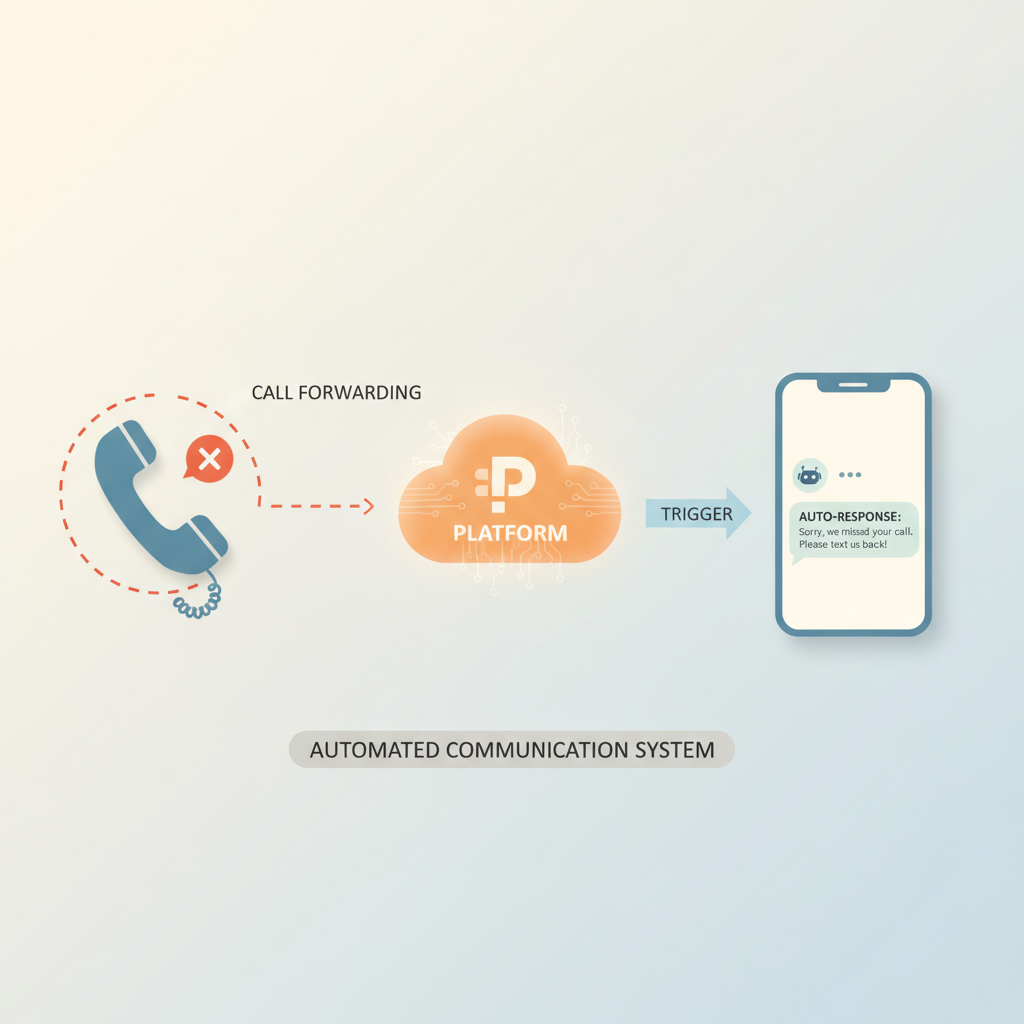
Step-by-Step Guide to Setting Up Your
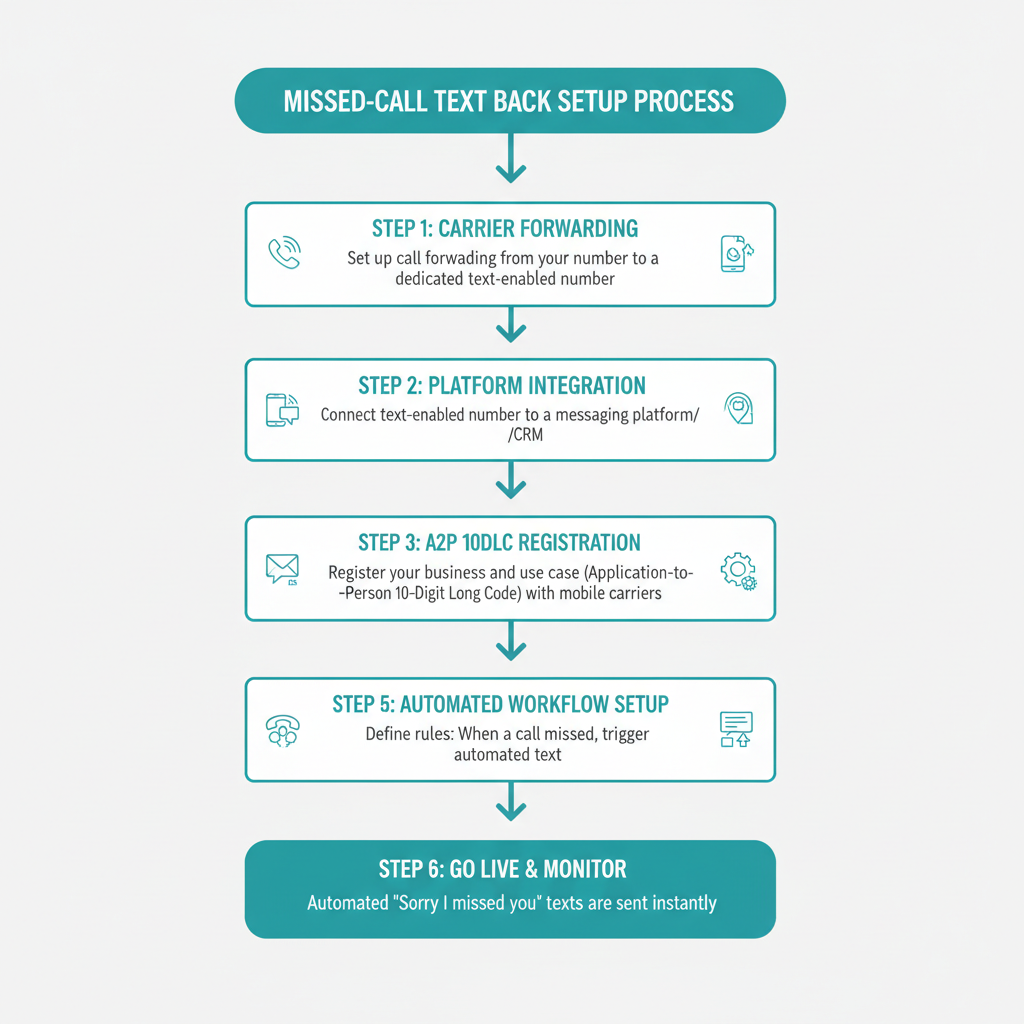
Landline Text-Back Setting up this system is a straightforward process when using a unified platform. Here is how you can configure the system for your business: - Step 1: Text-Enable Your Existing Landline Number. You do not need to change your carrier. Your voice calls will still go through your current landline provider exactly as they do now.
- Step 2: Register for A2P 10DLC Compliance. US carriers require all software-sent texts from standard 10-digit local numbers to be registered under the A2P 10DLC framework, or carriers like Twilio will block the messages outright [9], [10]. To ensure high deliverability, you must register your Brand and Campaign details with your messaging provider before activating the automation.
- Step 3: Configure Conditional Call Forwarding. Dial the appropriate star code from your landline phone to forward missed calls. For example, dialing *71 followed by your digital tracking number sets up forwarding for busy or unanswered calls [7], [8]. This ensures the landline still rings first, and forwarding only occurs if you fail to pick up.
- Step 4: Design Your Automated Text Sequence. Draft a compliant, helpful response. Under CTIA guidelines, a missed phone call does not constitute implied consent for marketing, meaning the initial automated text-back must be purely informational and include opt-out instructions [11].
- Step 5: Connect to a Unified Inbox. Modern customer communication platforms allow businesses to route SMS, WhatsApp, and web chat into a single unified inbox, preventing staff from having to manage multiple disconnected apps [14]. This keeps your team organized and ready to respond when the customer texts back.
Navigating Technical Limitations and
Compliance While missed-call text back recovery is incredibly powerful, there are a few technical limitations and legal compliance rules you must keep in mind to protect your business and ensure smooth operations. First, consider the caller's phone type. While a business can text-enable its own landline, a standard analog landline cannot receive SMS, meaning a text-back automation cannot deliver a reply if the caller dialed from a traditional landline [10]. Although the vast majority of modern callers use mobile phones, businesses should be aware of this technical limitation and consider setting up a call-back fallback or using an AI receptionist to handle landline-to-landline scenarios. Second, legal compliance is critical. To remain compliant with TCPA regulations, the first text in a missed-call text back recovery sequence should simply acknowledge the missed call, ask how to help, and provide a clear STOP opt-out keyword [11]. Do not include promotional offers or sales pitches in this initial message, as you do not yet have explicit opt-in consent for marketing.
Choosing the Right Platform: Conversify vs.
Competitors When selecting a platform to manage your missed-call text back recovery, you will find several options on the market. This centralized approach is especially valuable for service businesses that need to seamlessly transition a missed-call text back recovery into an appointment booking or an AI-powered auto-response.  Businesses using missed-call text back recovery systems typically see a 30% to 45% recovery rate of missed calls into active text conversations, with 35% to 55% of those converting to booked appointments [13]. For service businesses, converting even a third of previously lost calls into booked appointments directly translates to thousands of dollars in recovered monthly revenue.
Frequently Asked Questions
How do I set up conditional call forwarding on my landline?
You can set up conditional call forwarding by dialing specific star codes on your physical landline phone [7], [8]. For most major carriers, dialing *71 followed by your digital tracking number will route unanswered or busy calls to your text-back platform while keeping your primary line ringing first.
Will text-enabling my landline affect my current voice service?
No, text-enabling your landline using Hosted SMS does not affect your voice service [4], [5]. Your current carrier will continue to handle all voice calls exactly as they do now, while your digital messaging platform handles the text traffic separately.
Why is A2P 10DLC registration necessary for missed-call text back?
US carriers require all software-sent texts from standard 10-digit local numbers to be registered under the A2P 10DLC framework [9]. If you do not register your business brand and campaign details, carriers like Twilio will block your automated text-backs outright [10].
What should I include in my first automated text-back message?
To comply with TCPA regulations, your first text must be purely informational [11]. It should acknowledge the missed call, ask how you can help, and include clear opt-out instructions, such as "Reply STOP to unsubscribe" [11].
Can a missed-call text back system text an analog landline?
No, a standard analog landline cannot receive SMS messages [10]. If a caller dials from a traditional landline, the text-back automation will fail to deliver [10], which is why having an AI receptionist or a manual call-back fallback is highly recommended.
What kind of recovery rates can my business expect?
Businesses using missed-call text back recovery systems typically see a 30% to 45% recovery rate of missed calls into active text conversations [13]. Between 35% and 55% of those recovered conversations successfully convert into booked appointments [13].
Can I manage other messaging channels alongside SMS?
Yes, modern customer communication platforms allow you to route SMS, WhatsApp, and web chat into a single unified inbox [14]. This prevents your staff from having to manage multiple disconnected apps while responding to customers.
Sources
- [1] [The Valley Marketing
- [2] Nexus Flow Integration - Missed Call Text Back Automation
- [3] Omnyra - Missed Call Text Back
- [4] Textline - Landline Text Message
- [5] MessageDesk - Text to Landline
- [6] Reddit - Keep Number for Missed Call Text Back
- [7] GHL ScaleUp - Missed Call Text Back Setup
- [8] TextBack App - AT&T Call Forward
- [9] Inflowave - Missed Call Text Back Resources
- [10] Advai - Missed Call Text Back Not Working
- [11] 757 Comply - ERVA Missed Call Text Back
- [12] Inflowave - SMS vs Email Engagement
- [13] Voxmation - Missed Call Recovery
- [14] AI Emply - Missed Call Text Back AI Integration
- [15] The Marketing Block - Missed Call Text Back Guide
- [16] Havstock - Missed Call Text Back Benefits
- [17] Flowbots - What is Missed Call Text Back
Conclusion Implementing a missed-call
text back recovery workflow is one of the fastest ways to stop leaking revenue from unanswered phone calls. By text-enabling your existing landline and routing missed calls through conditional forwarding, you can instantly engage leads when their intent is highest. Platforms like Conversify make this seamless by combining Hosted SMS, AI-driven auto-responses, and a unified inbox, allowing you to turn missed opportunities into booked appointments without changing your voice carrier.
David Friedman - Founder, Conversify · LinkedIn
David Friedman is a B2B operations leader with over 10 years of experience managing large-scale teams and business processes. After years of working with service businesses and seeing how much time was lost to manual customer communication, he founded Conversify, an AI-powered platform that helps healthcare practices and service providers across Europe automate their patient and client interactions. David built the platform from the ground up, working directly with practicing healthcare professionals to ensure every feature solves a real operational pain point. He is based in Spain.