
AI Receptionist for Therapy Clinics: Capture Every Patient Call
Discover how an AI receptionist for therapy clinics solves staffing shortages, captures after-hours bookings, and prevents patients from calling competitors.
Deploying an AI receptionist ensures that therapy clinics capture every booking opportunity 24/7. This system handles routine administrative tasks, freeing up human staff to focus on in-person patient care. As clinics face a 47% front-desk turnover rate [4], automated front-desk solutions help stabilize operations and maintain consistent, high-quality patient communication.
The Administrative Crisis in Modern
Therapy Clinics Therapy clinics across the country are facing an unprecedented operational bottleneck. Front-desk turnover in medical practices reached a multi-year peak of approximately 47% in 2025, with the average time-to-fill for a medical receptionist role stretching to a grueling 62 days [4]. This chronic staffing shortage makes it incredibly difficult for clinics to maintain consistent administrative coverage. When front desks are understaffed, communication suffers. Medical practices miss an average of 23% of incoming calls [1]. This high rate of missed calls, which includes calls sent to voicemail, abandoned on hold, or disconnected, represents a significant communication gap and a massive source of potential revenue loss. Clinicians want to focus on patient care, but they are instead bogged down by ringing phones and scheduling logistics. However, modern patient behavior has rendered these systems obsolete. Today, 62% of patients will not leave a voicemail when calling a medical office, and 67% will call a competing provider instead of waiting [2]. Voicemail is no longer a safety net; it is a dead end that actively drives potential clients away. Hold times are another major point of friction. Research shows that 34% of patients put on hold will abandon the call after waiting for just two minutes [3]. In a fast-paced digital world, patients expect immediate gratification. If they cannot speak to someone or book an appointment within seconds, they move on. This behavior is highly costly for growing practices. An unanswered appointment request has a 40% probability of resulting in a patient calling a competing practice next [4]. Traditional administrative workflows simply cannot keep up with this demand, leaving clinics vulnerable to losing market share to competitors who leverage modern automation. 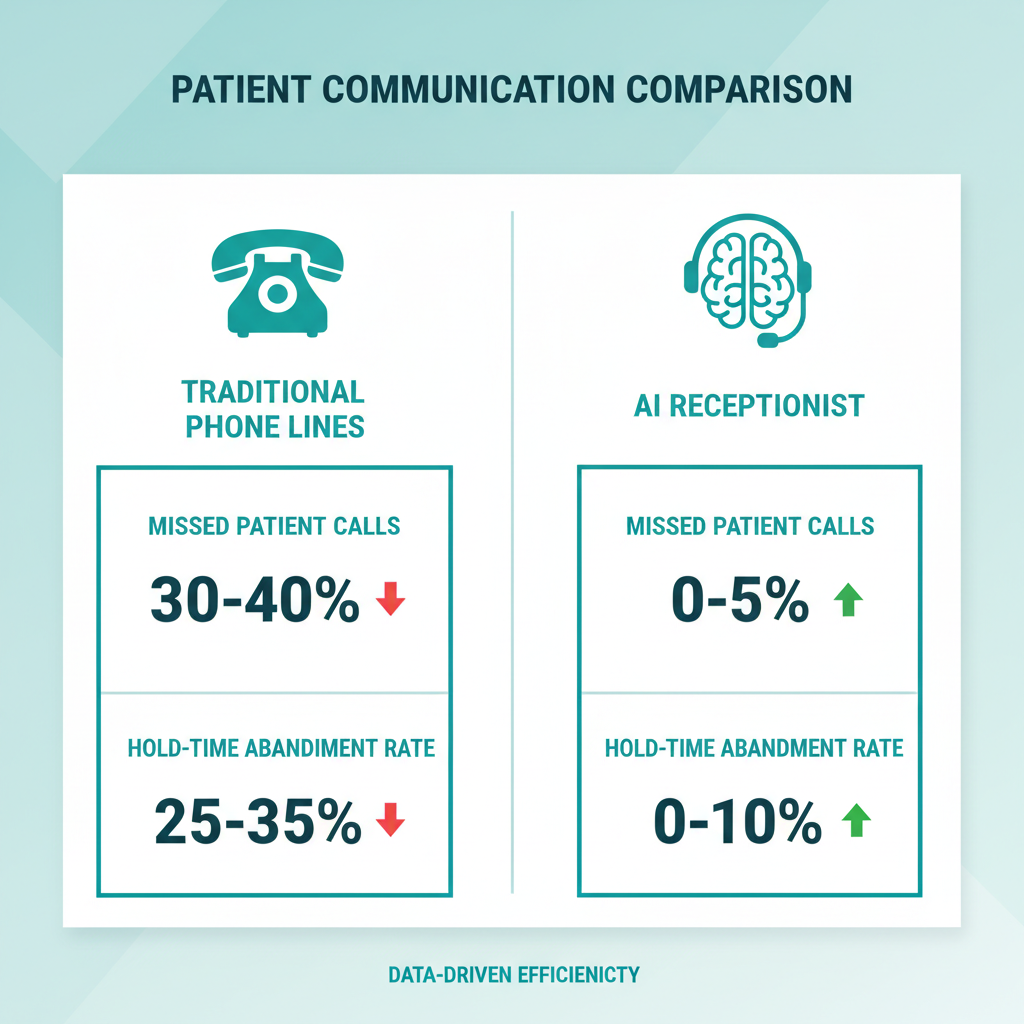
How an AI Receptionist for Therapy Clinics
Solves the Problem An AI receptionist solves these communication gaps by providing an instantaneous, 24/7 digital front desk. Unlike traditional systems, an AI-powered assistant does not put patients on hold or let calls go to voicemail. It interacts with patients in real time, answering inquiries and booking appointments instantly. This constant availability is crucial because patient demand does not stop when the office closes. Data shows that 41% of patient calls to medical practices occur outside of standard business hours [3]. Furthermore, 44% of online healthcare bookings occur after standard business hours [6]. If your clinic only accepts bookings during standard 9-to-5 hours, you are missing nearly half of your potential patient base. Modern patients heavily prioritize scheduling convenience. In fact, 80% of patients would switch healthcare providers for the convenience of online scheduling [6]. By deploying an AI receptionist that handles appointment booking directly, therapy clinics can capture patient intent during evenings and weekends. However, the data reveals a massive shift in patient expectations. Survey data shows that 85% to 92% of patients accept interacting with a well-tuned AI receptionist [5]. Patients do not mind talking to an AI as long as it successfully, quickly, and accurately resolves their scheduling and administrative needs. This high level of patient acceptance has triggered a rapid wave of adoption. AI receptionist deployment crossed an estimated 11% to 14% of US medical practices by the first quarter of 2026 [5]. Clinics are quickly realizing that automation is the most reliable way to maintain patient access in a challenging labor market. Industry leaders are also preparing for a highly automated future. An Accenture report reveals that 73% of healthcare executives expect AI to automate at least half of administrative tasks within five years [7]. Embracing an AI receptionist today is not just about solving today's staffing crisis; it is about positioning your therapy clinic for the future of digital healthcare. 
Step-by-Step Guide to Implementing an
AI Receptionist Transitioning to an AI receptionist does not have to be complicated. By following a structured implementation plan, you can upgrade your clinic's communication systems with minimal disruption to your daily operations. * Map your patient journey: Identify when your clinic misses the most calls and which channels (SMS, WhatsApp, web chat) your patients prefer.
- Choose a dedicated platform: Select a platform like Conversify that offers a unified communication inbox, AI auto-responses, and direct scheduling integrations.
- Define booking rules and availability: Set up your scheduling calendar, slot durations, therapist specialties, and intake policies so the AI books accurately.
- Train your AI assistant: Input your clinic's frequently asked questions, location details, cancellation policies, and insurance guidelines into the AI's knowledge base.
- Launch and monitor: Deploy the AI across your digital channels, review early interactions, and refine conversational flows to optimize booking rates.
- Support your staff: Train your physical front-desk team to manage the unified inbox and focus on high-value, in-person patient interactions. For more insights on optimizing clinic workflows and improving patient retention, feel free to browse our collection of related articles.
Frequently Asked Questions
What is an AI receptionist for therapy clinics?
An AI receptionist is an automated communication system that manages patient inquiries, schedules appointments, and handles administrative tasks. Solutions like Conversify integrate with digital channels like WhatsApp and SMS to provide instant, 24/7 administrative support, ensuring that no patient call or message goes unanswered.
Do patients actually like interacting with AI receptionists?
Yes, patient acceptance of automated communication is remarkably high. Research indicates that 85% to 92% of patients are comfortable interacting with a well-tuned AI receptionist [5]. Patients prioritize speed and convenience, preferring an instant automated response over waiting on hold or waiting for a callback.
How does an AI receptionist help reduce patient churn?
When clinics miss calls, 67% of patients will call a competitor instead of leaving a voicemail [2], and an unanswered appointment request has a 40% probability of driving a patient to a competing practice next [4]. An AI receptionist eliminates this churn by instantly answering every inquiry and securing bookings in real time.
Can an AI receptionist handle after-hours patient inquiries?
Yes, an AI receptionist operates 24/7. This is highly beneficial since 41% of patient calls [3] and 44% of online bookings [6] occur outside of standard business hours. The AI captures this after-hours demand, booking patients when your physical office is closed.
How does this technology address front-desk staffing shortages?
With front-desk turnover reaching 47% and taking an average of 62 days to fill open positions [4], staffing is a persistent challenge for clinics. An AI receptionist automates repetitive administrative tasks, which 73% of healthcare executives expect to be automated within five years [7], reducing the burden on your remaining staff.
What channels can an AI receptionist manage?
An AI receptionist can manage multiple digital communication channels, including SMS, web chat, and WhatsApp. Platforms like Conversify unify these channels into a single inbox, allowing the AI to coordinate patient scheduling and answer inquiries seamlessly across all platforms.
Sources
- [1] [AgentZap: Medical Practice
- [2] Anservo: Missed Patient Calls in Healthcare
- [3] GreetMate: Missed Calls and Lost Patients
- [4] CallMyDoc: Missed Calls and Revenue Leak
- [5] Ask Claire: State of AI Receptionists in Medical Practice
- [6] SchedulingKit: Healthcare Scheduling Statistics
- [7] DoctorConnect: AI Medical Receptionists Capabilities and Costs Deploying an AI receptionist is a strategic necessity for modern therapy clinics looking to stay competitive, stabilize their operations, and provide the seamless, on-demand scheduling experience that today's patients expect.
David Friedman - Founder, Conversify · LinkedIn
David Friedman is a B2B operations leader with over 10 years of experience managing large-scale teams and business processes. After years of working with service businesses and seeing how much time was lost to manual customer communication, he founded Conversify, an AI-powered platform that helps healthcare practices and service providers across Europe automate their patient and client interactions. David built the platform from the ground up, working directly with practicing healthcare professionals to ensure every feature solves a real operational pain point. He is based in Spain.