

Why AI Customer Support Still Needs Human Oversight
Automated customer support can streamline your front desk, but leaving AI entirely unmonitored introduces critical risks. Learn why a hybrid human-AI approach is essential for maintaining customer trust.
AI customer support for local service businesses refers to the deployment of automated conversational agents to manage front-desk communications, but as Conversify demonstrates, it still requires human oversight because automated systems lack contextual reasoning. You can view our pricing plans to see how we balance automation with human control. Research shows that 89% of customers state that a clear "escalate to human" option is essential for them to trust AI-driven administrative support [2]. Without human-in-the-loop validation, automated systems can misclassify urgent requests, leading to severe operational and reputational damage.
What Are the Risks of Unmonitored AI in Customer Service?
Leaving an artificial intelligence system to run your customer communication entirely on autopilot is a major operational risk. While modern AI models are incredibly sophisticated, they do not actually comprehend the meaning of the words they generate. Instead, they operate by predicting statistical word patterns. This fundamental limitation is why an independent safety organization ranked AI chatbot misuse as the top technology hazard for 2026 [5]. Because chatbots predict patterns rather than understanding operational context, they can confidently suggest incorrect information, invent nonexistent specifications, or misinterpret company policies [5]. The consequences of these "hallucinations" are not minor anomalies. A benchmark study by the nonprofit Building Humane Technology revealed that 67% of leading AI chatbots exhibit harmful or highly inaccurate behavior when subjected to adversarial pressure or complex customer prompts [6]. If a frustrated customer presses an automated bot for immediate answers, the system's safety guardrails often break down, leading to unsafe or completely false advice. Furthermore, a 2026 audit published in BMJ Open analyzed popular AI chatbots and found that nearly half (49.6%) of responses in specialized scenarios were problematic, with 19.6% rated as highly problematic or potentially harmful [1]. For service businesses where accuracy is paramount (such as salons, clinics, agencies, and retail stores) relying on unverified AI responses can lead to severe liability. This is why About Conversify centers on a collaborative framework where AI drafts responses, but humans remain in control. 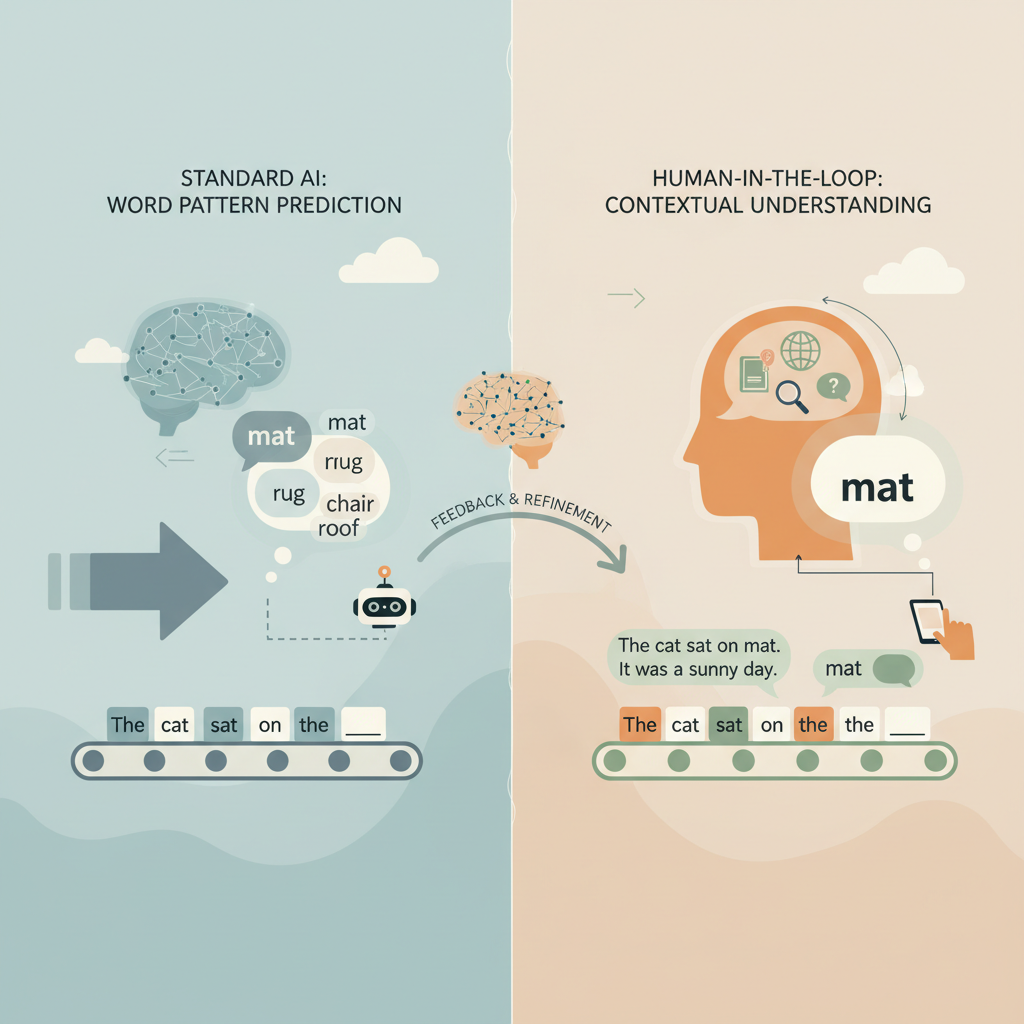
Why Do Customers Demand a Human Escalation Option?
Trust is the most valuable asset any service business possesses. When you automate your customer communication, you risk alienating the very clients who keep your doors open. According to a comprehensive Salesforce survey, 89% of customers stated that a clear, instant "escalate to human" option is essential for them to trust AI-driven administrative support, and 90% expected the same for specialized support scenarios [2]. This demand for human oversight is not merely a preference; it is a defensive reaction to known AI limitations. When customers interact with your brand via WhatsApp, SMS, or web chat, they want the speed of AI but the safety net of a real person. If they feel trapped in an endless automated loop with no way to reach a human, they will simply take their business elsewhere. AI models are trained on historical data, which often contains human prejudices and systemic gaps. When these models are deployed without human oversight, they replicate and amplify these biases at scale. Because the business had built no structured human-review layer into the workflow, the biased outputs were acted upon directly. Currently, only 31% of organizations actively monitor their AI systems, and nearly 50% lack formal approval processes for deploying these tools [10]. When you implement AI customer support for clinics, salons, or consulting offices, you must actively monitor the system to ensure it treats every customer equitably.
Data Security and Compliance Risks in
Automated Support Beyond operational errors, unmonitored AI introduces massive data privacy and compliance risks. Using consumer-grade, public AI tools to handle customer inquiries often means sending sensitive client data to third-party servers, which can violate strict industry regulations. These high stakes are causing significant anxiety among business leaders. When choosing conversational tools, businesses must select platforms that prioritize data security and offer robust human-in-the-loop controls.
How to Implement Safe Human-in-the-Loop
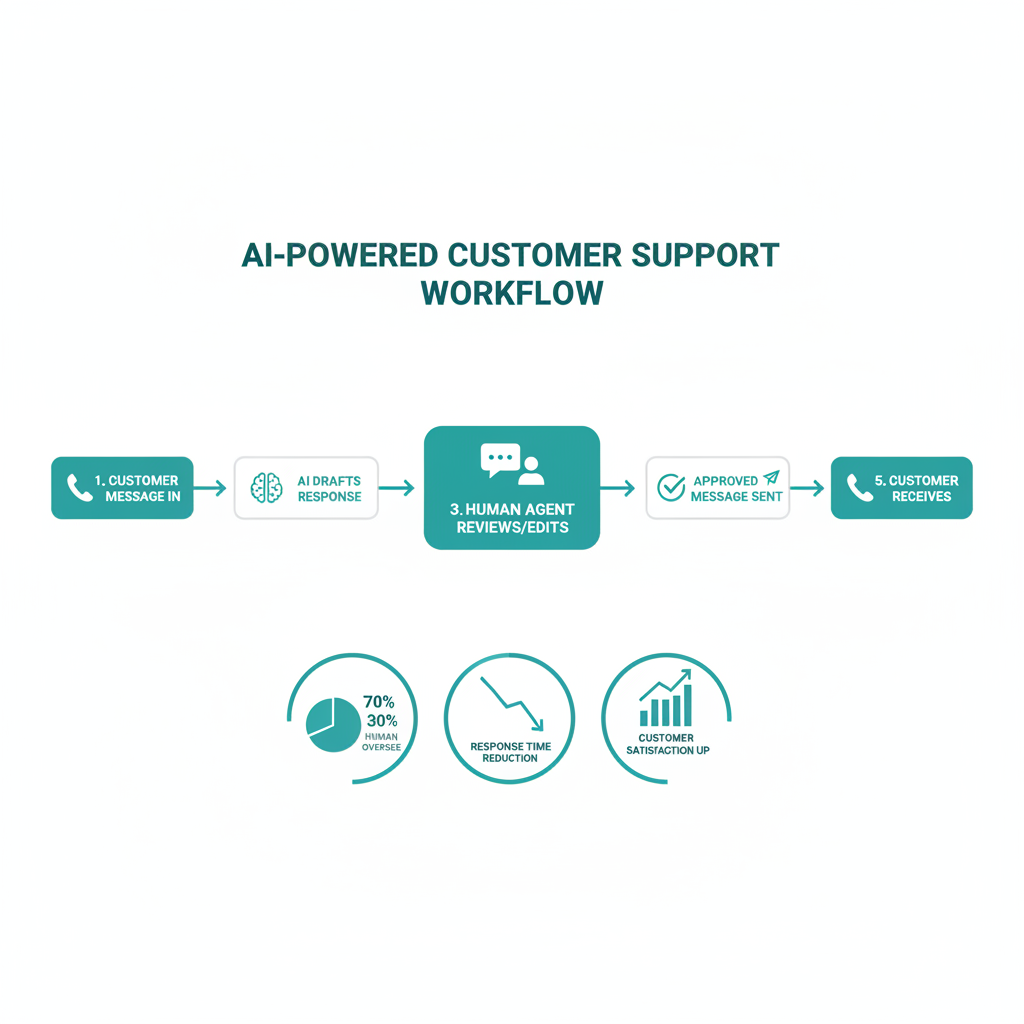
AI Workflows To reap the benefits of AI without exposing your business to operational, reputational, or legal risks, you must establish a structured "human-in-the-loop" workflow. Here is how you can implement this safely: - 1. Map your customer touchpoints: Identify which routine inquiries (like business hours or basic pricing) can be safely automated, and which complex queries (like booking disputes or custom service requests) must be routed to a human.
- 2. Integrate a collaborative inbox: Use a platform like Conversify to unify your WhatsApp, SMS, and web chat into a shared team inbox. This allows your staff to see exactly what the AI is drafting before it gets sent.
- 3. Implement formal approval processes: Establish strict role-based access controls and formal approval processes for all deployed AI prompts and tools [10]. Ensure that no AI model can send autonomous messages for high-stakes topics.
- 4. Train your front-desk staff: Teach your team how to monitor AI interactions in real-time and take over conversations instantly when they detect a customer is confused or frustrated.
- 5. Conduct regular quality audits: Regularly review a sample of AI-drafted responses to identify training bias, hallucinations, or outdated information [4].
Comparing Conversify with Fully Automated
Alternatives Many businesses turn to tools like ManyChat, respond.io, or Intercom to manage their customer messaging. However, these platforms often push businesses toward fully autonomous customer interactions, which can increase the risk of communication failures.
| Feature | Conversify | Fully Automated Bots (e.g., ManyChat, Intercom) |
|---|---|---|
| Primary Philosophy | Human-in-the-loop collaboration | Fully autonomous resolution |
| Risk of Hallucination | Extremely low (human approved) | High (unmonitored generative AI) |
| Escalation Paths | Instant, seamless handoff | Often rigid or complex |
Frequently Asked Questions
Why is human oversight necessary for AI customer support?
Human oversight is necessary because AI models predict word patterns rather than understanding context, which leads to a 49.6% error rate in specialized scenarios [1]. Without a human-in-the-loop, these systems can deliver incorrect or harmful information directly to your customers.
What are the main risks of using fully automated AI chatbots?
The main risks include AI hallucinations, training data bias, and safety protocol failures under pressure [4, 6]. Additionally, fully automated systems can under-triage urgent inquiries, directing high-priority customers away from the immediate help they need [3].
How does Conversify prevent AI hallucinations in customer communication?
Conversify prevents hallucinations by keeping your team in control through a shared inbox where AI drafts responses for review. Staff members can instantly edit or approve drafts before they are sent, ensuring 100% accuracy and compliance.
What percentage of customers trust AI without human intervention?
Very few customers trust fully autonomous AI, as 89% state that a clear "escalate to human" option is essential to trust AI-driven administrative support [2]. Furthermore, 52% of users only trust AI recommendations if a qualified professional approves the decision [9].
How do data privacy regulations impact AI customer support?
Data privacy regulations require businesses to protect sensitive customer data and avoid using consumer-grade AI tools without proper data sharing agreements [10]. Violations can result in penalties exceeding $2 million annually, making human oversight of data sharing critical [10].
How does training bias affect automated inquiry routing?
Training bias can cause AI systems to systematically under-score the urgency of inquiries from specific demographics, such as clients with limited English proficiency [8]. Without a human-review layer, these biased outputs are acted upon directly, leading to delayed service and reputational damage [8].
Sources [1] [AI Chatbot Information
Safety](https://teledirectmd.com/health-guides/ai-chatbot-medical-information-safety/)
- Customers Engage Providers' AI Agents Still Emphasize Human Oversight Survey Finds
- Evaluating Conversational AI Health
- AI Privacy Survey
- AI Chatbot Misuse Tops Annual List of Technology Hazards
- AI Chatbot Safety Guardrails Study Reveals Flaws
- From AI Pilots to Customer Impact: Scaling Safely with Local AI
- AI Human Oversight and Compliance
- Data Shows Americans Want to Trust AI Use in Service Industries, Finance, and Government, But Only with Human Oversight
- AI Risk Management and Privacy Rule Compliance
David Friedman - Founder, Conversify · LinkedIn
David Friedman is a B2B operations leader with over 10 years of experience managing large-scale teams and business processes. After years of working with service businesses and seeing how much time was lost to manual customer communication, he founded Conversify, an AI-powered platform that helps healthcare practices and service providers across Europe automate their patient and client interactions. David built the platform from the ground up, working directly with practicing healthcare professionals to ensure every feature solves a real operational pain point. He is based in Spain.