
Should You Charge a Fee for Initial Consultations?
Wondering if charging an upfront fee is the best way to prevent consultation no-shows? Discover how punitive fees can backfire and explore highly effective, friction-free alternatives to secure client commitment.
![COVER: A modern, clean office reception desk with a digital tablet displaying an appointment booking screen, symbolizing efficient scheduling.
- The Power of Texting: SMS reminders achieve an immediate 90% open rate and a 45% response rate, far outperforming traditional email communication. Instead, service businesses should use friction-free booking and automated engagement tools like Conversify to reduce no-shows without alienating prospects. At About Conversify, we help businesses streamline communication. While a January 2025 poll reveals that 42% of professional groups charge a no-show fee [1], research shows that punitive policies often backfire. Approximately 68% of clients admit they have skipped an appointment they intended to cancel simply because they feared being charged a fee [2]. This breakdown in communication damages customer goodwill and increases long-term attrition. Instead of charging upfront fees, implementing modern no-show reduction strategies for service businesses, such as automated multi-channel reminders and self-service rescheduling, can cut missed appointments by up to 70% [8]. Empowering clients to manage bookings digitally secures commitment without creating financial barriers.
The True Cost of Empty Slots for Service
Businesses Empty appointment slots are more than just a minor inconvenience; they represent a massive drain on revenue. Across the United States, missed appointments cost the economy an estimated $150 billion annually, with individual service providers experiencing average no-show rates of 20% to 30% [3]. For an independent service business, this translates to annual losses exceeding $150,000, making effective scheduling strategies critical for financial survival [3]. Beyond the immediate loss of a billable hour, there is a far more damaging long-term cost: customer attrition. Research indicates that clients who miss a single initial visit are approximately 70% more likely to not return to the business within 18 months, compared to just a 19% attrition rate among consistent attenders [2]. This means the true cost of a single flaked consultation is not just the immediate lost slot, but the long-term loss of the customer relationship and their lifetime value.
Why Charging a Consultation Fee Might
Backfire When faced with high abandonment rates, many business owners consider charging an upfront deposit or a nominal fee. A January 2025 industry poll found that 42% of professional groups charge a no-show fee, while 58% choose not to use these punitive financial measures [1]. While charging a fee can provide some behavioral modification, its overall impact is modest. However, this minor improvement comes at a steep cost to customer goodwill. A survey revealed that 52% of customers believe no-show or cancellation fees are unfair [2]. Even worse, approximately 68% of respondents admitted they have missed an appointment they fully intended to cancel simply because they feared being charged a fee [2]. Strict punitive policies actually discourage customers from communicating or rescheduling, causing them to completely disappear rather than opening up a slot for someone else. 
The Psychology of the No-Show: Why Clients
Flake Understanding why clients fail to show up is the first step toward solving the problem. In most cases, flaking is not malicious; it is the result of simple forgetfulness, busy schedules, or friction in the cancellation process. When a booking process is rigid, clients who realize they cannot make it often choose to do nothing rather than navigate a difficult phone-based cancellation system. This is why giving clients an easy way out is actually beneficial for your business calendar. Proactive communication directly addresses this psychological barrier. For example, the STAR-SI program tracked 67 agencies and discovered that implementing basic reminder calls dropped no-show rates from 37.3% to 19.5% [10]. This massive 17.8-point improvement proves that simple, helpful outreach is highly effective at resolving forgetfulness. When you make it easy for clients to reschedule, they feel respected rather than restricted, which dramatically increases their likelihood of rebooking rather than disappearing forever. Furthermore, empowering clients during the initial booking phase builds immediate commitment. When clients use self-scheduling tools to choose their own times, they show a much stronger personal dedication to attending, which naturally reduces no-shows by approximately 29% [9].
Modern No-Show Reduction Strategies
for Service Businesses To protect your calendar without alienating potential customers, you must shift from punitive rules to proactive, low-friction communication. Implementing comprehensive no-show reduction strategies for service businesses can dramatically improve attendance.
Automated Multi-Channel Reminders The
most effective way to address missed appointments is to solve the number-one reason they happen: forgetfulness. A systematic review of 29 studies found that automated reminders cut appointment non-attendance by a weighted mean of 28.9%, while manual phone reminders reduced it by 39.1% [4]. Although manual calls are slightly more effective, automated digital reminders are significantly more cost-effective and scalable for busy service businesses [4].
SMS and Two-Way Messaging Channels
Not all communication channels are created equal.
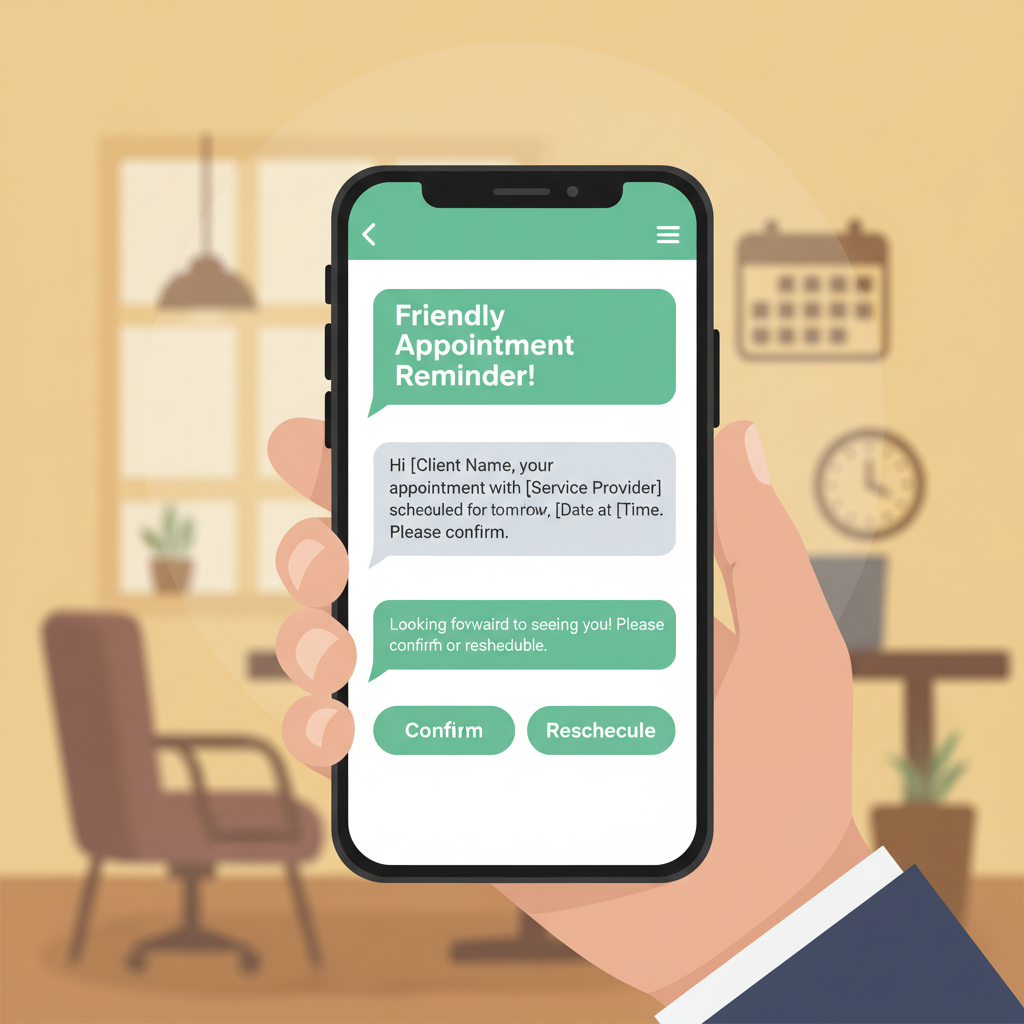
SMS text reminders achieve an immediate open rate of 90% at delivery and a 45% response rate [5], [7]. In contrast, email open rates hover at only 20% to 30%, with response rates of just 5% to 10% [6]. Utilizing high-engagement, two-way channels like WhatsApp or SMS allows customers to instantly confirm or reschedule their appointments.
Self-Service Online Rescheduling Giving
customers control over their schedules naturally boosts attendance. A survey revealed that 69% of customers prefer the ability to reschedule online rather than calling an office [2]. Furthermore, self-scheduling tools reduce no-shows by approximately 29% because customers who choose their own times demonstrate a stronger commitment to attending [9].
How to Implement a Frictionless Booking
System Instead of relying on manual follow-ups or complex rules, businesses can streamline their booking process with a modern digital front desk. Here is how to construct a high-attendance scheduling funnel: - Enable Self-Scheduling: Allow prospects to select their own initial consultation times via online booking widgets. This simple step filters out less serious leads without requiring an upfront financial barrier [9].
- Automate Multi-Channel Reminders: Set up automated sequences that trigger SMS or WhatsApp messages 24 hours and 2 hours before the scheduled slot.
- Simplify Rescheduling: Include a direct, one-click rescheduling link in every reminder. Since 69% of people prefer online rescheduling [2], this prevents them from flaking when unexpected conflicts arise.
- Leverage AI Auto-Responses: Use an AI receptionist to handle incoming booking queries instantly. When prospects have questions, quick answers keep them engaged and committed to their scheduled times. By integrating these elements into a unified platform, businesses can successfully cut their no-show rates by up to 70% [8]. Platforms like Conversify offer a WhatsApp shared inbox, AI auto-responses, and integrated appointment booking to replace fragmented tools like ManyChat, respond.io, or Intercom. You can explore how these features fit into your budget by reviewing our pricing plans or browsing related articles to learn more about automated customer engagement.
Comparing Consultation Fees vs.
Digital Engagement To help you decide which path is right for your business, here is a direct comparison of punitive fees versus digital engagement strategies: 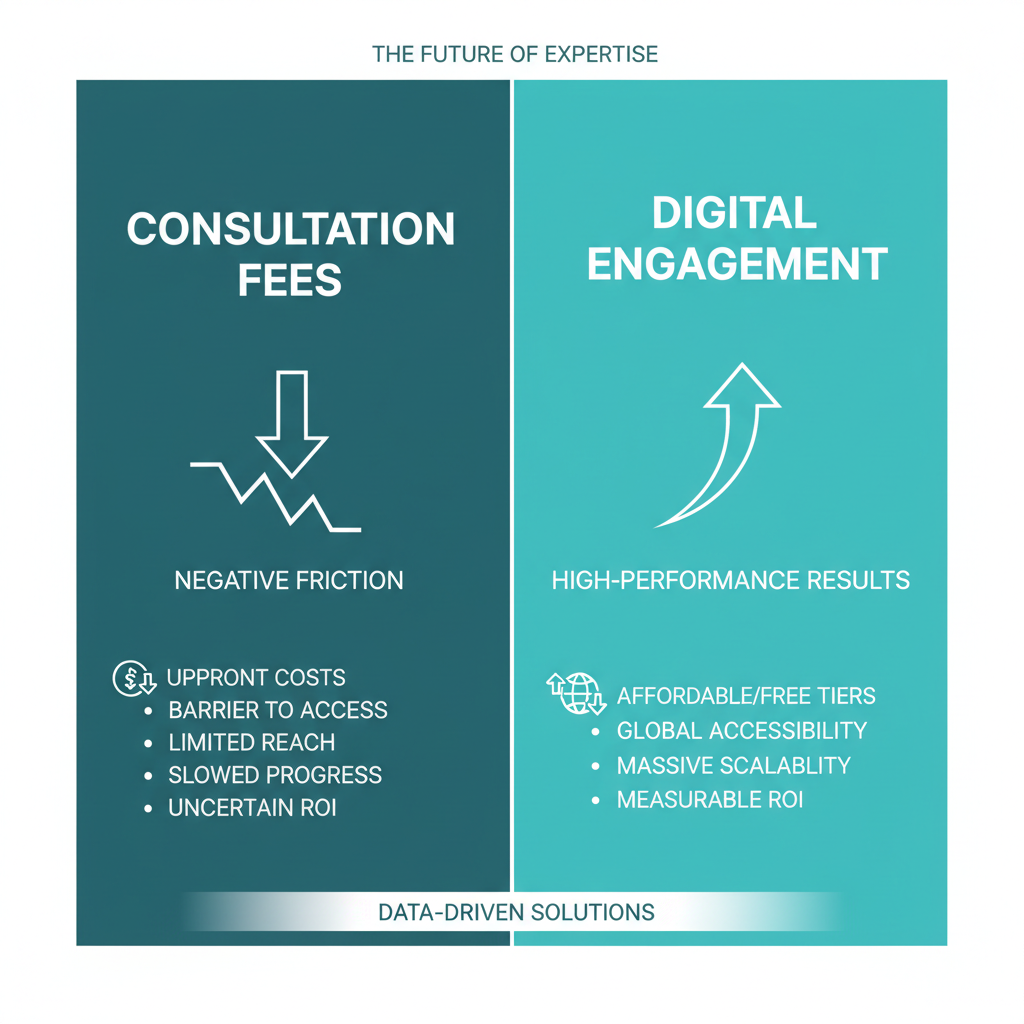
| Metric | Charging a Consultation Fee | Implementing Digital Engagement |
|---|---|---|
| No-Show Rate Improvement | 25% average improvement [2] | Up to 70% average reduction [8] |
| Customer Sentiment | 52% of customers view fees as unfair [2] | Highly positive; 69% prefer online options [2] |
| Communication Impact | 68% avoid canceling due to fear of fees [2] | 45% active response rate via SMS/WhatsApp [5], [7] |
Frequently Asked Questions
How much do missed appointments cost service businesses?
Missed appointments cost the United States economy an estimated $150 billion annually, with individual service providers experiencing average no-show rates of 20% to 30% [3]. For an independent service business, this translates to annual losses exceeding $150,000 [3]. These substantial financial losses make finding effective scheduling and communication strategies critical for long-term survival.
Do no-show fees actually improve attendance rates?
Yes, charging a fee does provide some behavioral modification, but its overall impact is modest. Instead of encouraging clients to open up their slots, punitive fees cause them to avoid communication entirely. SMS text reminders achieve an immediate open rate of 90% at delivery and a 45% response rate, making them highly effective for securing active confirmations [5], [7]. In comparison, email reminders only achieve open rates of 20% to 30% and response rates of 5% to 10% [6]. Two-way messaging channels like WhatsApp allow clients to instantly confirm or reschedule with minimal effort.
How much can automated reminders reduce no-shows?
A systematic review of 29 studies found that automated reminders cut appointment non-attendance by a weighted mean of 28.9% [4]. While manual phone reminders can reduce no-shows by 39.1%, automated digital reminders are significantly more cost-effective, scalable, and less time-consuming for busy service businesses [4].
How do online self-scheduling tools prevent clients from flaking?
Self-scheduling tools reduce no-shows by approximately 29% because clients who select their own times show a stronger commitment to attending [9]. Additionally, 69% of clients prefer the ability to reschedule online rather than calling an office [2]. Providing this digital flexibility allows wavering clients to easily move their appointments instead of simply failing to show up. Building a reliable client pipeline does not require punitive financial measures that push away high-value prospects. By replacing restrictive consultation fees with automated multi-channel communication and self-service online scheduling, service businesses can protect their calendars while keeping customer relationships intact. Embracing modern tools to eliminate booking friction ensures your business remains accessible, professional, and highly efficient.
Sources [1] [MGMA Stat Poll on No-Show
Fees](https://www.mgma.com/mgma-stat/no-show-fees-in-medical-practices-on-the-rise-to-balance-bumpy-attendance-rates)
- Why Service Businesses Must Rethink Their No-Show Strategy
- How Much No-Shows Cost the Service System
- Do Appointment Reminders Reduce No-Shows
- Patient Appointment Reminder Statistics
- Appointment Reminders: Text vs. Email
- Appointment Reminders Statistics and Open Rates
- Reduce No-Shows: A Complete Guide
- No-Show Prevention Strategies to Reduce Missed Appointments
- The Effectiveness of Appointment Reminder Systems
- No-Show Statistics and Business Impact
David Friedman - Founder, Conversify · LinkedIn
David Friedman is a B2B operations leader with over 10 years of experience managing large-scale teams and business processes. After years of working with service businesses and seeing how much time was lost to manual customer communication, he founded Conversify, an AI-powered platform that helps healthcare practices and service providers across Europe automate their patient and client interactions. David built the platform from the ground up, working directly with practicing healthcare professionals to ensure every feature solves a real operational pain point. He is based in Spain.