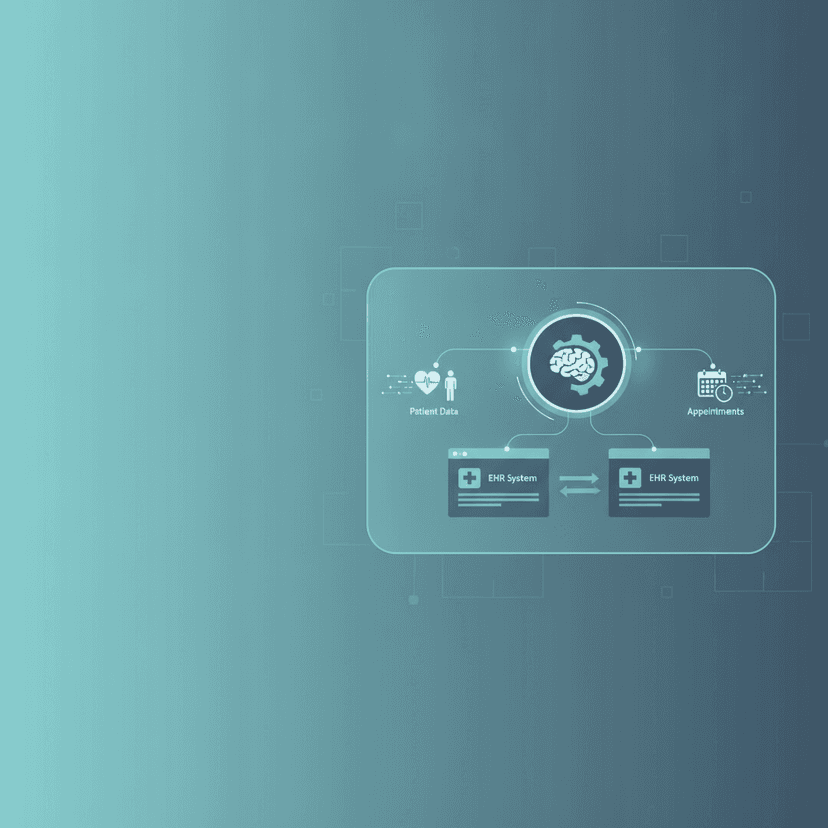

Best AI Chatbot for Healthcare Customer Service: Top HIPAA-Compliant Solutions
Discover the best HIPAA-compliant AI chatbot for medical practices. Compare top platforms like Intercom, SiteGPT, and Klara to secure your patient data and automate patient engagement safely.
An AI chatbot for medical practices must prioritize HIPAA compliance by securing patient data and signing a Business Associate Agreement (BAA). The best options include SiteGPT (Enterprise plan), Intercom (Expert plan), and Klara for specialized workflows. These platforms ensure secure communication while preventing unauthorized exposure of Protected Health Information (PHI). Implementing a compliant ai chatbot for medical practices is no longer optional. According to an August 2026 report from the Pew Research Center, 34 percent of U.S. adults use AI chatbots for at least one health-related reason [1]. At the same time, OpenAI revealed that over 40 million people turn to ChatGPT daily for health-related answers [3]. Without a secure, HIPAA-compliant system, patients risk sharing sensitive health details on public platforms. For medical practices, failing to protect this data is costly; during the 2021 to 2022 period, healthcare data breaches exposed at least 41 million records, while only 29 percent of healthcare organizations were in full compliance with HIPAA rules [12].
Why Compliance is Non-Negotiable for
Medical Chatbots In recent years, patient communication has shifted rapidly toward automation. A compliant ai chatbot for medical practices can bridge the gap between patient expectations and administrative capacity. However, healthcare providers face severe risks if they deploy unvalidated consumer tools. During the 2021 to 2022 period, healthcare data breaches exposed at least 41 million records [12]. Compounding this risk, a survey revealed that only 29 percent of healthcare organizations were in full compliance with HIPAA rules [12]. When patient data is compromised, clinics face devastating financial penalties and reputational damage. This is why a signed Business Associate Agreement (BAA) and strict technical safeguards are non-negotiable when deploying an ai chatbot for medical practices. Without a BAA, any transmission of protected health information (PHI) constitutes a direct violation of federal law.
The Top HIPAA-Compliant AI Chatbots
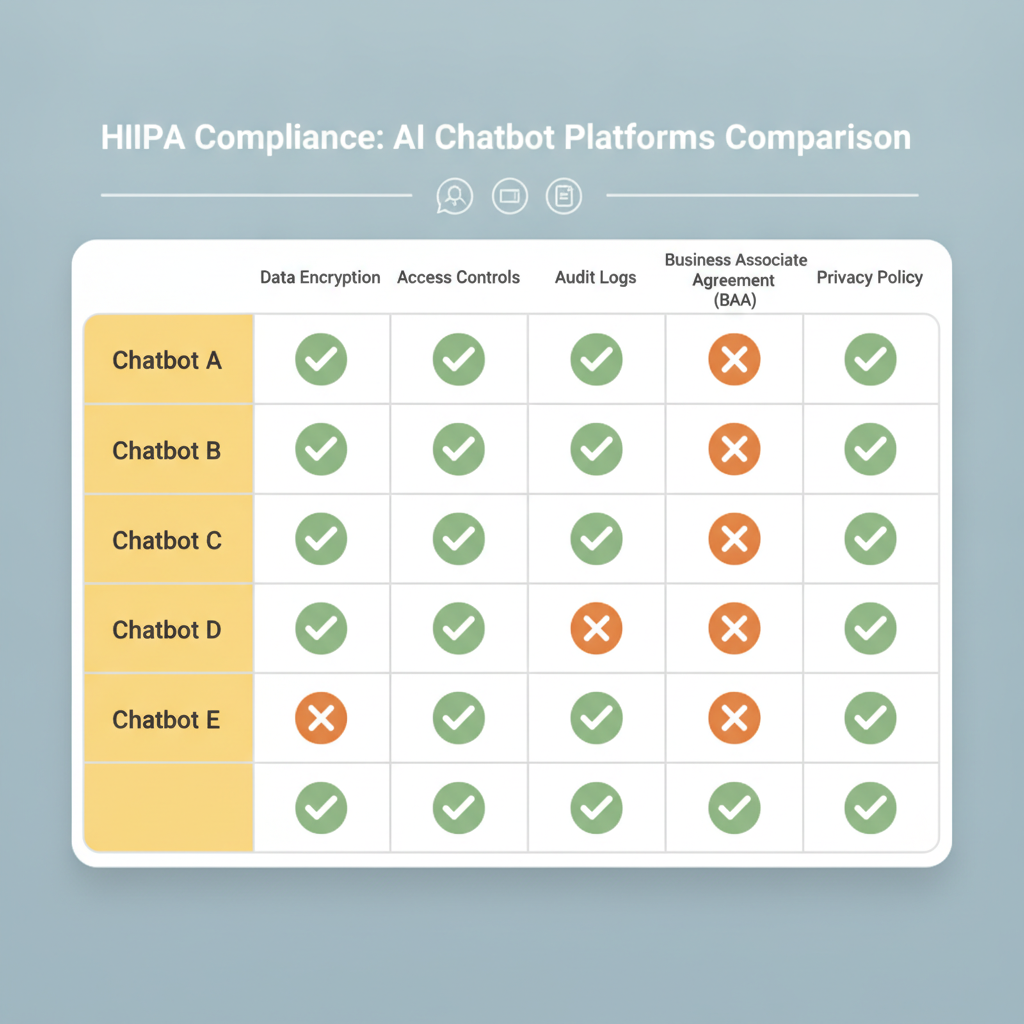
Compared To help healthcare providers choose the right platform, we have compared the leading AI chatbot solutions on the market today. | Chatbot Platform | HIPAA BAA Offered? | Required Plan / Tier | Key Channels Covered | Certification |
| :--- | :--- | :--- | :--- | :--- |
|---|---|---|---|---|
| SiteGPT | Yes [14] | Enterprise Plan [14] | Website [14] | SOC 2 Type II, GDPR [10] |
| Intercom | Yes [4] | Expert Plan [4] | Website (excludes SMS/WhatsApp by default) [5] | HIPAA Attestation [4] |
| Respond.io | Yes [6] | Enterprise Plan [6] | WhatsApp, Social Channels [6] | HIPAA Compliant [6] |
| ManyChat | No [7] | None (Do not use for PHI) [7] | None [7] | None [7] |
| Chat Data (Claude API) | Yes [8] | Standard Plan ($95/month) [8] | API, Website [11] | HIPAA Compliant [8] |
In-Depth Review of Compliant AI Chatbots
Let us dive deeper into how these platforms operate under regulatory frameworks.
SiteGPT SiteGPT provides HIPAA compliance
with a signed Business Associate Agreement on its Enterprise plan [14]. This security is backed by SOC 2 Type II and GDPR certifications [10]. The platform allows healthcare organizations to train an ai chatbot for medical practices on their own clinical documentation and deploy it securely without writing any code [14]. This makes it an exceptional choice for clinics that want a custom, self-trained AI assistant that answers patient questions based strictly on validated medical resources.
Intercom (Fin AI Agent) Intercom successfully
completed a HIPAA attestation examination and will sign a Business Associate Agreement, but only for customers subscribed to its Expert plan [4]. While Intercom offers robust patient support through its Fin AI Agent, healthcare providers must subscribe to this highest-tier plan to access the necessary administrative and technical safeguards [4]. Furthermore, Intercom's Business Associate Agreement does not cover SMS, email, or WhatsApp channels by default [5]. This means these specific communication channels are not HIPAA-compliant out of the box, requiring practices to obtain explicit patient consent or implement additional security measures [5].
Respond.io Respond.io supports HIPAA
compliance and will sign a Business Associate Agreement exclusively on its Enterprise tier, while its Team and Business tiers remain non-compliant [6]. Although respond.io is a powerful multi-channel inbox that unifies WhatsApp and other social channels, medical practices must invest in the Enterprise tier to safely handle protected health information [6].
Anthropic Claude via Chat Data For
smaller clinics and solo practitioners, cost is often a barrier to enterprise-grade compliance. Anthropic offers a HIPAA Business Associate Agreement for Claude API usage, which can be accessed by small businesses through the Chat Data platform starting on its Standard plan for 95 dollars per month [8], [11]. This integration allows solo practitioners and small clinics to deploy an advanced, compliant ai chatbot for medical practices while maintaining a secure data chain from the AI model provider to the clinic [8]. To find the best setup for your budget, view our pricing plans.
Klara For clinics looking for a specialized,
clinical-first alternative, Klara stands out.
Klara, a specialized patient engagement platform, can reduce phone call volume for medical practices by up to 50 percent through its automated workflows and HIPAA-compliant messaging [9]. Purpose-built healthcare platforms like Klara offer a secure alternative to general-purpose chatbots by natively handling appointment coordination, digital intake, and patient inquiries [9].
Why Consumer Chatbots Pose a Major Health
Technology Hazard The temptation to use free, unvalidated tools is high, but the risks are catastrophic. The ECRI, an independent patient safety organization, officially ranked artificial intelligence chatbot misuse as the top health technology hazard for 2026 [2]. This ranking underscores the critical need for healthcare providers to implement highly regulated, compliant software rather than unvalidated consumer tools when selecting an ai chatbot for medical practices [2]. With over 40 million people turning to ChatGPT daily for health-related answers [3], patients are already accustomed to seeking automated medical advice. If a clinic does not provide a secure, validated portal, patients may share protected health information on public platforms, leading to severe privacy risks. 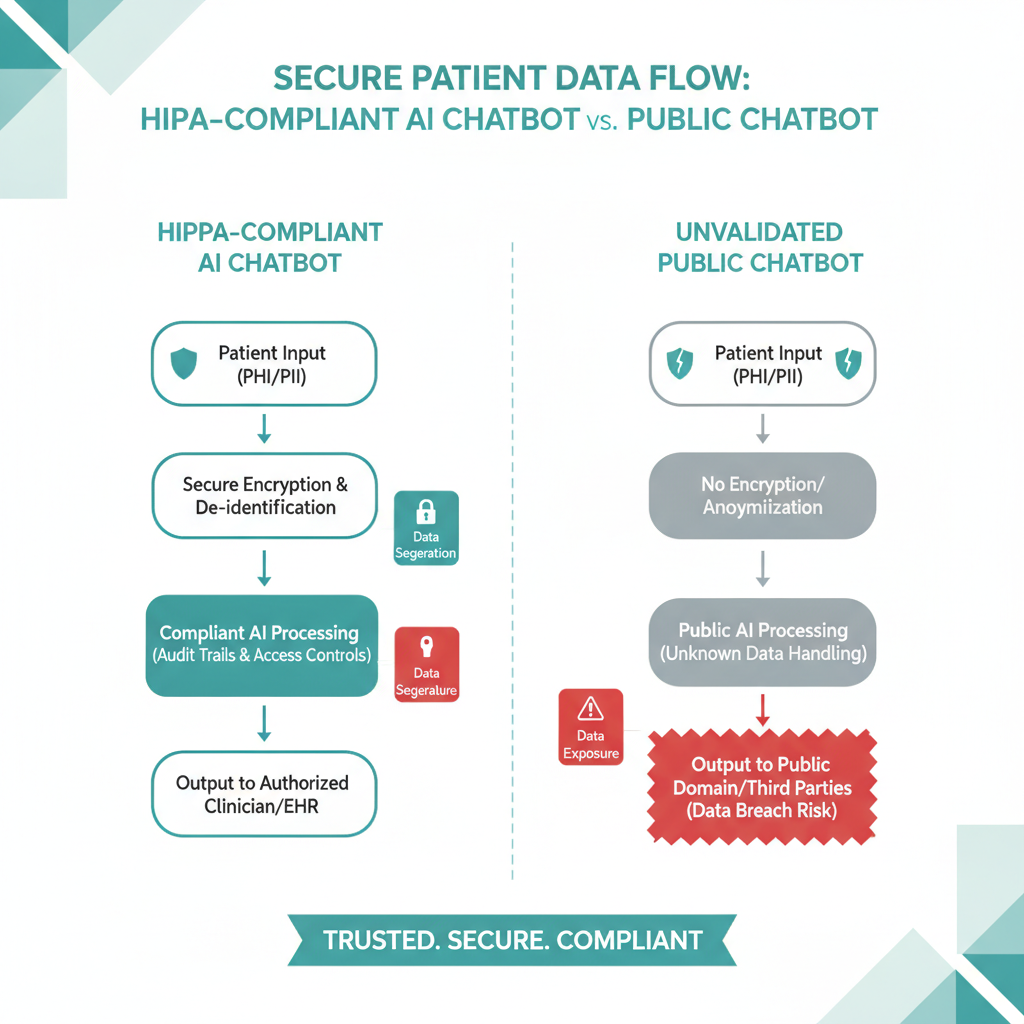
How to Safely Deploy an AI Chatbot for
Medical Practices Implementing an AI chatbot requires a systematic approach to ensure security and compliance. Follow these steps to deploy your chatbot safely: - Determine your communication channels. Identify where your patients interact with you, whether via your website, SMS, or WhatsApp.
- Evaluate compliance limits. Remember that platforms like Intercom do not secure SMS, email, or WhatsApp by default under their BAA [5], while ManyChat does not offer a BAA for standard plans at all [7].
- Choose the correct subscription plan. Ensure you subscribe to the compliant tier, such as Intercom's Expert plan [4], Respond.io's Enterprise tier [6], SiteGPT's Enterprise plan [14], or Chat Data's Standard plan [11].
- Request and sign a Business Associate Agreement (BAA) before launching the chatbot.
- Train the AI strictly on approved clinical documentation to prevent hallucinations or incorrect medical advice.
- Establish clear clinical boundaries. Ensure the chatbot never diagnoses patients or prescribes medication, and always provides an easy way to connect with a human medical professional. For more tips on optimizing your practice workflows, read our related articles.
Frequently Asked Questions
Is ManyChat HIPAA compliant?
No, ManyChat is not HIPAA-certified or compliant out of the box and does not sign a Business Associate Agreement for standard plans [7]. While ManyChat is a popular, budget-friendly tool for social-first automation, healthcare providers must strictly avoid transmitting any protected health information through its flows, making it unsuitable as a primary ai chatbot for medical practices [7].
Does Intercom sign a BAA for medical practices?
Yes, Intercom will sign a Business Associate Agreement, but only for customers subscribed to its Expert plan [4]. Healthcare providers using Intercom must also note that its BAA does not cover SMS, email, or WhatsApp channels by default [5].
Can small clinics afford a HIPAA-compliant AI chatbot?
Yes, small clinics can access advanced, compliant AI models affordably. Anthropic offers a HIPAA Business Associate Agreement for Claude API usage, which can be accessed through the Chat Data platform starting on its Standard plan for 95 dollars per month [8], [11].
How much can Klara reduce phone call volume?
Klara can reduce phone call volume for medical practices by up to 50 percent through its automated workflows and HIPAA-compliant messaging [9]. This specialized platform natively handles appointment coordination, digital intake, and patient inquiries [9].
What makes SiteGPT secure for healthcare providers?
SiteGPT provides HIPAA compliance with a signed Business Associate Agreement on its Enterprise plan [14]. Additionally, its security is backed by SOC 2 Type II and GDPR certifications, allowing clinics to securely train the AI on their own clinical documentation [10], [14]. This highlights why medical practices must use highly regulated, compliant software rather than consumer-grade tools [2].
Choose Security First for Patient Communication
Deploying an AI chatbot can revolutionize how your medical practice interacts with patients, but security must never be compromised. By selecting a platform that offers a robust Business Associate Agreement and strict technical safeguards, you protect both your patients and your practice. Whether you choose a specialized patient engagement platform like Klara or a flexible, self-trained tool like SiteGPT, prioritizing compliance ensures a safer, more efficient healthcare experience.
Sources [1] [Becker's Hospital Review](https://vertexaisearch.cloud.google.
com/grounding-api-redirect/AUZIYQGH7BZ4Rga-NIurBHxsUmyQW3QouR6FdgIIAsK7Lb7oA8gKNbCFfyThFYtD0yRKz7M3OXiLHI8USbQVizxB65EFW0JmZwrgQxvNoxgH4DpzfKuElJDXIx3wDsRCQ3V8QCK7kX8GOle3YcxhiqHg4jEmS4iYlqf90pgl3JEBZxziX9sZIh8XueQKA05Ngcu3JOOmO4Sz-_nUbqLoDJVyWt_p_LXQXB1qP4JM9JjAAvsyzJrDE9e39eI=) [2] ECRI Institute [3] Intercom Blog [4] Ringly.io HIPAA Chatbots [5] Paubox HIPAA Compliance [6] Today Testing Respond.io HIPAA [7] OT1 Pro ManyChat Compliance [8] Innovate Solutions Claude API [9] Hackceleration Klara Patient Engagement [10] Resonate App SiteGPT Review [11] Chat Data Claude Integration [12] Top Healthcare Tools Compliance Survey [13] Dealism.ai [14] SiteGPT Platform [15] Wonderchat.io [16] Accountable HQ
David Friedman - Founder, Conversify · LinkedIn
David Friedman is a B2B operations leader with over 10 years of experience managing large-scale teams and business processes. After years of working with service businesses and seeing how much time was lost to manual customer communication, he founded Conversify, an AI-powered platform that helps healthcare practices and service providers across Europe automate their patient and client interactions. David built the platform from the ground up, working directly with practicing healthcare professionals to ensure every feature solves a real operational pain point. He is based in Spain.