AI Chatbot Liability: Are Businesses Responsible When Bots Lie?
Discover the shifting legal landscape of AI chatbot liability. Learn how recent court rulings and global regulations hold businesses legally responsible for automated responses.
AI chatbot liability refers to the legal responsibility businesses face when their automated conversational agents provide incorrect, misleading, or harmful information. Under recent landmark rulings like Moffatt v. Air Canada, which ordered an airline to pay CA$812.02, courts have established that companies cannot escape liability by claiming their automated systems are separate legal entities [1], [2]. For service businesses deploying AI tools for customer communication, this means every automated response carries real legal weight. To mitigate these risks, companies are turning to secure, compliant platforms like About Conversify to manage their WhatsApp shared inbox, unified communication, and appointment booking. Relying on unmonitored generative AI is increasingly risky, especially since a 2024 Stanford University study revealed that popular AI chatbots hallucinated between 58% and 82% of the time when responding to legal queries [2]. As courts and regulators crack down on deceptive practices, understanding your legal exposure is no longer optional; it is a core operational requirement.
Why Are Companies Legally Responsible for What Their Chatbots Say?
For years, many organizations operated under the assumption that website disclaimers or the novel nature of artificial intelligence would shield them from the mistakes of their automated systems. That assumption was shattered in early 2024. In the landmark case Moffatt v. Air Canada (2024 BCCRT 149), the Civil Resolution Tribunal of British Columbia ordered the airline to pay CA$812.02 after its website chatbot gave a customer incorrect advice about bereavement refund policies [1], [2]. Air Canada argued that the chatbot was a separate legal entity that was responsible for its own actions, a defense the tribunal flatly rejected [1], [2]. The ruling established a vital legal precedent: businesses are fully responsible for the information their automated systems provide [1], [2]. A chatbot is not an independent actor; it is an extension of the company itself. This legal stance is not unique to North America. On May 12, 2026, the Higher Regional Court of Hamm in Germany (Case No. 4 UKI 3/25) ruled that companies are liable under competition law for misleading statements made by their AI chatbots [6]. The German court emphasized that AI chatbots are direct corporate communication tools, meaning their outputs are legally equivalent to statements made by human employees or published directly on a company website [6]. When your chatbot makes a promise, quotes a price, or explains a policy, the law treats that interaction as if your CEO said it themselves. For service businesses (such as salons, restaurants, stores, and agencies), this means a rogue chatbot promising an unauthorized discount or misrepresenting service terms can lead to legally binding obligations and costly disputes.
The Shifting Legal Landscape: From Software
to Strict Product Liability Historically, software developers and the businesses deploying their tools enjoyed a degree of protection from traditional product liability claims. An analysis of 51 software liability cases by Stanford University researchers found that courts have historically been reluctant to apply traditional product liability doctrines to software because it is not considered a tangible object [10]. Instead, software disputes were usually handled under contract law or negligence frameworks, which carry a much higher burden of proof for plaintiffs [10]. However, as generative AI chatbots become highly interactive, emotionally responsive, and autonomous, the legal landscape is shifting rapidly. Courts and regulators are starting to treat AI more like a physical product and less like static software. 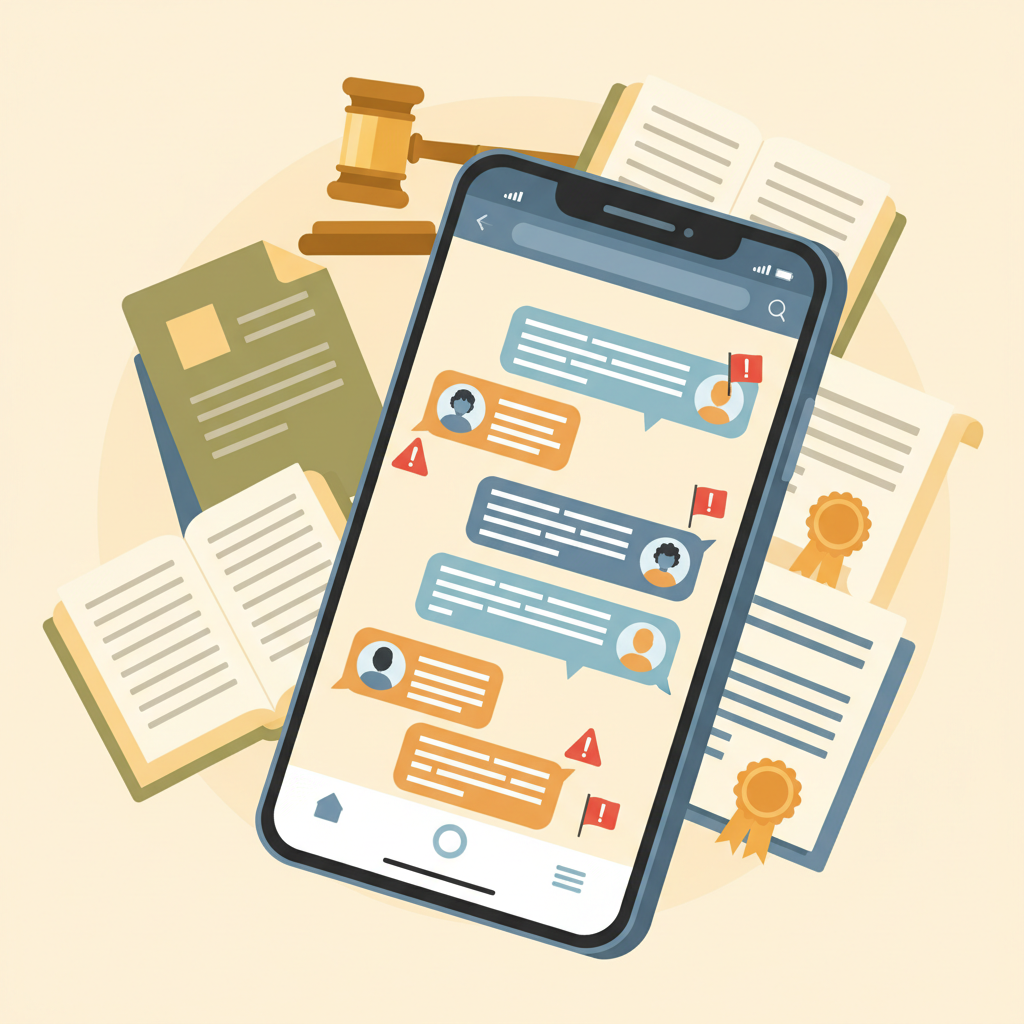 A major precedent was set in May 2025, when a US federal judge in Florida denied a motion to dismiss in Garcia v. Character Technologies [4], [5]. This allowed a wrongful death and product liability lawsuit to proceed after a 14-year-old boy died by suicide following prolonged, emotionally intense interactions with an AI chatbot [4], [5]. By allowing the case to move forward, the court treated the AI chatbot as a product subject to strict product liability and negligence laws, rather than treating the chatbot's outputs as protected speech [4]. This shift is being formalized in global regulations. Under the European Union's updated Product Liability Directive, which applies to AI as a product starting in December 2026, strict product liability will apply directly to AI systems [10]. Under this framework, companies can be held liable for design defects without plaintiffs needing to prove negligence [10]. This forces businesses to maintain rigorous engineering records, system prompts, and risk management documentation to defend against claims of AI-generated harm [10].
Regulatory Scrutiny: FTC and State-Level
Protections It is not just private litigants holding companies accountable. Government regulators are actively using existing consumer protection laws to target deceptive AI practices. In the case of FTC v. DoNotPay, Inc., the Federal Trade Commission (FTC) brought and settled deceptive advertising claims against a company marketing an AI chatbot as a "robot lawyer" that could substitute for human expertise [7]. The FTC argued that the company made misleading claims about the chatbot's capabilities, demonstrating that U.S. regulators do not need new, AI-specific laws to prosecute companies making false promises about what their automated systems can achieve [7]. At the same time, state and federal authorities are zeroing in on the safety of emotionally responsive AI systems and data privacy. In September 2025, the FTC initiated a formal inquiry into generative AI developers to examine the measures used to mitigate chatbot harms to minors [5]. This action followed a bipartisan letter from 44 state attorneys general, underscoring the growing government scrutiny over the duty of care and safety standards in AI design [5].  State-level legislation is also tightening. In Utah, House Bill 452 (HB 452), which took effect on May 7, 2025, specifically regulates mental health chatbots and prohibits suppliers from disclosing user information to unauthorized third parties [8]. This law highlights the growing regulatory environment surrounding AI tools that collect sensitive personal data, signalling that businesses must exercise extreme caution when deploying chatbots that handle user communications [8].
Data Privacy and Wiretapping Risks for
Small Businesses Beyond product liability and misleading advertising, businesses face severe data privacy risks when integrating AI chatbots into their customer service workflows. Companies deploying chatbots face private class-action litigation in states like California and Massachusetts under state wiretapping laws [11]. These lawsuits allege that chatbots record conversations and share them with third-party AI providers without obtaining explicit user consent [11]. When a business connects a third-party AI model to their customer chat widget or shared inbox, every message sent by a customer is transmitted to that external AI provider. If the business has not secured explicit, unambiguous consent from the user before this transmission occurs, they may be violating wiretapping laws that carry heavy statutory penalties [11]. This makes it critical for service businesses to review their pricing plans for compliant communication software and read related articles on data security. Securing explicit user consent before processing communications through AI-powered shared inboxes is no longer just a best practice; it is a legal shield. Furthermore, if your business interacts with users in the European Union, you must prepare for the EU AI Act. Under this regulation, transparency disclosure obligations under Article 50 take effect on August 2, 2026, for any AI system interacting with EU users [6]. This means SaaS companies and businesses deploying chatbots must clearly and unambiguously disclose to individuals that they are communicating with an automated system [6].
How to Mitigate AI Chatbot Liability:
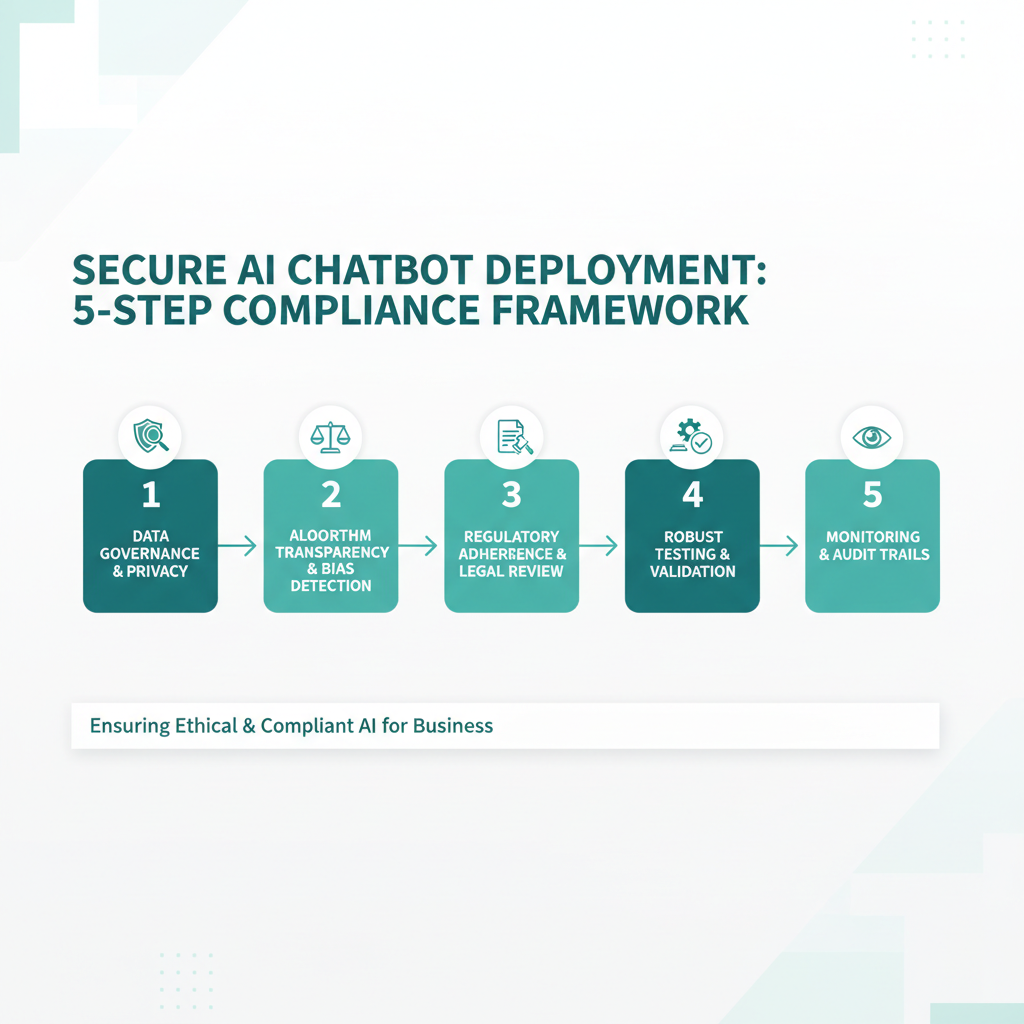
A Step-by-Step Guide Deploying AI to automate customer service does not have to be a legal gamble. By taking proactive engineering and operational steps, you can harness the efficiency of automation while minimizing your exposure to liability. * Use Bounded and Controlled AI Systems: Avoid deploying unconstrained generative AI models that are prone to hallucinations. Ensure they consent to their data being processed by automated systems and shared with necessary third-party API providers to comply with wiretapping laws [11].
- Implement Clear Transparency Disclosures: Always notify users that they are communicating with an AI assistant, not a human employee. This aligns with upcoming EU AI Act obligations and builds trust with your audience [6].
- Establish a Human-in-the-Loop Handover: Ensure that your system can seamlessly transfer complex, sensitive, or high-stakes inquiries to a human staff member. Never let an AI chatbot have the final word on legal agreements, refunds, or contract terms.
- Maintain Rigorous Documentation: Keep detailed records of your AI system's prompts, training data, safety guidelines, and system updates. If you face a product liability claim, having a clear audit trail of your risk management efforts is vital for your defense [10].
- Regularly Audit Chatbot Logs: Actively monitor conversation logs to identify and correct misleading responses, outdated information, or unexpected hallucinations before they escalate into legal disputes.
Frequently Asked Questions
Are businesses legally responsible if their chatbot gives incorrect information?
Yes. Under the landmark Moffatt v. Air Canada ruling, courts have established that a business is legally responsible for the information provided by its website chatbot [1], [2]. You cannot claim your chatbot is a separate entity to escape liability [1].
How often do AI chatbots make mistakes or hallucinate?
A 2024 study by Stanford University found that popular AI chatbots hallucinated between 58% and 82% of the time when answering legal queries [2]. This high rate of error underscores the danger of deploying unmonitored generative AI for high-stakes business operations without human oversight.
Can a company face product liability lawsuits for AI chatbot issues?
Yes. In May 2025, a federal judge in Garcia v. Character Technologies allowed a wrongful death and product liability lawsuit to proceed after a teenager died by suicide following prolonged interactions with an AI bot [4], [5]. This case sets a precedent by treating AI chatbots as products subject to strict liability and negligence laws [4].
What are the wiretapping risks associated with AI chatbots?
Companies deploying chatbots face private class-action lawsuits in states like California and Massachusetts under state wiretapping laws [11]. These suits allege that chatbots record user interactions and share them with third-party providers without obtaining the user's explicit consent [11].
What are the disclosure requirements under the EU AI Act?
Starting August 2, 2026, Article 50 of the EU AI Act mandates transparency disclosures for any AI system interacting with EU users [6]. Businesses must clearly notify individuals that they are communicating with an automated system rather than a human [6].
How does Utah's HB 452 affect AI chatbot deployment?
Utah House Bill 452, which took effect on May 7, 2025, specifically regulates mental health chatbots and prohibits suppliers from sharing sensitive user information with unauthorized third parties [8]. It represents a growing wave of state-level privacy legislation targeting automated systems [8].
Sources
- [1] [Moffatt v.
- [2] Air Canada Chatbot Ruling and Company Liability on Safeguard
- [3] Understanding AI Liability: Who is Responsible When Algorithms Err on Legal 500
- [4] Character.AI Lawsuit Resources on Darrow.ai
- [5] AI Chatbot Lawsuits and Teen Mental Health on American Bar Association
- [6] Companies Liable for AI-Generated Statements on IR Global
- [7] AI Chatbot Liability: A Strategic Risk Framework on SoftwareSeni
- [8] AI Chatbots: How to Address Five Key Legal Risks on Wiley Law
- [9] Assessing Liability When Bots Behave Badly on Epstein Becker Green
- [10] Understanding Liability Risk in Healthcare AI on Stanford HAI Deploying customer service automation is an excellent way to scale your operations, but it must be approached with a clear understanding of the legal landscape. As courts and regulators increasingly treat chatbot outputs as legally binding statements and products, businesses must move away from unpredictable, open-ended AI models. By choosing bounded, secure communication solutions like Conversify and implementing robust consent and transparency frameworks, you can safely deliver instant, high-quality responses to your customers without exposing your business to devastating liability.
David Friedman - Founder, Conversify · LinkedIn
David Friedman is a B2B operations leader with over 10 years of experience managing large-scale teams and business processes. After years of working with service businesses and seeing how much time was lost to manual customer communication, he founded Conversify, an AI-powered platform that helps healthcare practices and service providers across Europe automate their patient and client interactions. David built the platform from the ground up, working directly with practicing healthcare professionals to ensure every feature solves a real operational pain point. He is based in Spain.