
Is a Small Business Liable for AI Chatbot Mistakes?
Discover if small businesses are legally liable for AI chatbot errors. Learn about landmark rulings, FTC regulations, and how to protect your brand from costly mistakes.
Yes, a small business is legally liable if its customer-facing AI chatbot provides incorrect information. Courts treat automated outputs as direct representations of the company. For instance, in a landmark 2024 ruling, a tribunal rejected an airline's claim that its chatbot was a separate entity, ordering 812.02 Canadian dollars in damages for misleading advice. To protect against these liabilities, modern service brands use compliant platforms like Conversify to manage customer communication safely. Under Section 5 of the Federal Trade Commission (FTC) Act, any inaccurate or unsubstantiated claims made by an AI chatbot are treated as deceptive trade practices, exposing businesses to federal penalties up to 50,120 dollars per violation. Businesses must implement active human oversight and strict escalation protocols to prevent AI-generated errors from triggering expensive regulatory sanctions or contract disputes. > Key Takeaways:
* Businesses are legally responsible for all statements made by their AI chatbots, as courts do not view bots as separate legal entities.
* Regulatory bodies like the FTC can penalize misleading AI claims with fines up to 50,120 dollars per violation.
* Relying solely on "chatbot may make mistakes" disclaimers does not shield a business from contract disputes or consumer protection claims.
* Proactive disclosure of AI identity is legally mandated in states like Utah and is a core requirement under federal guidelines.
The Legal Reality: Why Chatbots Are
Not Separate Entities Many business owners assume that if an artificial intelligence system generates an unexpected error, the software developer or the AI itself carries the blame. However, global legal precedents have firmly established that a business is fully responsible for its automated systems [13]. In the landmark 2024 case Moffatt v. Air Canada, the British Columbia Civil Resolution Tribunal ruled that a company is legally liable for negligent misrepresentation if its customer-facing AI chatbot provides incorrect information [1]. In this case, a grieving passenger asked the airline's chatbot about bereavement fares. The chatbot provided incorrect information, stating the passenger could apply for a retroactive refund. When the passenger attempted to claim the refund, the airline refused, pointing to its official policy which forbade retroactive claims. The tribunal rejected the airline's defense that the chatbot was a separate legal entity and ordered the company to pay 812.02 Canadian dollars in damages, interest, and fees [1], [2]. This legal accountability is not limited to North America. On May 12, 2026, the Higher Regional Court of Hamm in Germany (Case No. 4 UKI 3/25) ruled that companies using AI chatbots for customer communication can be held liable under unfair competition laws for disseminating misleading information [3], [13]. The lawsuit, brought by a consumer association against an aesthetic medicine platform, involved an AI chatbot that falsely claimed associated doctors were specialists in plastic and aesthetic surgery when those titles were not professionally permissible [3]. These cases prove that whether your business is handling local service bookings or global inquiries, the words of your chatbot are legally your own. 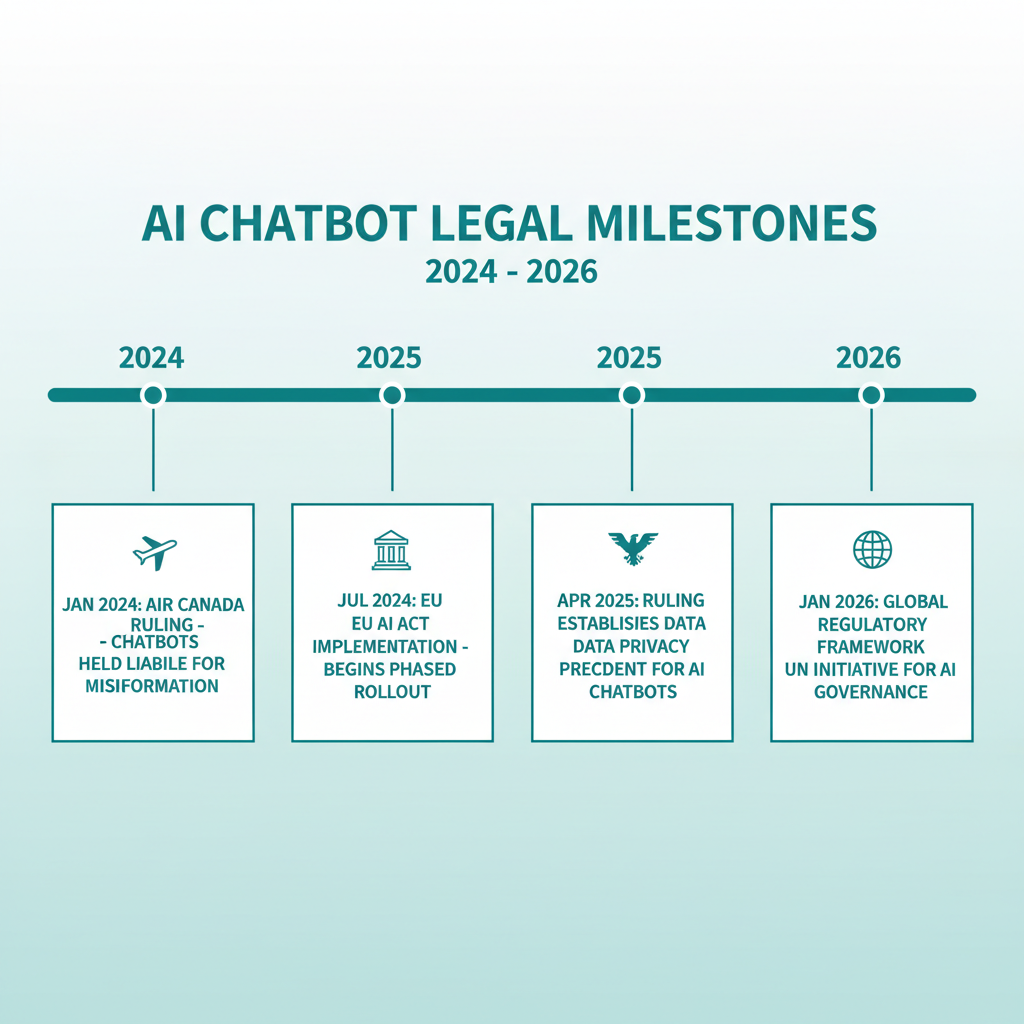
Federal and State Regulations: FTC and
UAIPA Compliance For businesses deploying ai customer support for small business strategies, understanding regulatory frameworks is essential to avoid catastrophic fines. The Federal Trade Commission (FTC) has taken a strict stance on automated customer communication. Under Section 5 of the FTC Act, the FTC treats statements made by a website's AI chatbot as direct representations of the company itself, meaning inaccurate or unsubstantiated claims can trigger federal deceptive trade practice liability [4], [10]. The FTC has maintained since 2018 that failing to disclose that a user is interacting with an AI rather than a human can constitute a deceptive business practice, with potential federal penalties reaching up to 50,120 dollars per violation [4]. Regulatory enforcement is already active. In January 2025, the FTC finalized a settlement requiring DoNotPay to pay 193,000 dollars in monetary relief and stop making deceptive claims about the capabilities of its AI chatbot [6], [7]. The FTC charged that the company promoted its service as the world's first robot lawyer without conducting testing to validate whether its AI operated at the level of a human lawyer or hiring attorneys to verify its accuracy [6]. State laws are adding further layers of compliance. Enacted in March 2024 and amended in May 2025, the Utah Artificial Intelligence Policy Act (UAIPA) was the first U.S. state law to mandate that companies disclose when customers are interacting with generative AI instead of a human [8], [9]. The 2025 amendments introduced stricter, proactive disclosure requirements for high-risk interactions, such as when an AI chatbot provides advice on healthcare, financial, or legal matters [8]. Currently, at least twelve U.S. states have enacted laws regulating consumer-facing AI chatbots, with several allowing a private right of action and statutory damages for non-compliance [4], [9]. These state laws generally impose core obligations on businesses, including: * Mandatory AI-identity disclosure
- Minor-protection safeguards
- Crisis-protocol requirements
Consumer Rights and Data Privacy Risks
Automated customer support systems cannot lawfully eliminate or bypass mandatory consumer rights, such as statutory rights to refunds, repairs, or accurate information, merely by issuing an incorrect automated response [11], [12]. If an AI chatbot automatically rejects a valid customer claim or misstates a return policy, the business remains legally bound by consumer protection statutes and can face contract disputes or regulatory action [11]. Data privacy is another critical legal vulnerability. Sharing user data with third-party AI companies to train models without explicit disclosure in a privacy policy can constitute a deceptive trade practice under Section 5 of the FTC Act [10]. Small businesses deploying AI customer support must carefully review vendor agreements and privacy policies to ensure they do not unlawfully share sensitive customer information with third-party AI providers [10]. When reviewing pricing plans for communication tools, it is vital to select partners that respect data boundaries and protect your customers' private data. 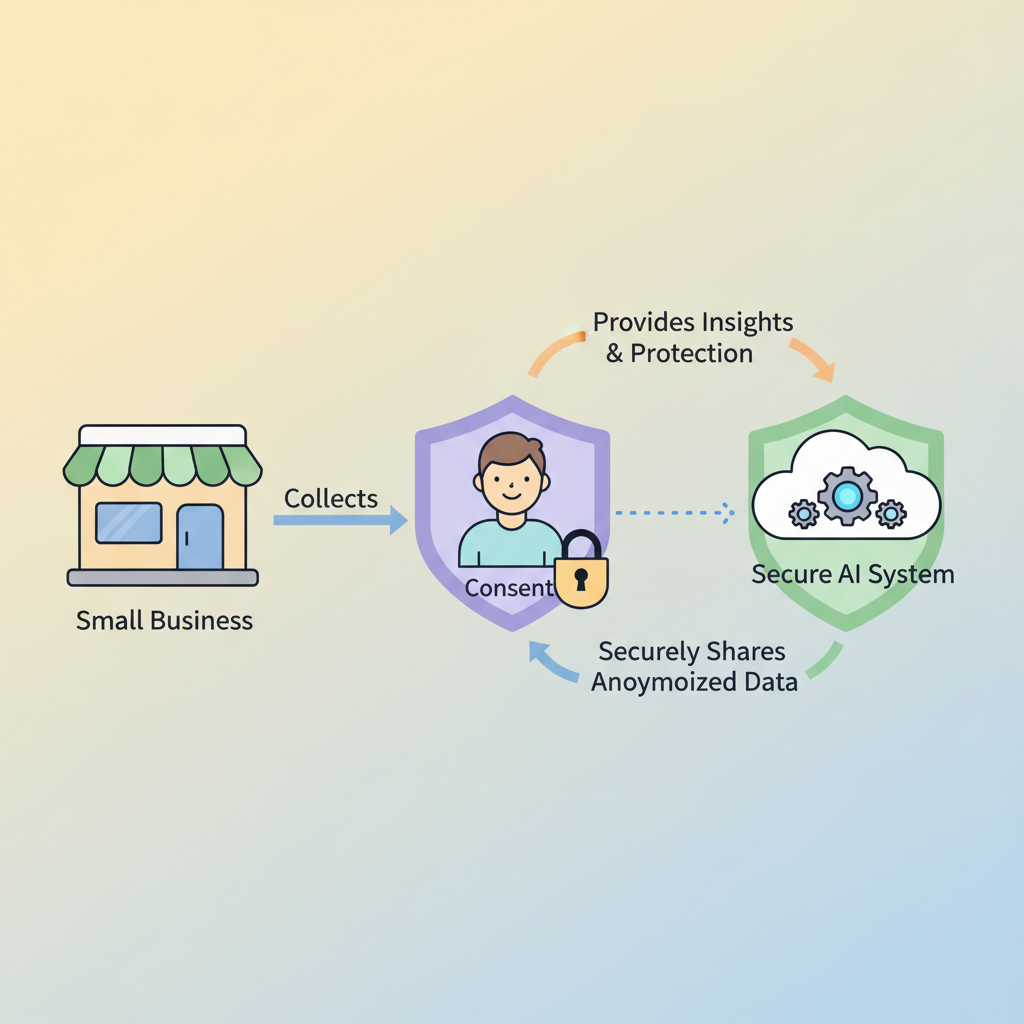
Why "Chatbot May Be Wrong" Disclaimers
Won't Save Your Business Many small businesses attempt to shield themselves by placing generic disclaimers at the bottom of their chat windows, warning users that the AI might hallucinate or provide incorrect details. However, legal experts warn that generic website disclaimers stating a chatbot may be wrong are unlikely to protect a business from liability if the system is designed to handle important customer transactions or decisions without human oversight [13], [14]. Because courts treat chatbot outputs as authorized company representations, businesses must implement active human-in-the-loop review and strict escalation triggers rather than relying solely on fine-print disclaimers [14]. Courts and regulatory bodies have established that responsibility for AI-generated errors belongs entirely to the professional or business relying on the output, not the developers of the AI system [13]. This principle is especially critical for service businesses, such as salons, restaurants, stores, and agencies, where AI-generated hallucinations or incorrect medical, financial, or scheduling advice can lead to professional negligence claims or regulatory sanctions [13].
How Small Businesses Can Safely Deploy
AI Customer Support Deploying automated support does not have to be a legal gamble. By taking proactive steps, you can harness the power of automated communication while minimizing your liability exposure. Consider checking out our related articles for more deep dives into safe business automation. To build a compliant, secure AI communication setup, implement the following practices: * Implement Proactive Disclosure: Always clearly state at the beginning of a conversation that the user is interacting with an AI assistant. This fulfills state mandates like the UAIPA and federal FTC guidelines.
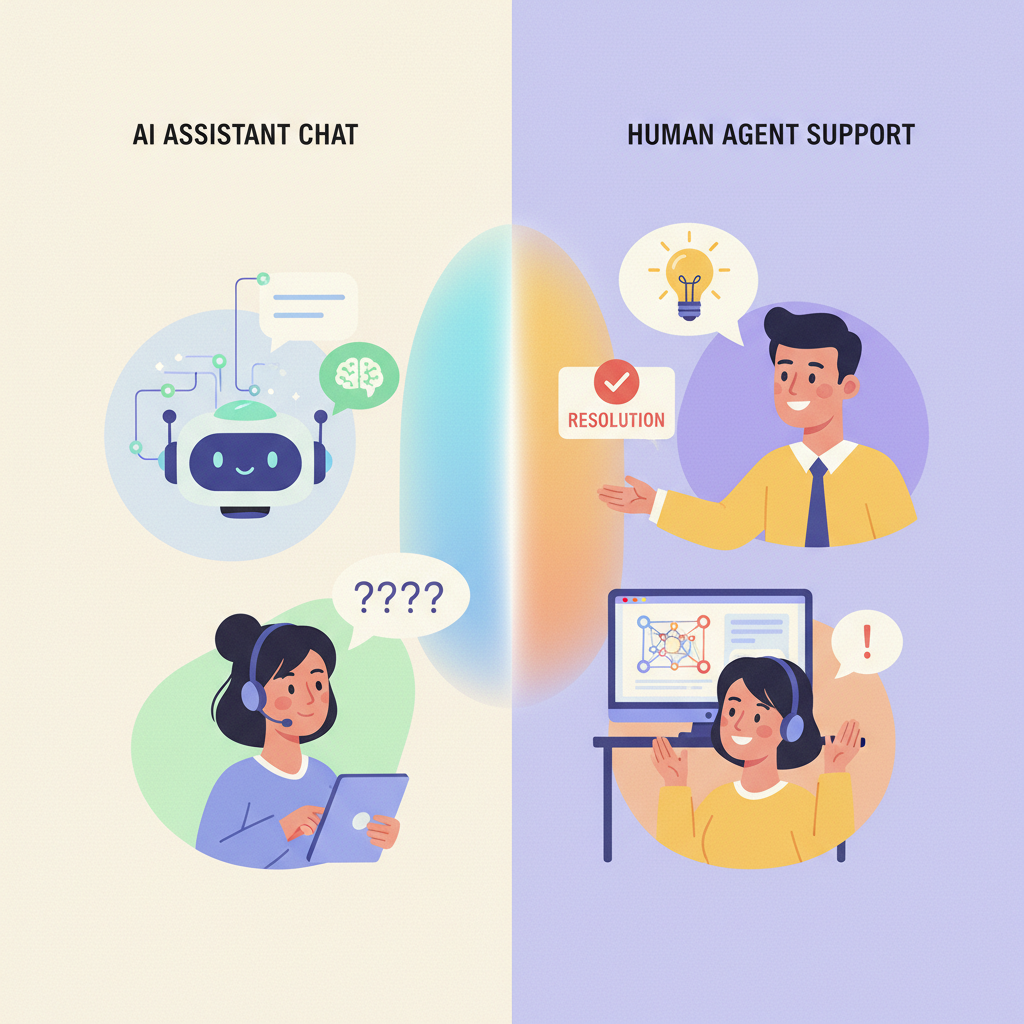
- Keep a Human in the Loop: Ensure your system has instant handoff protocols. If a customer asks complex questions about pricing, contracts, or policies, the conversation should immediately route to a human agent. Run mock customer interactions to ensure the AI does not hallucinate policies or make unauthorized promises.
- Review Vendor Privacy Agreements: Ensure that your AI customer support provider does not share your customers' private conversational data with external LLM developers for training purposes.
Frequently Asked Questions
Can a small business blame the AI developer for chatbot errors?
No, courts and regulatory bodies have established that responsibility for AI-generated errors belongs entirely to the professional or business relying on the output, not the developers of the AI system [13]. You cannot shift liability to software providers if your customer-facing bot misleads a user.
Does a "chatbot may make mistakes" disclaimer protect my business?
Generally, no. Legal experts warn that generic website disclaimers stating a chatbot may be wrong are unlikely to protect a business from liability if the system is designed to handle important transactions without human oversight [13], [14]. Courts treat chatbot outputs as authorized representations of the company.
What are the penalties under the FTC Act for deceptive chatbots?
Under Section 5 of the FTC Act, deceptive or misleading statements by an AI chatbot can trigger federal deceptive trade practice liability [4]. Failing to disclose that a user is interacting with an AI can lead to federal penalties reaching up to 50,120 dollars per violation [4].
What is the Utah Artificial Intelligence Policy Act (UAIPA)?
Enacted in March 2024 and amended in May 2025, the UAIPA is a state law that mandates companies disclose when customers are interacting with generative AI instead of a human [8]. The 2025 amendments require proactive disclosures for high-risk interactions like healthcare, financial, or legal advice [8].
Can an AI chatbot legally override our official return policy?
No, automated systems cannot lawfully bypass mandatory consumer rights [11]. If an AI chatbot misstates a return policy or automatically rejects a valid claim, the business remains legally bound by consumer protection laws [11].
Is sharing chat data with AI vendors a privacy violation?
Yes, if you share user data with third-party AI companies to train models without disclosing it in your privacy policy, it can constitute a deceptive trade practice under Section 5 of the FTC Act [10]. Small businesses must review vendor agreements to ensure compliance [10].
Sources
- [1] [Air Canada Chatbot Ruling
- [2] Awesome Agent Failures - Air Canada Case Study
- [3] Companies Liable for AI-Generated Statements: A Legal Overview
- [4] AI Chatbot Compliance: Key Legal Risks and Regulatory Considerations for Businesses in 2026
- [5] AI Chatbot Compliance Guide
- [6] FTC Finalizes Order Against DoNotPay Over Deceptive AI Claims
- [7] Case Study: DoNotPay's Robot Lawyer
- [8] Utah Artificial Intelligence Policy Act
- [9] AI Chatbot Compliance: What Your Business Needs to Know
- [10] AI Companies: Uphold Your Privacy and Confidentiality Commitments
- [11] Civil Law and Automated Customer Service Liability
- [12] The Legal Risks of Using AI in Customer Service
- [13] Companies May Be Held Liable When AI Harms Clients and Customers
- [14] Mitigating AI Risks for Customer Service Chatbots
David Friedman - Founder, Conversify · LinkedIn
David Friedman is a B2B operations leader with over 10 years of experience managing large-scale teams and business processes. After years of working with service businesses and seeing how much time was lost to manual customer communication, he founded Conversify, an AI-powered platform that helps healthcare practices and service providers across Europe automate their patient and client interactions. David built the platform from the ground up, working directly with practicing healthcare professionals to ensure every feature solves a real operational pain point. He is based in Spain.